




The Great Monsoon Myth
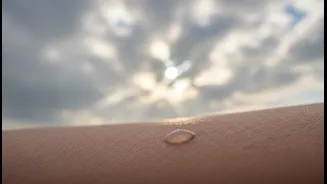
One of the most persistent skincare myths is that clouds offer a free pass from sun protection. It's a comforting thought, but unfortunately, it's false. While thick, dark clouds do block a good portion of visible light and some UVB rays (the kind that cause
immediate sunburn), they are far less effective against UVA rays. In fact, according to the World Health Organization and other dermatological sources, up to 80% of UV radiation can penetrate cloud cover and reach your skin. This is why you can still get a tan—or worse, accumulate skin damage—on a completely overcast day. The cool temperatures and lack of bright sun create a false sense of security, but the underlying threat remains.
UVA vs. UVB: The Invisible Threat
To understand why monsoon sunscreen is crucial, it helps to know the enemy. Ultraviolet (UV) radiation that reaches us is primarily made up of two types. UVB rays have a shorter wavelength and are responsible for the obvious signs of sun exposure, like redness and sunburn. Their intensity does decrease on cloudy days. UVA rays, however, have a longer wavelength that allows them to penetrate clouds, haze, and even glass windows with ease. This is the type of radiation that works silently, reaching deeper into the skin to break down collagen, accelerate premature ageing, and trigger hyperpigmentation like dark spots and melasma. In a high UV-index country like India, where a significant portion of radiation is UVA, protecting against it year-round is critical for long-term skin health.
Decoding the Labels: SPF and PA+
The marketing hype around sunscreen can be confusing. The two most important symbols to understand are SPF and PA. SPF, or Sun Protection Factor, primarily measures protection against UVB rays. An SPF of 30 blocks about 97% of UVB rays, while SPF 50 blocks about 98%. The PA rating, which originated in Japan, measures protection against UVA rays and is indicated by plus signs (from PA+ to PA++++). For Indian conditions, especially when tackling issues like pigmentation and photoaging, dermatologists widely recommend a broad-spectrum sunscreen with at least SPF 30 and a high PA rating of PA+++ or, ideally, PA++++.
Choosing Your Monsoon Armour
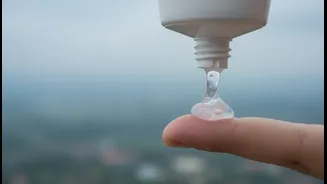
The biggest complaint about sunscreen in the monsoon is the texture. Heavy, greasy creams feel uncomfortable in high humidity and can clog pores, leading to breakouts. The key is to choose a formula designed for this climate. Look for sunscreens that are lightweight, non-comedogenic (meaning they won't clog pores), and have a gel-based, serum, or matte finish. These formulas absorb quickly without leaving a sticky or oily residue. For extra assurance, especially if you get caught in the rain or sweat a lot, a water-resistant formula is an excellent choice. It's designed to adhere better to the skin even when it's damp, though reapplication remains essential.
Application Isn’t Just for the Beach
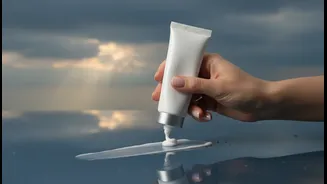
Even the best sunscreen is ineffective if not used correctly. It should be the last step in your morning skincare routine, applied about 15 to 20 minutes before you head out. A common mistake is not using enough; the general rule is about a teaspoon for the face and neck to achieve the advertised SPF level. Reapplication is just as important. The humidity, sweat, and rain during the monsoon can cause sunscreen to wear off more quickly. If you're outdoors for extended periods, aim to reapply every two to three hours. If you've been in the rain or have been sweating, it's wise to reapply once your skin is dry.