





The King in a Dessert Disguise
Mention mango, and the mind often drifts to sweet, luscious desserts: creamy milkshakes, rich shrikhand, decadent ice creams, or simply a plate of perfectly ripe, fragrant slices. This perception, while delicious, is a bit like casting a versatile actor
in the same role repeatedly. While the fruit’s natural sweetness makes it an obvious choice for a final course, this typecasting overshadows its far more expansive role in Indian culinary traditions. For over 4,000 years, the mango, or 'Amra' in Sanskrit, has been woven into the fabric of Indian life. It’s a sacred fruit in mythology, a symbol of prosperity, and a muse for poets. This deep cultural embedding means it has found its way into every part of a meal, not just the end.
The Tangy Heart of the Matter: Raw Mango
The secret to unlocking the mango's savoury side lies in embracing its entire lifecycle, especially its unripe, green stage. Known as 'kacchi kairi', raw mango is a cornerstone of Indian summer cooking. Its firm texture and sharp, acidic tang make it a powerful souring agent, a role often played by tamarind or lime in other contexts. This tartness is the backbone of countless dishes. Take Aam Panna, a traditional North Indian drink made from boiled or roasted green mangoes, blended with cumin, mint, and black salt. It's a revered summer cooler, celebrated for its ability to replenish electrolytes and prevent heatstroke. Raw mangoes are also the star of pickles like the famous Avakaya from Andhra Pradesh and countless chutneys that provide a burst of flavour to an everyday meal.
Beyond Pickles: A Symphony of Savoury Curries
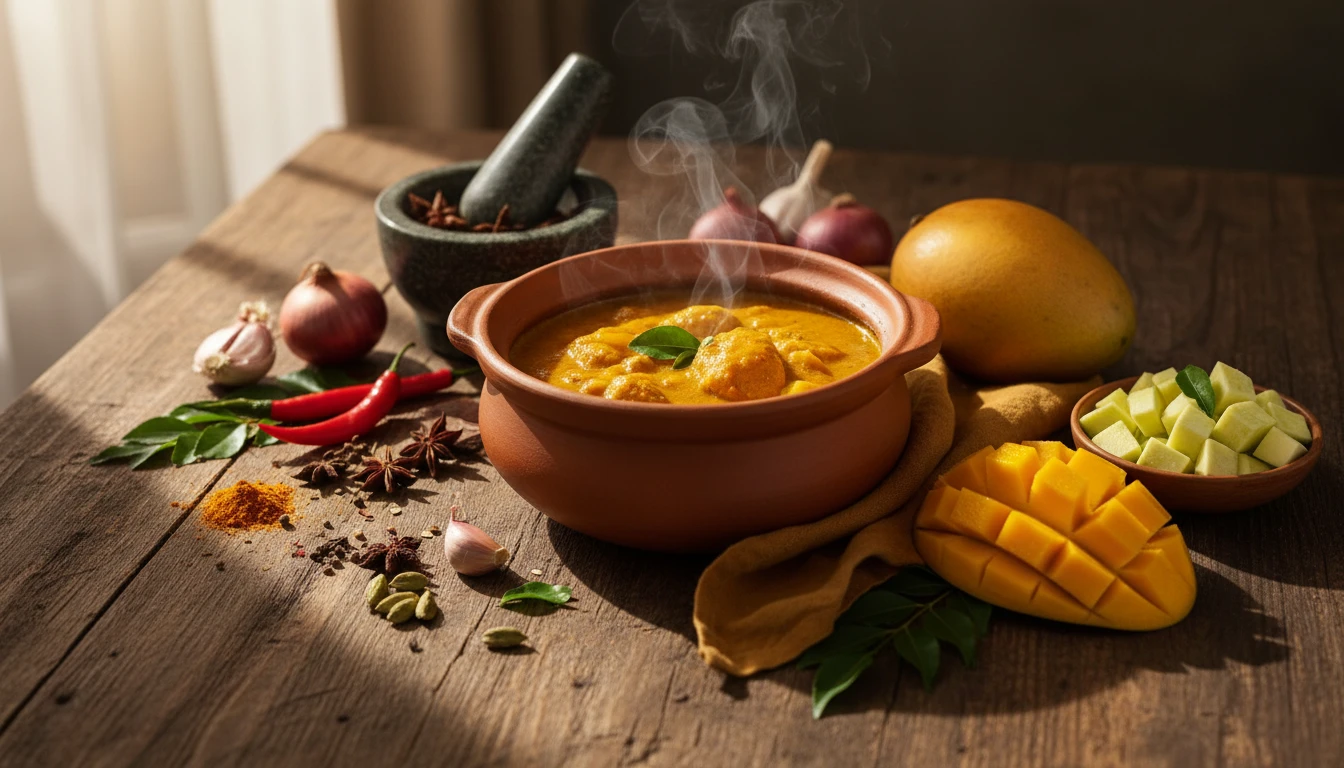
The savoury journey doesn’t stop with condiments. Both raw and ripe mangoes feature prominently in main courses, adding layers of complexity. In Bengal, 'Tok Dal' is a light lentil curry made with raw mango pieces, offering a refreshing sweet and tangy flavour perfect for hot afternoons. Similarly, a raw green mango dal provides a comforting balance of sweet, spicy, and sour notes. Further south, Kerala offers a shining example with Mambazha Pulissery, a stunning curry that uses ripe, sweet mangoes. In this dish, juicy mango chunks are simmered in a creamy, tangy gravy of coconut and yoghurt, seasoned with green chillies and spices. It’s a celebrated part of festive feasts like Onam Sadya, where its sweet and sour profile beautifully complements a spread of other dishes. There are also Mangalorean specialties like 'Ambuli Upkari', a raw mango curry with jaggery and spices.
From Salads to Marinades
The versatility of mango extends even further into everyday cooking. A simple raw mango salad, with finely chopped cubes mixed with onion, chilli powder, and roasted cumin, can liven up any meal. For a different texture, a Maharashtrian 'Ambe Dal' combines soaked chana dal with grated raw mango and coconut. Ripe mangoes also find their place in savoury salads, where their sweetness pairs surprisingly well with salty cheese like feta, crisp cucumber, and fresh mint. The fruit's flavour profile also makes it an excellent base for salsas and marinades. A quick mango salsa with onions, coriander, and lime can instantly elevate grilled chicken or paneer. Its natural sugars and acids work wonderfully as a tenderiser and flavouring agent in marinades, adding a tropical note to grilled meats and vegetables.