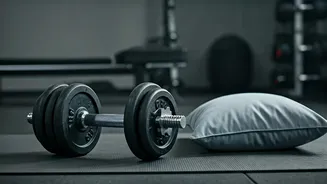









The Night Shift for Muscle Growth
It’s a common misconception that muscles are built while you’re lifting weights. In reality, the gym is where you create the stimulus for growth by causing microscopic tears in your muscle fibres. The actual repair and growth—a process called muscle protein
synthesis—happens when you rest. This process is most active during deep sleep. While you're asleep, your body increases blood flow to the muscles, delivering essential oxygen and nutrients that aid in healing and growth. Skipping sleep to squeeze in another workout is like placing an order for a new building but sending the construction crew home before they can lay the foundation. Without adequate rest, you’re simply breaking your muscles down without giving them a chance to rebuild stronger.
Your Body’s Hormone Headquarters
Sleep is prime time for hormonal regulation, which is critical for fitness. During the deep stages of sleep, your pituitary gland releases a significant pulse of Human Growth Hormone (HGH). This powerful hormone is vital for repairing tissues, building muscle mass, and metabolising fat. When you cut your sleep short, you blunt this crucial HGH release, directly sabotaging your fitness goals. At the same time, a lack of sleep causes a spike in cortisol, the body's primary stress hormone. Chronically high cortisol levels can have a catabolic effect, meaning it can break down muscle tissue and encourage your body to store fat, particularly around the midsection. So, while you might be pushing hard in the gym, sleep deprivation could be making your body work against you hormonally.
Refueling Your Energy Tanks
Think of your muscles' energy stores like the battery on your phone. Intense exercise depletes them. Sleep is when your body plugs in and recharges. During exercise, you use up glycogen, the stored form of glucose that fuels your muscles. Sleep is the primary window for your body to replenish these glycogen stores. When you wake up after a full night of restorative sleep, your muscles are refuelled and ready for peak performance. If you are sleep-deprived, you start your workout on a low battery. This means you’ll likely feel fatigued faster, be unable to lift as heavy, and won't have the endurance to complete your workout effectively. An extra hour of sleep might do more for your next day’s performance than an extra 30 minutes of tired, sloppy reps.
The Mental Game and Injury Prevention
Fitness isn't just a physical game; it's a mental one. Sleep deprivation significantly impairs cognitive functions like focus, coordination, and reaction time. When you're tired, your form is more likely to suffer, your movements become less precise, and your ability to judge fatigue is compromised. This is a perfect recipe for injury. A simple mistake in form due to a lapse in concentration can lead to a strain, sprain, or worse, setting your progress back by weeks or even months. A well-rested mind is sharper, more motivated, and better at executing complex movements safely. Prioritising sleep is one of the most effective injury-prevention strategies you can adopt, ensuring you can train consistently and safely over the long term.
Finding the Right Balance
This isn't an argument to abandon your workout for a nap. Instead, it’s about smart training. The headline 'Sleep Beats Extra Reps' is most true when you're already running on empty. If you've only had five hours of sleep, forcing yourself through a high-intensity workout and adding extra sets is counterproductive. In that scenario, an extra hour or two of sleep would provide a far greater fitness benefit. The goal is to integrate sleep into your training plan with the same seriousness you give to your workouts and nutrition. Listen to your body. On days when you feel genuinely recovered and energetic, push for those extra reps. On days when you're exhausted, recognise that the most anabolic, performance-enhancing thing you can do is get a good night's rest.