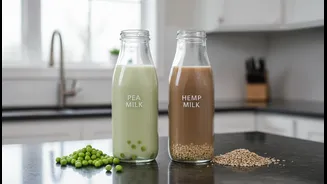








The Protein Power of Pea Milk
When it comes to muscle repair and growth after a strenuous workout, protein is non-negotiable. This is where pea milk truly shines and why it's rapidly gaining favour. Derived from yellow split peas, a cup of unsweetened pea milk can pack up to 8 grams
of protein, a figure comparable to traditional dairy milk. This is significantly higher than many other popular plant milks like almond or rice milk. More importantly, pea protein contains all nine essential amino acids, including a healthy dose of branched-chain amino acids (BCAAs) which are crucial for muscle synthesis and reducing soreness. Studies have even shown that fortified pea beverages can provide similar benefits to dairy milk for improving strength after resistance training. This makes it an efficient and powerful choice for rebuilding what was broken down in the gym.
Hemp Milk's Unique Recovery Blend
While pea milk leads with protein, hemp milk offers a more holistic approach to recovery. Made from hemp seeds, this option provides a respectable amount of protein, often around 3 to 5 grams per cup, and is considered a complete protein source, containing all essential amino acids. However, its main advantage lies in its unique fatty acid profile. Hemp milk is rich in omega-3 and omega-6 fatty acids in an ideal ratio for human health. These healthy fats are known to help reduce inflammation, a natural consequence of intense exercise. By helping to manage post-workout inflammation, hemp milk can aid in faster recovery and soothe taxed joints and muscles. It's a dual-action choice that helps repair muscle and manage the body's stress response to exercise.
Clean, Lean, and Allergen-Free
For many modern city dwellers, fitness is part of a broader wellness philosophy that prioritizes clean eating. Both pea and hemp milk fit perfectly into this ethos. They are naturally free from the most common allergens: dairy, lactose, soy, and nuts. This makes them an excellent choice for individuals with food sensitivities or those who simply prefer to avoid these ingredients for digestive comfort. Unlike whey protein, which is dairy-based and can cause bloating or digestive issues for some, pea and hemp proteins are known for being easily digestible. This 'clean label' appeal is a major reason why they are not just seen as a supplement, but as an integral part of a healthy, conscious diet.
The Sustainable Choice
The decision-making process for an urban consumer often extends beyond personal health to planetary health. Here again, pea and hemp milk score high marks. Compared to dairy milk, all plant-based alternatives have a significantly lower environmental footprint in terms of land use, water consumption, and greenhouse gas emissions. But even among plant milks, pea and hemp stand out. Peas are a nitrogen-fixing crop, meaning they naturally enrich the soil and reduce the need for artificial fertilisers. They also require less water than crops like almonds. Hemp is similarly sustainable; it's a resilient plant that requires few pesticides, and its production is very efficient. For the eco-conscious athlete, choosing pea or hemp milk is a way to align their fitness goals with their environmental values.
Taste, Texture and Versatility
No matter how nutritious, a post-workout drink has to be palatable. Pea milk is often noted for its creamy texture and neutral taste, making it a versatile base for protein shakes and smoothies without an overpowering flavour. Hemp milk has a slightly nuttier, earthier taste and a creamy consistency that many find appealing. Both can be consumed on their own or easily blended with fruits, seeds, and other supplements to create a customised recovery drink. Brands often offer unsweetened versions, allowing fitness enthusiasts to control their sugar intake, which is a key consideration for anyone focused on lean gains and overall health.