



Why Your Train Number Isn't Enough
Relying solely on a train number is becoming increasingly risky for passengers. Indian Railways frequently modifies services for a variety of reasons, especially during challenging periods like the monsoon season. In July 2026, several key factors are
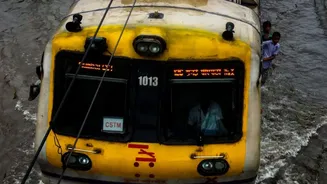
contributing to widespread changes. Essential engineering projects, such as track doubling and non-interlocking work to improve safety and capacity, are forcing temporary shutdowns of major routes. For instance, significant infrastructure work in Uttar Pradesh and the Bilaspur Railway Division has led to numerous cancellations and diversions. Furthermore, heavy monsoon rains can cause landslides, waterlogging on tracks, or ballast washouts, compelling zonal railways to divert, reschedule, or even suspend services with very little notice to ensure passenger safety. These dynamic situations mean that a static timetable or just the train number is insufficient for planning a smooth journey.
The Types of Changes to Expect
The service alterations happening this month are not uniform. Passengers should be aware of several potential changes to their journey. Complete cancellations are the most disruptive, with dozens of services being halted. Route diversions are also common, where your train will travel along a different path to its destination, bypassing several scheduled stops. Another frequent change is short-termination or partial cancellation, where a train may end its journey at an earlier station or start from a different one than originally scheduled. Finally, many trains are being rescheduled, departing earlier or later than their usual time. A train might also be 'regulated' en route, meaning it will be held at a station for a period to allow other traffic to pass. These changes mean that even if your train is running, its timing and route could be completely different from what you expect.
Your Guide to Accurate Information
In this fluid environment, static timetables are obsolete. The key to navigating these changes is to use real-time tracking tools. The most reliable source is the official National Train Enquiry System (NTES), developed by the Centre for Railway Information Systems (CRIS). Available as both a website and a smartphone app, NTES provides live, direct-from-source information on train running status, cancellations, diversions, and platform numbers. Unlike some third-party apps that may use crowd-sourced or less frequent data, NTES gets its feed directly from the railway signalling system, making it the gold standard for accuracy. You can 'Spot Your Train' to see its exact location or use the 'Live Station' feature to check all arrivals and departures from a specific station in the next few hours. The IRCTC Rail Connect app is another official tool for tracking and booking.
Practical Tips for July Travellers
To avoid being stranded or facing last-minute hassles, adopt a proactive approach to your travel planning. First, always check the live status of your train on NTES or the IRCTC app before you leave for the station, even if you have a confirmed ticket. Second, check it again just before your train's scheduled departure, as platform numbers can change at the last minute, especially at major junctions. It’s also wise to enable notifications from your booking app for any changes to your journey. Given the possibility of en-route delays, build some buffer time into your travel plans, particularly if you have a connecting journey. Finally, familiarize yourself with the dedicated sections within the NTES app for 'Cancelled Trains', 'Rescheduled Trains', and 'Diverted Trains' to get a comprehensive overview of disruptions on the network.