

Why Walks Aren't Always Enough
Physical exercise is crucial, but it only satisfies one part of your dog's needs. Many dogs, especially intelligent breeds, were originally bred for jobs that required problem-solving and focus. Without a 'job' to do, they can become bored. This boredom
can manifest in ways you might mistake for bad behaviour: excessive barking, chewing on furniture, restlessness, or even seeming withdrawn. Mental stimulation is not a luxury; it's a necessity for a well-rounded, happy canine companion. It helps reduce stress, builds confidence, and prevents destructive habits that stem from an under-stimulated mind.
The Power of the Nose: Sniff Games
A dog's nose is thousands of times more powerful than ours, and using it is mentally exhausting for them in the best way possible. Just fifteen minutes of intense sniffing can be as tiring as an hour-long walk. You can easily turn your home into a scent playground. Start with a 'Find It' game: have your dog stay while you hide a high-value treat, then release them with the cue 'Find it!'. Another simple idea is the 'Cup Game': place a treat under one of three plastic cups, shuffle them, and let your dog sniff out the prize. These games tap into their natural foraging instincts and provide a satisfying mental workout.
Brain Training: More Than Just Tricks
Training sessions are fantastic for mental stimulation and strengthening your bond. Keep sessions short, fun, and positive, around 5 to 10 minutes once or twice a day. Instead of just repeating 'sit' and 'stay', teach them new, fun cues. 'Touch' (teaching them to touch their nose to your hand) is a great foundation for other behaviours. You can also teach them the names of their toys and then ask them to fetch a specific one. This isn't about strict obedience; it's about engaging their brain, building their confidence, and giving them a cooperative task to focus on.
Mealtime Makeover: Food Puzzles
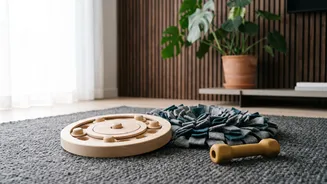
Instead of just handing over a bowl of food, make your dog work for it. This concept is called 'contra-freeloading', where animals actually prefer to earn their meals. You don't need to buy expensive toys to start. A muffin tin is a perfect beginner's puzzle: just sprinkle kibble into the cups and cover them with tennis balls or other toys for your dog to remove. You can also roll up kibble in an old towel, tie it in a loose knot, and let your dog figure out how to unroll it. For a more advanced challenge, a 'busy box' made from a cardboard box filled with crumpled paper and empty toilet paper rolls with treats inside can provide hours of foraging fun.
Creating a Balanced Routine
The goal isn't to cram every activity into one day. It's about creating variety throughout the week. Maybe Monday is a walk plus a 10-minute training session. Tuesday could be a shorter walk followed by a muffin tin food puzzle for dinner. On a rainy day, set up a 'Find It' game around the house. Rotating through different activities keeps things fresh and exciting for your dog, preventing them from getting bored with the same old routine. Pay attention to what your dog enjoys most. Some dogs are obsessive sniffers, while others love the challenge of a puzzle. Tailoring the enrichment to their personality is key.