


The Robotic Trailblazers
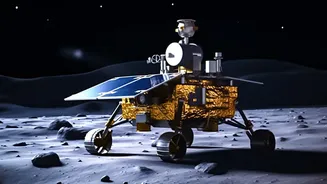
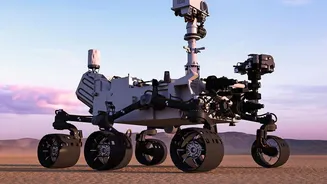
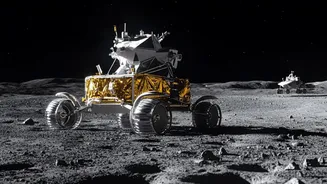
Our current emissaries on Mars are marvels of engineering. Rovers like Perseverance and its predecessors are semi-autonomous geologists, chemists, and photographers. Their needs are comparatively simple: electricity, which they generate from solar panels
or a radioisotope thermoelectric generator (RTG), and commands from Earth. They require no food, water, or air. They don't get sick, lonely, or bored. When a robot lands on Mars, it's a one-way trip; there's no need to pack for a return journey, dramatically reducing the mission's complexity and cost. This efficiency is why robotic missions, which can cost under $3 billion, have been our go-to method for exploring the Red Planet, providing invaluable data that paves the way for future exploration.
The Human Baggage Problem
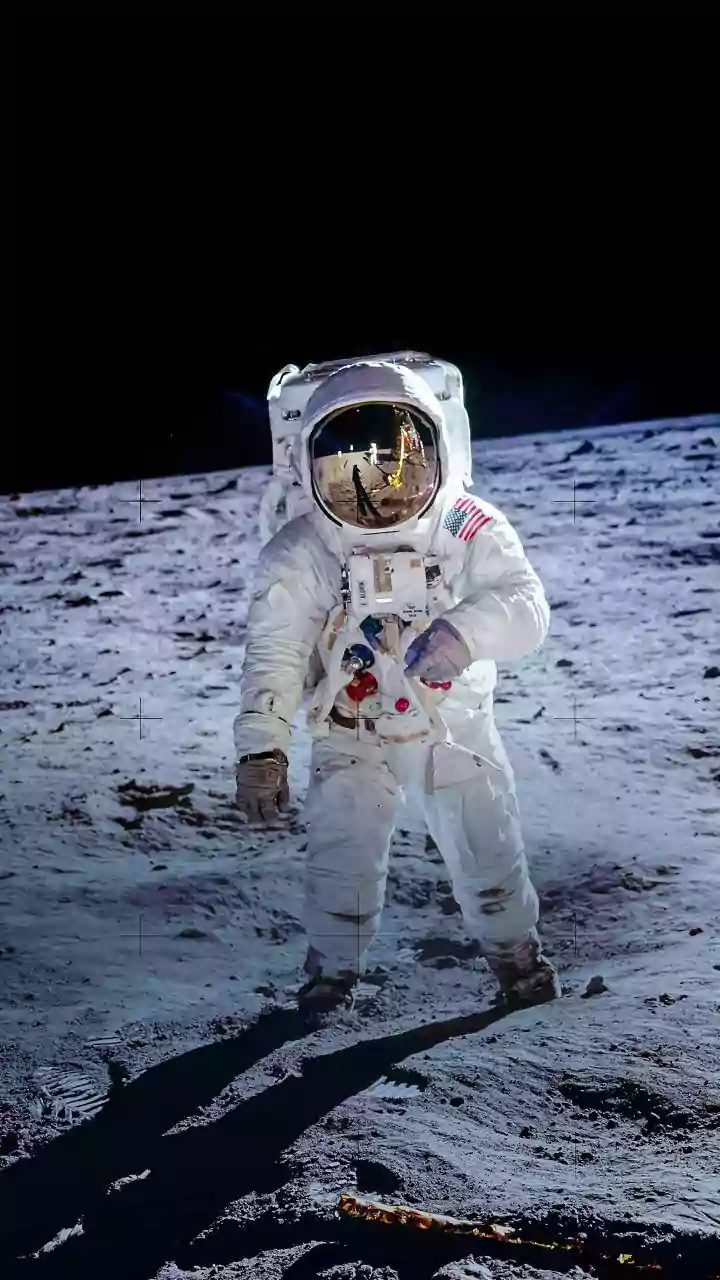
Sending a human, by contrast, is an entirely different proposition. Astronauts are not self-powering. They are fragile, squishy beings who have an inconvenient need to breathe, eat, and drink. For a mission that could last nearly three years, the sheer volume of supplies is staggering. A crew would consume thousands of kilograms of food, water, and oxygen. Unlike on the International Space Station (ISS), where resupply missions are frequent, a Mars crew is on its own. Every single item—from food and medical kits to spare parts and hygiene supplies—must be packed from the start or sent ahead. This mountain of 'stuff' has mass, and mass is the enemy of space travel. Every extra kilogram requires more fuel to escape Earth's gravity, more fuel to get to Mars, and more fuel to eventually return.
The Tyranny of Distance
A trip to Mars is not a weekend getaway. Due to the orbital mechanics of Earth and Mars, the planets align for an efficient launch window only once every 26 months. The journey itself takes seven to nine months each way. Once astronauts arrive, they can't just turn around. They must wait for the planets to align again for a return trip, which means staying on the Martian surface for about 500 days, or roughly 18 months. This entire round trip adds up to about three years. This long duration multiplies the supply problem and also exposes the crew to immense risks, including prolonged exposure to deep space radiation and the physiological effects of microgravity.
The Irreplaceable Human Touch
So why even consider sending people? Because for all their efficiency, robots are slow and limited. A rover moves at a crawl, taking weeks or months to investigate a site a human geologist could assess in an afternoon. Humans are adaptable problem-solvers who can make intuitive leaps, fix broken equipment with ingenuity, and react to unexpected discoveries in real-time. The communication delay between Earth and Mars can be up to 40 minutes round-trip, making real-time control of a robot impossible. A human on the scene can make a decision in seconds that might take a mission control team on Earth days of deliberation. This ability to think on one's feet is, for now, uniquely human.
A Collaborative Future
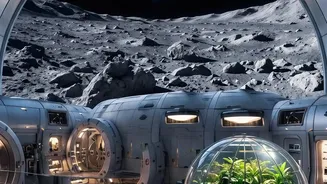
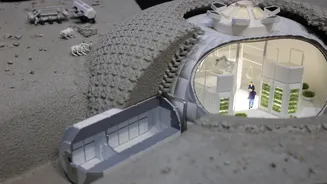
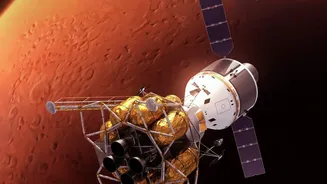
The conversation is now shifting from 'robots versus humans' to 'robots enabling humans'. The emerging consensus is that a successful human Mars program will be a partnership. This involves sending robotic cargo missions ahead of the astronauts. These missions would pre-position habitats, scientific equipment, and even rovers for the crew to use upon arrival. A key technology is In-Situ Resource Utilization (ISRU), which involves using robots to 'live off the land'. For example, robotic systems could be sent to mine Martian ice for water and to extract oxygen from the thin Martian atmosphere. These resources could then be used for life support and to create rocket propellant for the return journey, drastically reducing the amount of mass that needs to be hauled all the way from Earth.