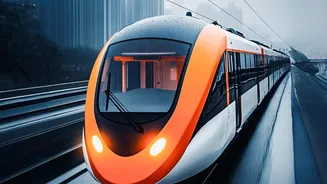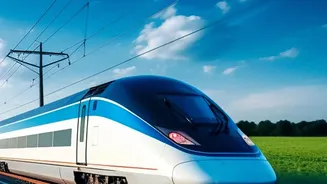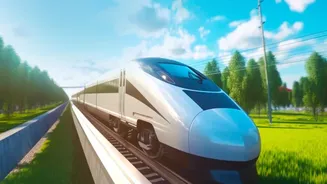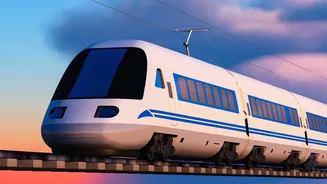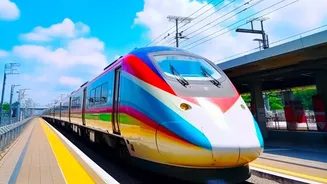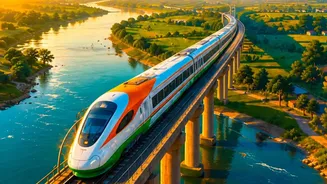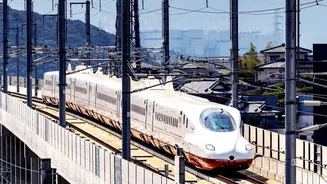

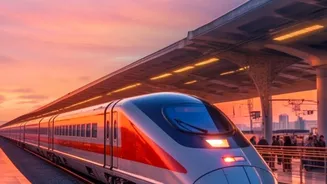
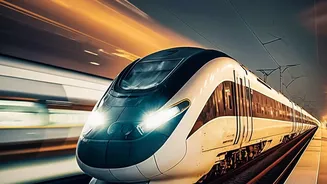
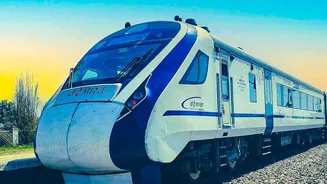
The long-held dream of a bullet train crisscrossing the Indian landscape is rapidly approaching its first tangible milestone. The Surat-Vapi section of the Mumbai-Ahmedabad corridor is poised to become the first operational high-speed rail line in the country.
The First Step in a 508-Kilometre Journey
The Surat-Vapi section, a crucial stretch in Gujarat, is the first segment of the ambitious 508-km Mumbai-Ahmedabad High-Speed Rail (MAHSR) project slated for completion. According to the Railway Ministry, this section is expected to be ready for passenger service in the final quarter of 2027. This phased approach of opening completed sections allows the public to experience the benefits of high-speed travel while construction continues on more complex parts of the corridor, such as the challenging undersea tunnel near Mumbai. As of late 2026, significant progress has been made, with civil works on the stations and viaducts largely complete, and work on tracks and electrical systems entering the final stages.
What Makes It a 'Bullet' Train?
This isn't just a faster version of existing trains; it's a technological leap. The corridor is designed for a maximum speed of 350 km/h, with trains operating at 320 km/h. The entire Mumbai-Ahmedabad journey, which currently takes several hours, is expected to be cut to just under two hours. The project uses Japan's renowned Shinkansen technology, famous for its exceptional safety and punctuality record spanning over six decades. For the initial phase, an indigenous B28 trainset, manufactured by ICF and BEML and designed for speeds of 280 km/h, will be used, with track trials scheduled for mid-2027.
More Than Just Speed
The impact of this project extends far beyond reduced travel times. It is a massive undertaking that is boosting the domestic construction and manufacturing sectors. The line will connect key economic centres, including Mumbai, Surat, Vadodara, and Ahmedabad, fostering greater business integration and regional development. For cities like Surat, a hub for textiles and diamonds, and Vapi, an industrial powerhouse, the high-speed link is expected to spur further economic growth, attract investment, and even influence real estate trends as connectivity improves. Local economies are already seeing a ripple effect, with small businesses setting up near the under-construction stations in anticipation of a new commercial boom.
A Glimpse of the Future
The launch of the Surat-Vapi section will be more than just an inauguration; it will be a proof of concept for high-speed rail in India. Recent milestones, such as the energisation of the overhead power lines on the Surat-Bilimora stretch in November 2026, signal that the project is moving from heavy construction to the technical testing phase. This first operational line will provide valuable experience and build public confidence as the nation looks towards an even broader network. The Union Budget for 2026-27 has already outlined seven more high-speed rail corridors, envisioning a future where cities like Delhi, Lucknow, Chennai, and Bengaluru are connected by next-generation transport.