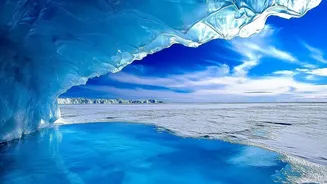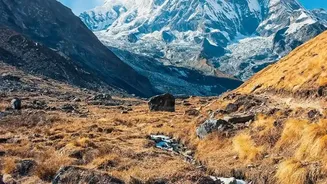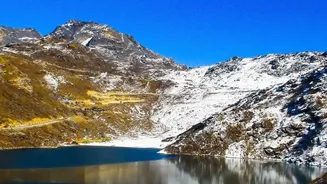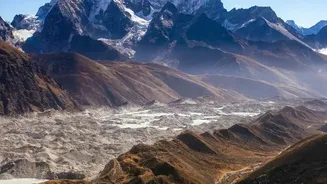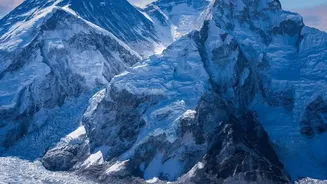





High in the Himalayas, a silent threat is growing. United Nations reports are sounding the alarm: as glaciers melt at an unprecedented rate, the risk of catastrophic glacial lake outburst floods is placing millions of lives in imminent danger.
A Ticking Time Bomb in the Mountains
Recent studies
and UN-backed reports paint a grim picture of the Hindu Kush Himalaya region. An estimated 15 million people worldwide live in the shadow of glacial lakes, with about half of them in India, Pakistan, China, and Nepal. Specifically within the Hindu Kush Himalaya region, which spans eight countries, several million people are considered directly exposed to the risk of what scientists call Glacial Lake Outburst Floods, or GLOFs. The danger is not distant or theoretical; a UN-led study found that between 1835 and 2025, India recorded the highest number of deaths from GLOFs in the entire region, with over 6,000 fatalities. These events have become five times more frequent since 1950, a surge directly linked to climate change.
What is a Glacial Lake Outburst Flood?
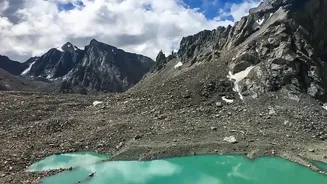
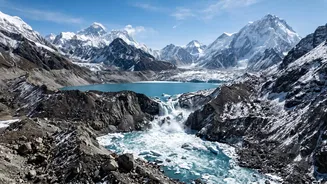
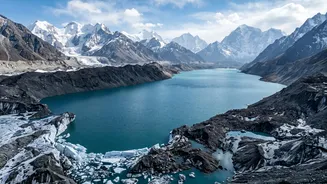
Imagine a massive, high-altitude lake held back not by a concrete dam, but by an unstable barrier of loose rock, soil, and ice left behind by a retreating glacier. This is a moraine-dammed glacial lake. As rising temperatures accelerate glacier melt, these lakes swell, putting immense pressure on their fragile natural dams. A GLOF occurs when this dam fails suddenly. The trigger could be an ice avalanche, a rockslide, an earthquake, or simply the pressure of the water itself. The result is a terrifying, sudden release of millions of cubic metres of water, mud, and debris that rushes down mountain valleys at incredible speeds, destroying everything in its path. These floods have a destructive power far exceeding that of normal river floods.
The Human Cost in India and Beyond
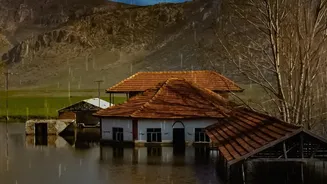
For communities in states like Sikkim, Uttarakhand, and Himachal Pradesh, this is a clear and present danger. The devastating 2023 GLOF at South Lhonak Lake in Sikkim, which killed dozens and affected tens of thousands, is a recent, tragic reminder of the country's vulnerability. Similar disasters have struck Kedarnath in 2013 and Chamoli in 2021. The risk is compounded by rapid and often unregulated development. Hydropower projects, roads, and new settlements are increasingly being built in high-risk floodplains, often out of necessity. A recent study found that between 2016 and 2023, the number of buildings in potential GLOF inundation paths in parts of Nepal, Tibet, and India's Uttarakhand region grew by a staggering 78 percent.
A Story of a Warming Planet
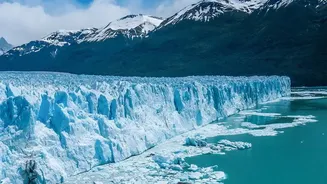
The root cause of this escalating threat is climate change. The Hindu Kush Himalaya region, often called the 'Third Pole' for its vast ice reserves, is warming faster than the global average. Glaciers here are now losing ice at twice the rate they did in 2000. This rapid melting is not only creating new glacial lakes but also expanding existing ones, increasing both the number of potential time bombs and the volume of water they hold. Even if global greenhouse gas emissions were to stop today, experts warn that the warming already locked into the climate system means glaciers will continue to melt for decades, and the GLOF threat will continue to grow.
The Race for Solutions
Addressing the GLOF threat is a monumental challenge. Solutions require a multipronged approach, starting with robust early warning systems. Initiatives are underway, such as installing monitoring stations at high risk lakes like Sikkim's South Lhonak Lake, to provide real time data that can offer precious time for evacuation. In some cases, engineering solutions like siphoning water to lower lake levels are being employed. However these are expensive and difficult to implement in remote high altitude terrain. Because many of these dangerous lakes and rivers cross national borders international cooperation between India Nepal Bhutan and China on data sharing and disaster response is critical to protecting downstream communities.