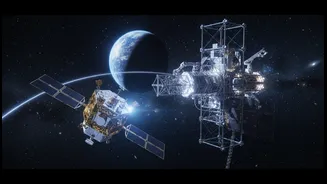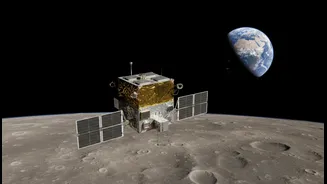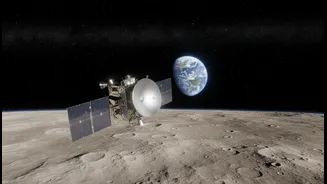



The Moon’s Frozen Time Capsules
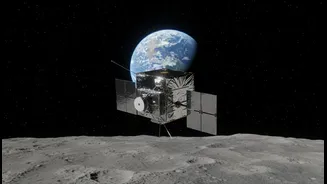
At the Moon's poles lie craters that sunlight has not touched for billions of years. These Permanently Shadowed Regions (PSRs) are among the coldest places in our solar system, creating natural cold traps. Inside them, scientists believe, is a pristine
record of the solar system's history in the form of water ice and other frozen volatiles. This ice, delivered by comets and asteroids long ago, could hold clues to the origin of water in our cosmic neighbourhood and even the chemical ingredients that led to life on Earth. Beyond its scientific value, this ice is also a critical resource for future lunar bases, capable of providing drinking water, breathable air, and even rocket fuel. It represents a treasure trove for both science and sustainable space exploration.
An Unavoidable Chemical Footprint
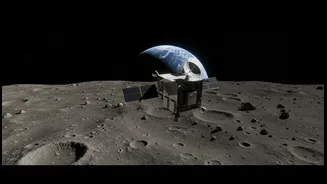
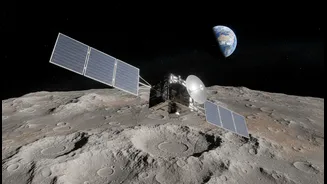
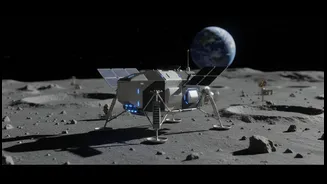
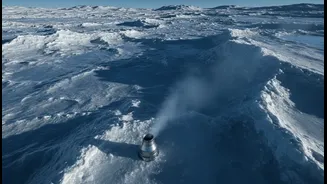
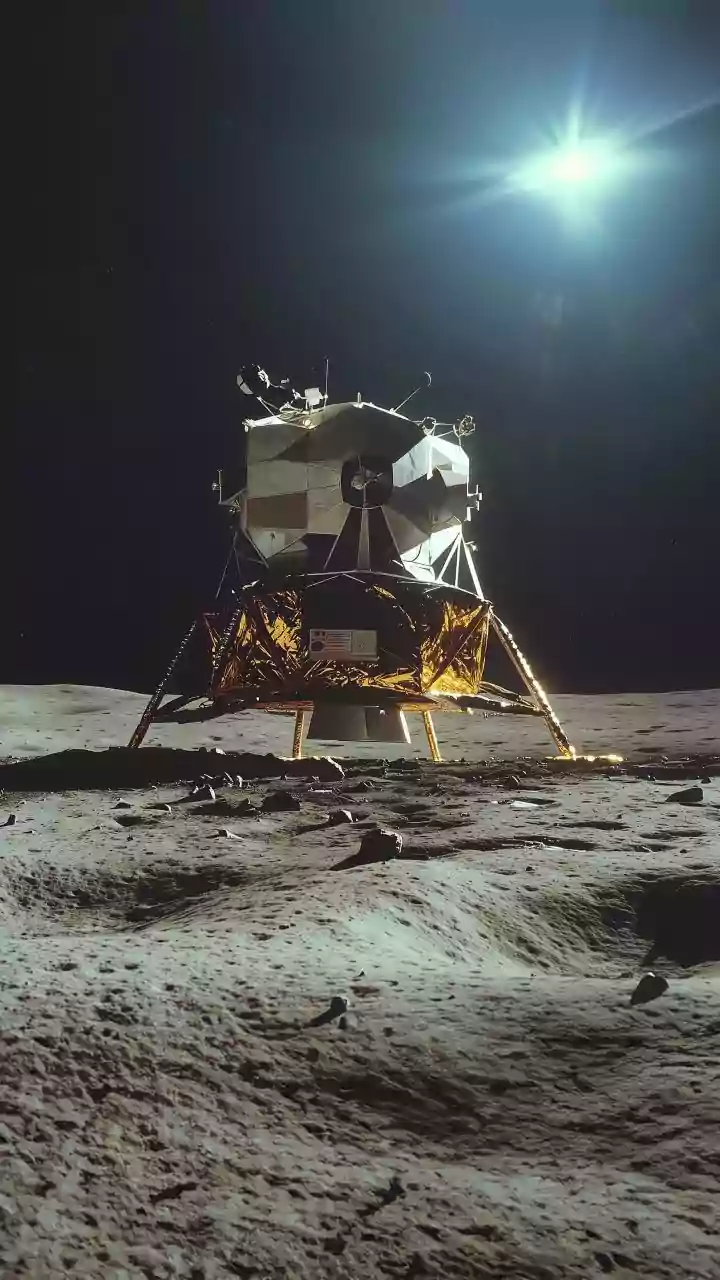
The problem begins the moment a spacecraft touches down. A landing module, even a moderately-sized one, releases significant quantities of exhaust gases to slow its descent. These gases are primarily composed of water vapor, but also include other compounds like methane, depending on the fuel. In the Moon's near-vacuum, these exhaust plumes expand rapidly and can travel vast distances. Computer simulations show that gases from a single landing near the south pole can spread across the entire lunar surface in mere hours. Within months, a substantial fraction of these artificial gases can become trapped in the same polar cold traps that hold the ancient, pristine ice. This means our own exhaust could coat and mix with the very samples scientists hope to study, permanently altering them.
A Race Against Contamination
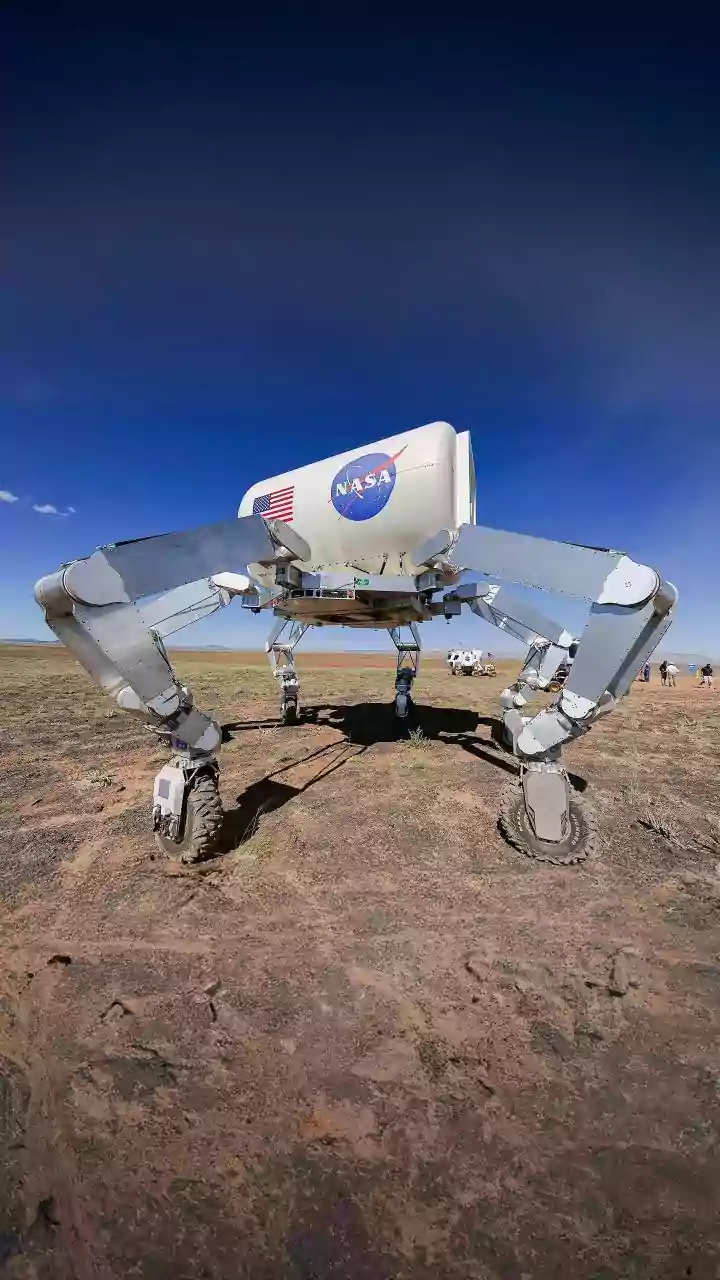
This isn't a distant problem. With NASA's Artemis program aiming for a sustained human presence and a growing number of commercial companies planning missions, the lunar surface is about to get busy. Each landing adds to the cumulative contamination. Recent studies highlight that exhaust from one landing can quickly contaminate another's research site, even if they are hundreds of kilometres apart. This creates a race against time. Scientists need to establish a baseline understanding of the pristine lunar environment before it's significantly altered by our own activities. The very exploration we undertake to unlock the Moon's secrets could inadvertently slam the book shut before we've had a chance to read the first page. As one expert noted, our own activity can hinder scientific exploration.
Crafting the Rules of the Road
So, what can be done? The international space community is grappling with the need for updated planetary protection protocols specifically for the Moon. Currently, the Moon is considered a Category II target, which has relatively relaxed requirements. However, there is a growing consensus that missions accessing the scientifically sensitive polar regions should face stricter rules, including a full inventory of organic materials they might release. Potential solutions include establishing exclusion zones around the most valuable PSRs, mandating that landers touch down at warmer sites where exhaust gases are less likely to become permanently trapped, and investing in new, cleaner landing technologies. Ultimately, monitoring the spread of these gases from future missions will be crucial to validate the models and inform a sustainable path forward for lunar exploration.