


What Exactly Is a Cool Roof?
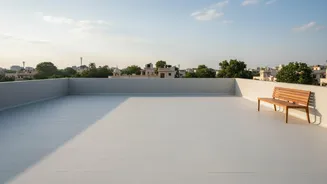
Think of it like choosing a white t-shirt over a black one on a sunny day. A cool roof is simply a roof that has been treated to reflect more sunlight and absorb less heat than a standard roof. Instead of soaking up the sun’s energy and transferring it into
the building below, it bounces that energy back into the atmosphere. This is most commonly achieved by applying a special high-reflectivity paint or coating, which is often white but can come in other lighter colours too. These coatings are designed not just to be reflective, but also to efficiently release any heat they do absorb, a property known as high thermal emittance.
The Science of Staying Cool
The magic of a cool roof lies in two key properties: solar reflectance and thermal emittance. Solar reflectance (also called albedo) measures how much of the sun's energy is reflected away by the surface. A typical dark, uncoated concrete or tar roof might absorb 80-90% of the sunlight that hits it, getting incredibly hot. In contrast, a roof treated with a quality cool coating can reflect up to 90% of that solar radiation. Thermal emittance is the roof’s ability to radiate away the heat it has absorbed. A surface with high thermal emittance will cool down much faster once the sun is no longer shining directly on it. Together, these two functions mean the roof surface itself can stay dramatically cooler—sometimes by as much as 30°C—than a traditional dark roof on a hot afternoon. This prevents a huge amount of heat from ever making its way into your home.
The Four-Degree Difference: Is It Real?
The headline's claim of a four-degree reduction is not just possible, it’s often exceeded in real-world applications across India. Studies and pilot projects in cities like Hyderabad, Ahmedabad, and Delhi have consistently shown significant temperature drops. A study by the Natural Resources Defense Council (NRDC) and partners including the Mahila Housing Trust found that cool roofs in low-income homes reduced indoor temperatures by 2°C to 5°C. In some cases, particularly in homes with direct roof exposure like top-floor apartments or single-storey houses, the reduction can be even greater. The exact reduction depends on factors like roof material, local climate, building insulation, and the quality of the cool-roof treatment, but a noticeable improvement in indoor comfort is a well-documented outcome.
More Than Just Personal Comfort
The benefits of a cooler home extend far beyond just feeling more comfortable. For starters, it can lead to significant energy savings. By reducing the amount of heat entering a building, cool roofs lessen the load on air conditioners and fans. This can cut cooling energy costs by anywhere from 15% to 30%. This not only saves money on electricity bills but also reduces strain on the power grid during peak summer demand. Furthermore, cool roofs protect the roof structure itself from UV degradation and extreme temperature fluctuations, potentially extending its lifespan. On a larger scale, widespread adoption of cool roofs helps combat the 'urban heat island' effect, where cities are significantly hotter than surrounding rural areas, leading to better air quality and improved public health.
Getting Started With a Cool Roof
Implementing a cool roof on an apartment terrace or residential building is surprisingly straightforward. The most common method is applying a solar reflective paint or coating. In India, numerous brands like Asian Paints, Dr. Fixit, and Berger offer specialised cool-roof products. The cost can range from ₹1,500 to ₹3,500 for a 20-litre container, which typically covers a large area. There are different types of coatings available, including acrylic, elastomeric, and polyurethane, each with different properties suited for various roof types like concrete, metal, or asbestos sheets. For residents in co-operative housing societies, getting approval may be the first step. Presenting the well-documented benefits of energy savings and increased comfort for top-floor residents can be a compelling argument for the managing committee.