







Decoding the 5.4% Figure
According to the Periodic Labour Force Survey (PLFS) released by the Ministry of Statistics and Programme Implementation, the unemployment rate for people aged 15 and above saw a quarterly increase, rising from 5.0% in the January-March quarter to 5.4%
in the April-June quarter. This marks a four-quarter high. Essentially, this means that for every 1,000 people in the labour force, 54 were unemployed, actively seeking a job, but unable to find one during this period. While on the surface this seems like a negative trend, the rate is identical to the same quarter last year, suggesting a more complex picture than a simple quarter-on-quarter rise.
The Urban vs. Rural Divide
India's job market is not monolithic, and the divide between urban and rural areas tells a crucial part of the story. The latest data shows that the increase in unemployment was more pronounced in rural India, where the rate climbed to 4.8% from 4.3% in the previous quarter. In contrast, the urban unemployment rate saw a much smaller increase, moving to 6.7% from 6.6%. However, urban joblessness remains significantly higher than in rural areas. While the urban labour market showed signs of stability, with some indicators like male labour force participation improving slightly, the rising rural rate drove the overall headline number up.
A Concerning Story for Women and Youth
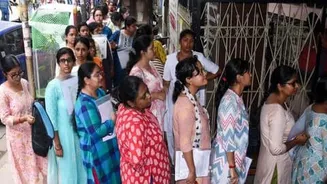
The details of the survey reveal concerning trends for specific demographics. The unemployment rate among women rose to 5.7%, up from 5.3% in the prior quarter. The situation is particularly stark for young people. Youth unemployment, for those aged 15 to 29, jumped to 15.9%, the highest in the current PLFS series. The most affected group appears to be young women, whose unemployment rate hit a series high of 19.6%. In cities, the unemployment rate for females was 8.7%, significantly higher than the 6.1% for urban males, highlighting persistent gender disparities in the workforce.
The Other Side of the Coin: Participation Rate
The unemployment rate can be misleading if viewed in isolation. Another critical metric is the Labour Force Participation Rate (LFPR), which is the percentage of the population that is either employed or actively looking for work. Worryingly, the overall LFPR declined from 55.5% to 54.6% during the quarter, a five-quarter low. This was driven mainly by a drop in rural areas. A falling LFPR suggests that a portion of the population has stopped looking for jobs altogether, and therefore are no longer counted as 'unemployed'. This can artificially keep the unemployment rate from rising even higher, masking deeper issues in the job market.
Shifts in the Employment Landscape
It’s not all bad news. The survey also pointed to some positive structural shifts. The share of regular wage and salaried employees increased in both rural and urban areas. In rural India, it rose from 15.5% to 16.1%, and in urban centres, it grew from 48.9% to 49.3%. This indicates a slow but steady move towards more formal and stable employment. Furthermore, rural employment showed a shift away from agriculture, whose share in jobs declined. Concurrently, the secondary sector (including manufacturing and mining) and the tertiary (services) sector saw their share of rural employment increase, suggesting a diversification of the rural economy.