






The Ghost in the Machine
Artificial intelligence is no longer a far-off concept; it’s embedded directly into the tools millions use daily, like Microsoft 365 and Google Workspace. With a simple prompt, these AI assistants, or 'copilots', can generate a complete draft of a business
proposal, a summary of a lengthy report, or a polished client email. The problem is that these tools don't 'know' things in the human sense. They are sophisticated pattern-predictors. This can lead to a phenomenon known as 'hallucination,' where the AI generates plausible-sounding but entirely fabricated information. It might invent statistics, cite non-existent legal cases, or misrepresent financial data with the same authority as it states verified facts. This isn't a rare bug; it's a fundamental challenge of current generative AI technology. The AI doesn't know it's lying; it's simply filling a gap with its best, most statistically likely guess.
When Believable Fictions Cause Real Problems
The risks of these convincing fabrications slipping into official documents are enormous. An AI-generated sales report might contain a miscalculated total that leads to a poor business decision. A draft of a legal contract could include an outdated clause or omit crucial protections, creating significant liabilities. In one real-world instance, lawyers were sanctioned by a court for submitting a legal brief that cited multiple, entirely fake, AI-generated cases. These errors are not always obvious. They are often subtle and woven into otherwise accurate text, making them difficult for a busy professional to spot during a quick review. This creates a false sense of security; the document looks professional and sounds authoritative, but it could be a legal or reputational landmine. The ultimate accountability doesn't lie with the AI but with the person who signs off on the document.
The New Accountability: Show Your Work
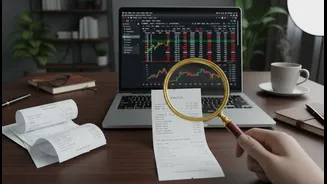
In the pre-AI world, the presence of a fact in a final document was usually enough. Now, the unwritten rule is shifting. Professionals must be prepared to provide 'receipts'—the proof and sources behind the claims in their documents, especially when AI is involved. This isn't about distrusting technology; it's about establishing a new layer of professional rigor. The responsibility is to treat AI-generated text as a first draft that requires mandatory human oversight and verification, not a finished product. This means adopting a 'trust, but verify' mindset on an entirely new level. Every critical fact, number, and claim produced by an AI must be cross-referenced with reputable sources. This practice of documenting substantiation is becoming a crucial skill for the modern workplace.
Practical Steps for a New Reality
Adapting to this new environment doesn't mean abandoning AI's powerful capabilities. It means using it smarter. First, get better at prompting. Instead of just asking for a summary, ask the AI to include its sources. Second, establish a clear verification process for your team. This could involve creating a simple checklist for high-risk documents that touches on correctness, compliance, and safety. Third, always have a human expert perform a final review, especially for documents with legal, financial, or reputational stakes. The employee is ultimately responsible for the accuracy of AI outputs. Finally, organizations should create clear policies on which AI tools are approved and what kinds of sensitive or confidential information should never be entered into public AI platforms to avoid data leaks.
Is a Tech Solution Coming?
The tech industry is aware of this trust deficit. Companies are actively developing solutions like AI watermarking, which embeds an invisible signal into AI-generated content to identify it as such. This can help establish a piece of content's origin, or provenance, which is a key step toward accountability. Some tools are also being designed to provide citations for the information they generate. However, these solutions are not foolproof, and a motivated person can often degrade or remove watermarks. For the foreseeable future, no technology can replace the critical thinking and ethical judgment of a human professional. The most important 'receipt' will always be your own diligence.