




As the lamps are lit and fireworks grace the sky this Diwali, another annual event looms: the morning-after smog. But the thickness of that grey blanket isn't just about the number of crackers burst. It's about the weather, and one factor rules them all:
wind.
The Anatomy of Diwali Smog
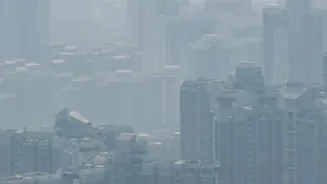
First, let's be clear about what we're up against. The smog that settles over many Indian cities after Diwali is a toxic cocktail. The primary culprits are fine particulate matter, specifically PM2.5. These are microscopic particles, smaller than 2.5 micrometres, released from the combustion of firecrackers. This smoke is a complex mixture of sulphur, charcoal, potassium nitrate, and heavy metals like barium and aluminum, which are used to create colours and effects. These tiny particles are dangerous because they are small enough to bypass the body's natural defences, penetrating deep into the lungs and even entering the bloodstream, posing significant health risks, especially to children and the elderly.
Wind as the Atmosphere's Fan
Think of the atmosphere as a room and pollution as smoke filling that room. Wind acts like a giant, natural fan. Its role is simple: to move air around. This process, called dispersion, is crucial for air quality. When wind speeds are high, the polluted air is quickly scattered and diluted, spreading it over a larger area and reducing its concentration in any single location. A brisk wind can sweep through a city, clearing out the smog from Diwali night and leading to a relatively clear next day. It doesn't eliminate the pollution, but it prevents the dangerously high concentrations that lead to 'Severe' AQI readings.
It's Not Just Speed, It's Direction
While wind speed determines how fast pollutants clear out, wind direction determines where they go. If you live in a city and the wind is blowing from a clean, open area like the sea or countryside, it will bring in fresh air to replace the polluted air. However, if the wind is blowing from a neighbouring industrial zone or another polluted urban area, it can actually make the air quality worse by transporting another region's pollution into yours. This is why air quality forecasting agencies like SAFAR (System of Air Quality and Weather Forecasting And Research) incorporate complex wind pattern models to predict how pollution will travel across a region, not just within a single city.
The Real Danger: When the Air Stands Still
The worst case scenario for post Diwali air quality is a combination of heavy pollution and calm windless conditions. This is often accompanied by a phenomenon called a temperature inversion which is common during late autumn and winter in northern India. Normally the air is warmest near the ground and gets cooler with altitude. An inversion flips this a layer of warm air settles on top of a layer of cooler air near the surface. This warm layer acts like a lid trapping the cold dense air—and all the firecracker smoke within it—close to the ground. With no wind to blow it away and no vertical air movement to lift it the smog becomes stagnant and highly concentrated leading to multi day pollution episodes.
How to Be Your Own Forecaster
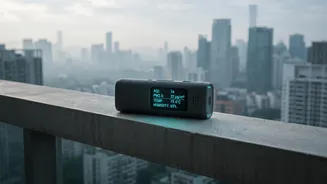
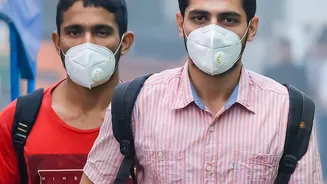
You don't need to be a meteorologist to use this knowledge. On Diwali day, and the day after, pay attention to the local weather forecast. Look for two key things: wind speed and wind direction. Most weather apps and websites from the India Meteorological Department (IMD) provide this information. If you see forecasts for calm or very light winds (generally under 8–10 km/h), it's a strong indicator that pollutants will accumulate. This is your signal to take extra precautions: limit time outdoors, use an air purifier if you have one, and wear an N95 mask if you must go out. Understanding the wind gives you the power to anticipate a bad air day and protect your family's health.