


A Planet Under Watchful Eyes
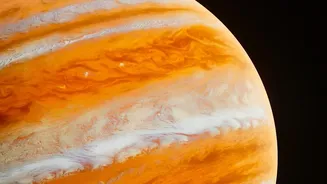
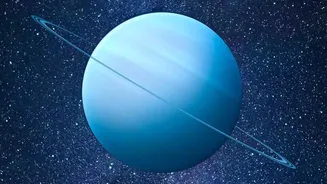
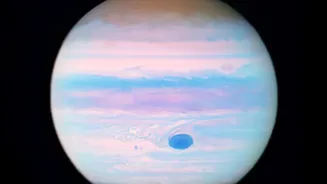
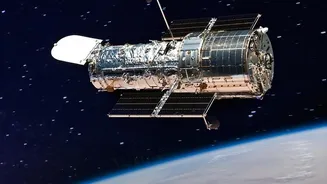
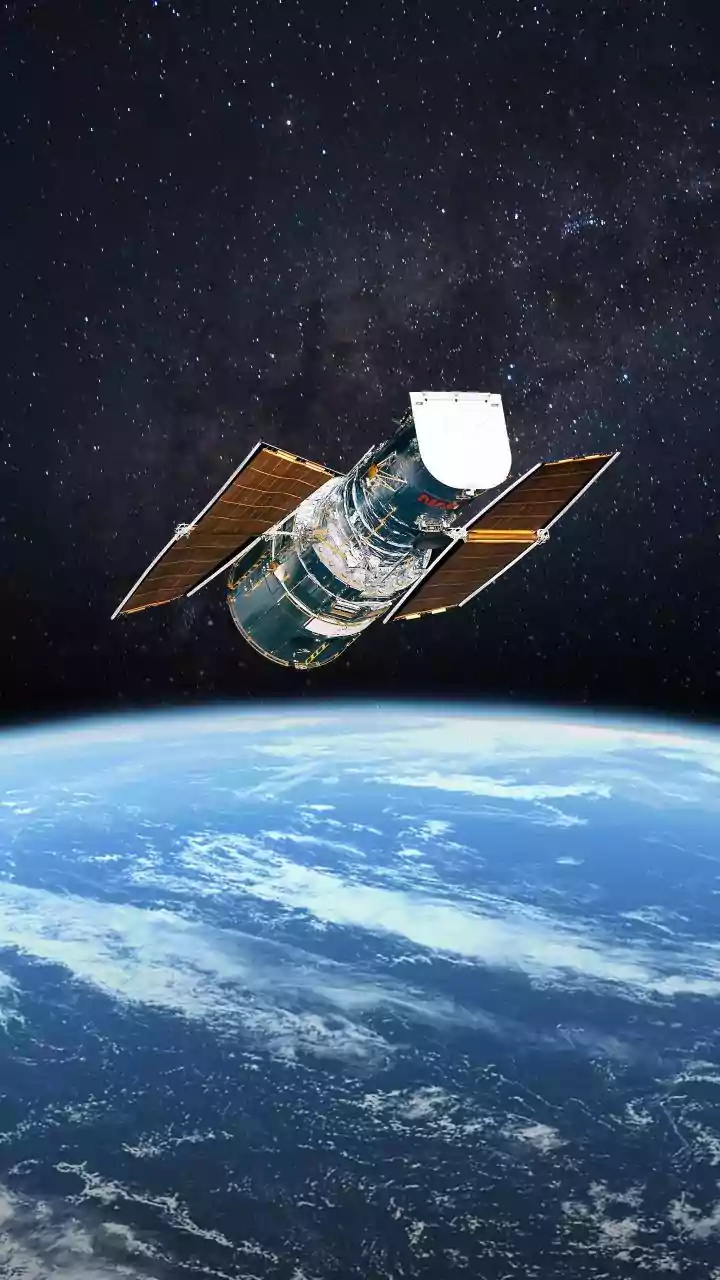
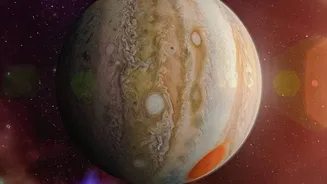
For years, scientists have been patiently monitoring the giant planets of our outer solar system through a dedicated program called the Outer Planet Atmospheres Legacy, or OPAL. The Hubble Space Telescope, a key part of this project, conducts annual check-ups
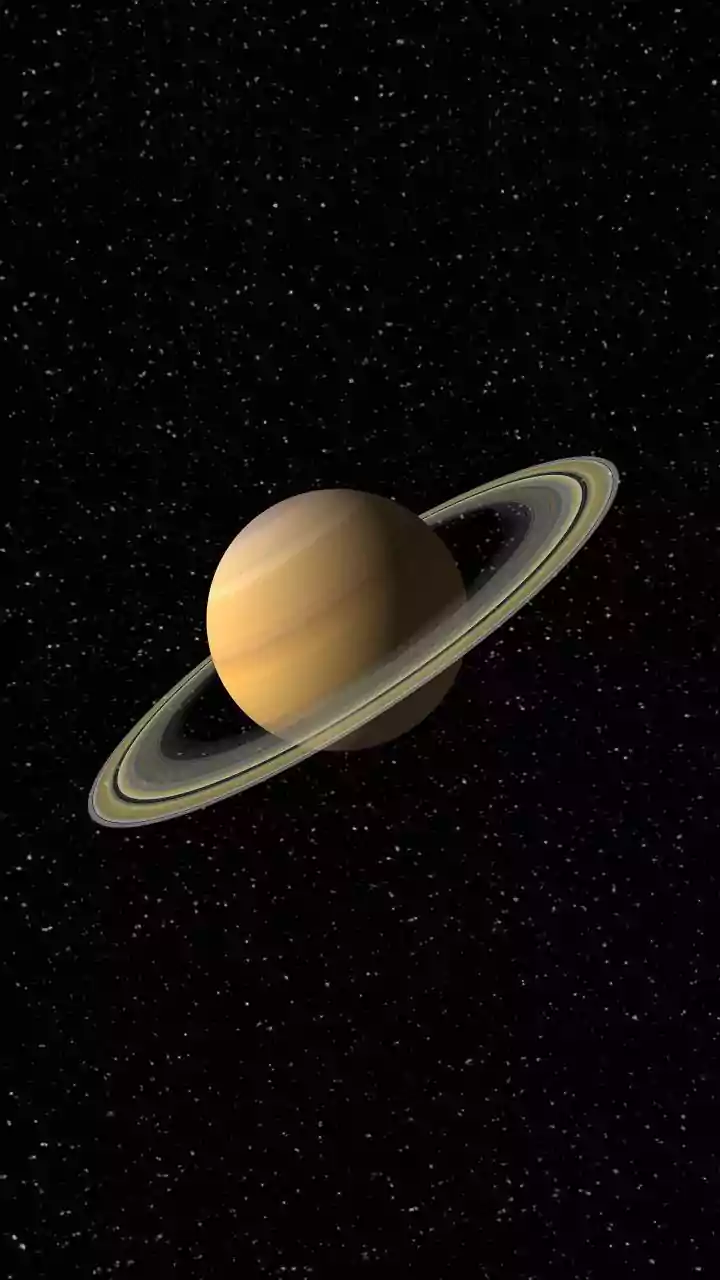
on Jupiter, Uranus, Neptune, and Saturn, building an invaluable long-term record of their atmospheric behaviour. This isn't just about taking pretty pictures; it's about understanding the complex physics of worlds with seasons that last for years. A year on Saturn, for instance, is more than 29 Earth years long, meaning each season stretches for over seven years. By observing the planet consistently, scientists can track how these immense seasonal shifts influence its weather, a process that would be impossible to see in a single snapshot.
Seeing Warmth with Infrared
While Hubble captures stunning images in visible light, its ability to observe in near-infrared is crucial for understanding a planet's climate. Infrared light is essentially heat radiation. By analysing it, astronomers can create temperature maps of a planet’s atmosphere, peering through the hazy upper layers to see the dynamics below. This capability allows them to track how different regions of Saturn's atmosphere heat up and cool down as it moves through its long orbit around the Sun. The latest findings from the OPAL program have focused on the period just after Saturn's northern hemisphere experienced its summer solstice, a time when scientists expected to see predictable patterns of cooling as autumn approached.
Surprising Temperature Swings
The long-term monitoring has revealed some truly unexpected atmospheric shifts. As the northern hemisphere moved out of its summer, its polar regions began to cool, as expected. However, the data also showed an unforeseen warming trend in the mid-latitudes of the southern hemisphere, which was supposed to be well into its winter cooling period. This mysterious warming suggests that our understanding of how heat is distributed across the gas giant is incomplete. The planet, it seems, isn't following the simple seasonal script scientists had written for it. These observations, combined with data from the James Webb Space Telescope, allow scientists to effectively 'slice' through Saturn's atmosphere at multiple altitudes, revealing a complex, three-dimensional system.
A Tale Told by Storms and Hazes
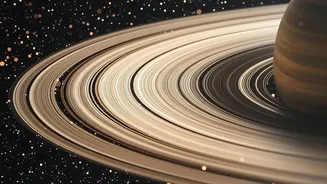
Beyond just temperature, the Hubble data shows changes in Saturn's iconic bands and storm activity. The brightness of the equatorial zone has increased, possibly due to a thickening of atmospheric haze. At the same time, the famous hexagonal jet stream at the north pole—a weather feature wider than Earth—has shown subtle changes, with some features at its edge disappearing over a single year. Even the remnants of a colossal storm, known as the 'Great Springtime Storm' from over a decade ago, can still be faintly detected, a testament to the sheer scale and energy of Saturn's weather. These observations help scientists understand how energy flows through the massive atmosphere and how such giant weather systems persist for so long.
Why the Long Gaze Matters
These discoveries highlight the irreplaceable value of long-term observation. Missions like Cassini provided an incredibly detailed, close-up view of Saturn for 13 years, but its mission ended in 2017. Projects like OPAL provide the crucial follow-up, giving us the context to understand planetary evolution over decades. The surprising data from Hubble doesn't just rewrite our models of Saturn; it provides a natural laboratory for studying fluid dynamics and atmospheric physics under conditions impossible to replicate on Earth. By untangling the mysteries of Saturn's seasonal shifts, we gain a deeper understanding of all giant planets, including those being discovered far beyond our own solar system.