

A Window to the Universe's Infancy
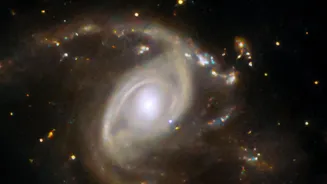
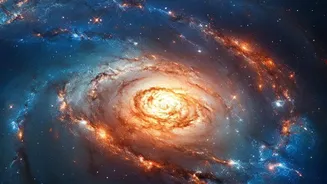
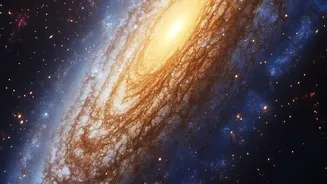
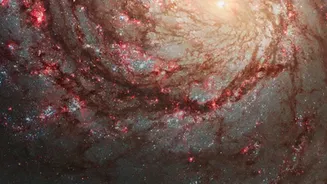
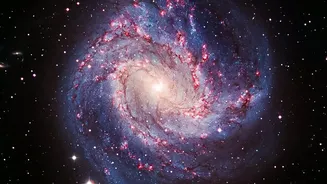
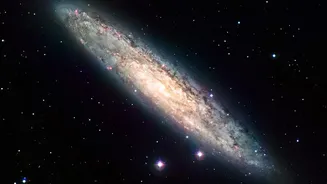
The latest dispatches from the cosmos are nothing short of revolutionary. Using the James Webb Space Telescope (JWST), an international collaboration of astronomers is capturing light that has traveled for over 13 billion years to reach us. These images
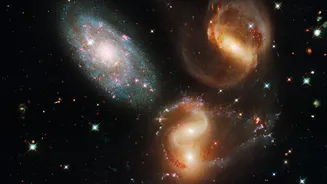
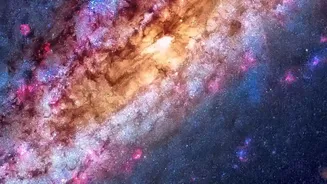
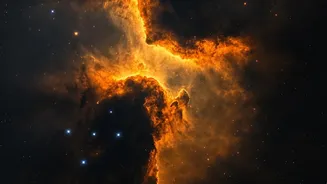
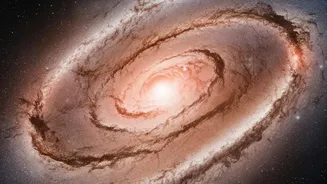
are effectively snapshots of the universe as it was in its infancy, just a few hundred million years after the Big Bang. Instead of the chaotic, small, and disorganized galaxies scientists expected, these images show systems that are surprisingly mature and structured. This has ignited intense discussion and excitement in the scientific community, suggesting that the first chapters of the universe's story may need a significant rewrite. These are not just pretty pictures; they are data-rich portraits that challenge the very foundations of cosmological models.
The Technological Marvel Behind the View
Seeing this far back in time is one of the greatest technological achievements in human history. The James Webb Space Telescope, a joint venture between NASA, the European Space Agency, and the Canadian Space Agency, is a multi-billion dollar engineering marvel. Its massive 6.5-meter primary mirror and advanced infrared instruments allow it to detect the faint, stretched-out light from the most distant objects in the universe. Light from these early galaxies has been traveling for so long that the expansion of the universe has shifted it into the infrared part of the spectrum, making it invisible to telescopes that primarily see visible light, like Hubble. The JWST was specifically designed to capture this elusive ancient light, cutting through cosmic dust to reveal what was previously hidden. This technological leap represents a massive investment, not just in terms of money, but in decades of human ingenuity.
Rewriting Cosmic Textbooks
The discoveries are forcing a major rethink of how galaxies form and evolve. Current theories predicted that the first galaxies would be small and irregular, gradually merging and growing over billions of years. However, the JWST is finding massive, well-developed galaxies that appear to have been forming stars for a considerable time, even when the universe was less than a billion years old. Some observations have revealed giant galaxies that show no signs of rotation, a feature previously thought to only occur in much older, more evolved galaxies. Others have uncovered complex collisions of multiple galaxies happening far earlier than anticipated. This suggests that the processes of galaxy formation and the distribution of heavy elements were already well underway much sooner than our models had predicted, meaning the cosmic dark ages may have ended more quickly and dynamically than previously imagined.
Why Our Cosmic Past Matters
While these galaxies are unimaginably far away, understanding them is fundamental to understanding ourselves. The story of the universe is our own origin story. The elements forged in the first stars and distributed by early galaxies, like the 'metals' astronomers refer to, are the very same elements that make up our planet, our bodies, and everything around us. By studying these ancient cosmic factories, we learn how the building blocks of life came to be. It helps answer some of the most profound questions we can ask: Where did everything come from? How did we get here? Each new image and discovery from telescopes like the JWST and the newly operational Vera C. Rubin Observatory brings us a step closer to a complete picture of our place in the cosmos. These powerful new eyes on the universe are not just decoding ancient history; they are revealing the earliest chapters of our own story.