

What Exactly Is Friselle?
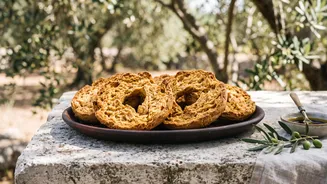
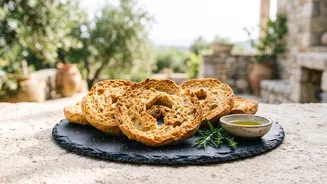
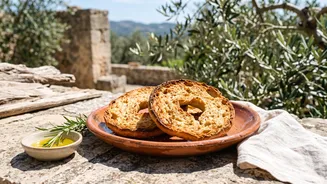
At first glance, friselle (pronounced free-zeh-leh) might look like a stale, bagel-shaped cracker. And if you try to bite into one dry, you might risk a tooth. This unique bread, most associated with the Puglia region in Italy's 'heel', is intentionally
baked twice to remove nearly all moisture, resulting in a jaw-breakingly hard texture. Made from simple ingredients like durum wheat or barley flour, water, yeast, and salt, the dough is first shaped into rings, baked, and then sliced horizontally. These halves are baked a second time at a low temperature until they are completely dry and crisp. This process, known as 'biscottato' (twice-cooked), gives friselle an incredibly long shelf life, making them a pantry staple that can last for months.
A History Baked in Necessity
The origins of friselle are not culinary artistry but pure practicality. Dating back centuries, this durable bread was the perfect sustenance for those who traveled for long periods. It was known as the 'bread of the Crusaders' and was a staple for fishermen and sailors who needed food that wouldn't spoil during weeks or months at sea. The hole in the centre even had a purpose: it allowed the rings to be strung together on a rope for easy transport and storage. In rural communities, friselle were a symbol of resourcefulness, providing a reliable food source through lean times. Historically, barley friselle were considered the food of the poor, while those made from durum wheat were a luxury. Today, both are enjoyed, with the rustic, nutty flavour of barley friselle often being highly prized.
The Ritual of 'Sponzatura'
The key to enjoying friselle lies in a process called 'sponzatura', which simply means soaking or moistening. Before eating, the hard bread must be rehydrated. The traditional method involves a quick dip in a bowl of cold water for just a few seconds. The goal is to soften the porous interior while leaving the outer edges with a bit of crunch—you want it pliable, not soggy. In ancient times, sailors would simply dip their friselle in clean seawater. Today, home cooks use tap water, and some even have a special ceramic bowl called a 'sponza frise' designed for the task. The brief soaking transforms the texture, making it ready to absorb the delicious toppings that follow.
Classic Toppings and Modern Twists
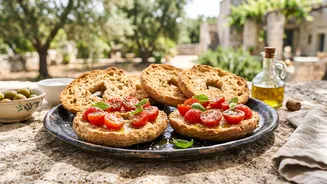
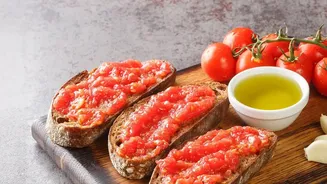
Once softened, the rough, porous surface of the frisella becomes the perfect canvas for flavour. The most classic and beloved topping is 'alla Pugliese': a simple pile of freshly chopped ripe tomatoes, a generous drizzle of high-quality extra virgin olive oil, a pinch of salt, and a sprinkle of dried oregano. The juices from the tomato soak further into the bread, creating an irresistible combination of textures and tastes. Some people like to first rub a clove of garlic on the bread's surface for an extra layer of flavour. But the variations are endless. Other popular toppings include drained tuna, capers, fresh basil, creamy burrata, or grilled vegetables. In Calabria, they might add spicy 'nduja sausage or sweet Tropea onions. It's a versatile dish that can be a light snack (or 'merenda') or a satisfying, simple meal, especially on a hot summer day.