



What Are These New Rules?
On November 16, 2026, the U.S. Commerce Department's Bureau of Industry and Security (BIS) unveiled an interim final rule that significantly expands its control over advanced Artificial Intelligence (AI) technology. The regulations have two main components.
The first is an update to existing export controls, which restricts the physical shipment of high-performance AI chips. The second, and more groundbreaking, element is a 'remote access' rule. This new provision aims to stop companies in restricted nations from simply renting computing power from data centers in other countries to train their AI models, a method that previously circumvented physical export bans. The rules also add new license requirements for chip exports to five specific countries seen as potential diversion risks: Indonesia, Malaysia, Singapore, Thailand, and Brazil.
The Goal: Slowing a Tech Rival
The primary objective of these regulations is to slow down China's development of advanced AI for military and intelligence purposes. U.S. officials are concerned that American-designed 'Super Intelligence' (SI) technology, as the government now calls it, could be used to support activities that threaten U.S. national security. By controlling access to the specialized chips that are essential for training large-scale AI models, Washington hopes to maintain its technological lead. The rules explicitly target companies headquartered in or with ultimate parent companies in China and other nations under U.S. arms embargoes, a list known as Country Group D:5. The policy essentially treats access to computing power as a controlled commodity, just like the physical hardware itself.
Closing the Cloud Loophole
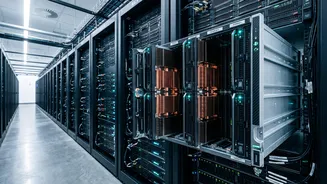
The remote access rule is the most significant evolution in this policy. Previously, a Chinese company could legally rent time on a server packed with top-tier U.S. AI chips as long as that server was located in a third country, like Singapore or Malaysia. The chips themselves never crossed a restricted border, but the computing power did, digitally. The new rule closes this gap by requiring a license for any data center, located anywhere in the world, that provides significant computing power to companies from restricted nations. Specifically, data centers that provide more than 12 million aggregate TPP (a measure of processing performance) to Chinese-headquartered firms will now need U.S. government approval for the chips they use. This puts the onus on data center operators and cloud providers globally to conduct due diligence on their customers.
Who Is Affected?
The impact of these rules is widespread. U.S. chip designers like Nvidia and AMD, which create the high-performance chips, are directly affected as their potential market is further constrained. Major cloud providers such as Amazon Web Services, Microsoft Azure, and Google Cloud, which operate vast global data centers, must now implement robust compliance systems to track who is using their services and for what purpose. For Chinese tech companies, the rules present a formidable obstacle, limiting their access to the world's most powerful AI hardware and potentially slowing their innovation. Meanwhile, countries like Singapore and Malaysia, now facing new licensing requirements, find themselves in a delicate position, balancing their roles as global tech hubs with the new U.S. regulations.
What Comes Next?
The long-term effectiveness of these regulations remains to be seen. Industry players have a 90-day grace period to secure licenses for existing operations affected by the new rules. One major question is whether China can accelerate its own domestic chip industry to overcome these restrictions, a goal it has been pursuing vigorously. Some analysts argue that cutting off Chinese firms from U.S. technology might speed up their path to self-sufficiency. For U.S. companies, the loss of revenue from the Chinese market is a significant concern. The world will be watching to see how this new chapter in the U.S.-China tech rivalry unfolds, shaping the global landscape of AI development, international trade, and national security for years to come.