


Spending hours at a desk leads to stiff joints and tight muscles. This sedentary routine can decrease your muscle elasticity, making you feel achy and restricted. Fortunately, incorporating a few simple movements can make a world of difference.
The Problem with Prolonged Sitting
The modern
corporate workday often involves sitting for eight or more hours, a routine that takes a significant toll on the body. When you remain in a static position, certain muscles, like your hip flexors and hamstrings, become shortened and tight, while others, like your glutes, can weaken. This imbalance contributes to poor posture, lower back pain, and a noticeable decrease in muscle elasticity. Muscle elasticity refers to the ability of your muscles to stretch and return to their normal length. Good elasticity allows for a full range of motion and efficient movement. However, a sedentary lifestyle reduces blood flow and causes muscles to lose their pliability, making them feel stiff and more prone to injury. Breaking up long periods of sitting with simple, targeted stretches is one of the most effective ways to counteract these negative effects. Regular stretching boosts circulation, delivers vital oxygen and nutrients to your muscles, and helps maintain the flexibility needed for a healthy, pain-free body.
1. Seated Hamstring Stretch
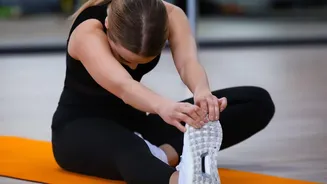
Your hamstrings are one of the primary muscle groups that suffer from prolonged sitting. Tight hamstrings can pull on the pelvis, contributing to lower back pain and poor posture. This simple seated stretch helps to lengthen these crucial muscles. To perform it, sit on the edge of your chair with one leg extended straight out in front of you, heel on the floor and toes pointing towards the ceiling. Place your other foot flat on the floor. Keeping your back straight, slowly hinge forward at your hips until you feel a gentle stretch along the back of your extended leg. Avoid rounding your back; the movement should come from your hips. Hold this position for 20 to 30 seconds, breathing deeply. Release and switch to the other leg. Repeat this two to three times on each side. Doing this stretch periodically throughout the day can prevent the hamstrings from becoming chronically shortened.
2. Upper Back and Shoulder 'Executive' Stretch
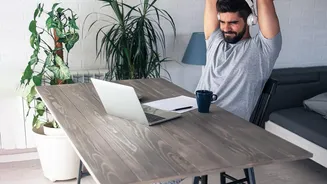
Hunching over a keyboard is a common posture that leads to rounded shoulders and a stiff upper back. The 'Executive Stretch' is perfect for opening up the chest and counteracting this forward slump. While seated, interlace your fingers and place your hands behind your head. Gently squeeze your shoulder blades together and pull your elbows back as far as you can, feeling a stretch across your chest and shoulders. Inhale deeply as you open up, hold for 15 to 20 seconds, and then exhale as you relax. This movement not only relieves tension in the upper back and neck but also encourages better posture by strengthening the muscles that help you sit upright. It's a discreet yet powerful way to reset your posture without leaving your desk.
3. Seated Spinal Twist
A rigid spine is a common consequence of staying in one position for too long. A seated spinal twist helps to gently increase mobility in your vertebrae and stretch the muscles of your lower back and obliques. Sit tall in your chair with both feet flat on the floor. Gently twist your torso to the right, using your hands to grip the armrest or the side of the chair for a deeper stretch. Only twist as far as is comfortable, keeping your hips facing forward. Hold the stretch for 15 to 30 seconds while breathing normally, feeling the release along the side of your torso and lower back. Slowly return to the centre and repeat on the left side. This rotational movement lubricates the spinal joints and can provide immediate relief from the stiffness that builds up during the day.
4. Neck and Shoulder Release
Staring at a screen often causes us to hold tension in our neck and shoulders, leading to persistent aches and even headaches. This simple two-part stretch can release that tension. First, perform a gentle neck tilt. Sit up straight and slowly lower your right ear toward your right shoulder, holding for 15 seconds. You should feel a stretch along the left side of your neck. Repeat on the other side. Next, address the shoulders by shrugging them up towards your ears, holding for three to five seconds to embrace the tension, and then releasing them completely, letting them drop. Roll them backwards and down a few times. This combination helps to release tight trapezius muscles and improve blood flow, reducing strain and preventing pain from setting in.
5. Hip Flexor and Quad Stretch
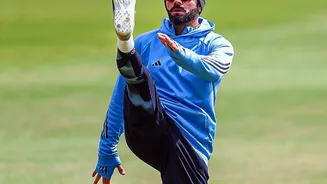
The muscles at the front of your hips, known as the hip flexors, become extremely tight from prolonged sitting, which can tilt your pelvis and lead to lower back pain. To stretch them, stand up and hold onto your desk for balance. Bend your right knee and grab your right ankle or foot with your right hand, gently pulling your heel toward your glute. Keep your knees aligned and stand up straight, avoiding arching your back. You should feel a stretch in the front of your thigh and hip. Hold for 20 to 30 seconds before switching to the other leg. If you can’t reach your foot, you can perform a modified version by placing your foot on your chair behind you. This stretch is vital for reopening the hips and maintaining balance in your pelvic alignment.