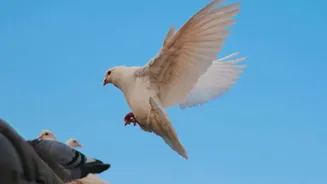








As a chill enters the air, you might notice a common urban sight: birds gathering on sun-drenched rooftops. It's more than just a random meeting; it’s a clever and crucial survival strategy driven by the fundamental need for warmth and energy.
The Science of Staying Warm
Like us,
birds are warm-blooded, but their small size means they lose body heat much faster, especially when temperatures drop. To survive, they must constantly work to maintain their core body temperature, a process called thermoregulation. This is a high-energy job. Every degree of warmth they can absorb from their environment is a calorie saved. Birds have several adaptations for this, including fluffing up their feathers to trap insulating pockets of air and shivering to generate heat. But one of the most effective, low-effort strategies is simply finding a warm spot to soak up the sun.
Harnessing the Sun's Power
Sunbathing, or 'sunning', is a common behaviour across more than 50 families of birds. By positioning themselves in direct sunlight, they absorb solar radiation, warming their bodies without burning precious energy reserves needed for finding food. This passive heating is vital on a cold day. Materials commonly used for city roofs—like tar, concrete, and dark metal—are excellent at absorbing and radiating the sun's heat. This makes a sunny rooftop significantly warmer than a shady tree branch, turning it into a perfect, natural heating pad for any bird looking to conserve energy.
Why Rooftops Are Prime Real Estate
Beyond just warmth, rooftops offer several key advantages that make them attractive gathering spots. Their elevated position provides an excellent vantage point, offering a wide, clear view to watch for ground-based predators like cats or dogs. This height gives birds a sense of security, allowing them to rest more peacefully. Furthermore, many urban rooftops are close to convenient food sources, such as overflowing bins or gardens, allowing birds to shuttle between feeding and resting with minimal effort. For social species like pigeons and mynas, rooftops also serve as communal spaces to flock together, which itself is another way to share body heat and enhance safety in numbers.
More Than Just a Tan
The benefits of sunning go beyond simple warmth. The sun's ultraviolet (UV) rays play a direct role in feather maintenance. The heat helps spread preening oils, which waterproof and insulate feathers. More importantly, UV radiation can help control ectoparasites like lice and mites that hide deep within a bird's plumage. The heat can either kill these pests directly or force them to move, making them easier for the bird to pick off. Finally, exposure to sunlight is necessary for the production of Vitamin D, which is essential for calcium absorption and overall bone health, just as it is for humans.
In Indian cities, you’re likely to see a familiar cast of characters taking advantage of sunny roofs. Feral pigeons, the descendants of rock doves, are experts at using urban structures for roosting and sunning. You'll also spot adaptable species like the Common Myna and the everpresent House Crow, both of which thrive in close proximity to humans. Even raptors like the Black Kite can be seen perching on high ledges, using the vantage point for hunting and the sun's warmth for energy conservation. Some migratory birds passing through might also use rooftops as temporary rest stops, though many prefer wetlands and parks.