



An AI Co-Pilot in the Sky
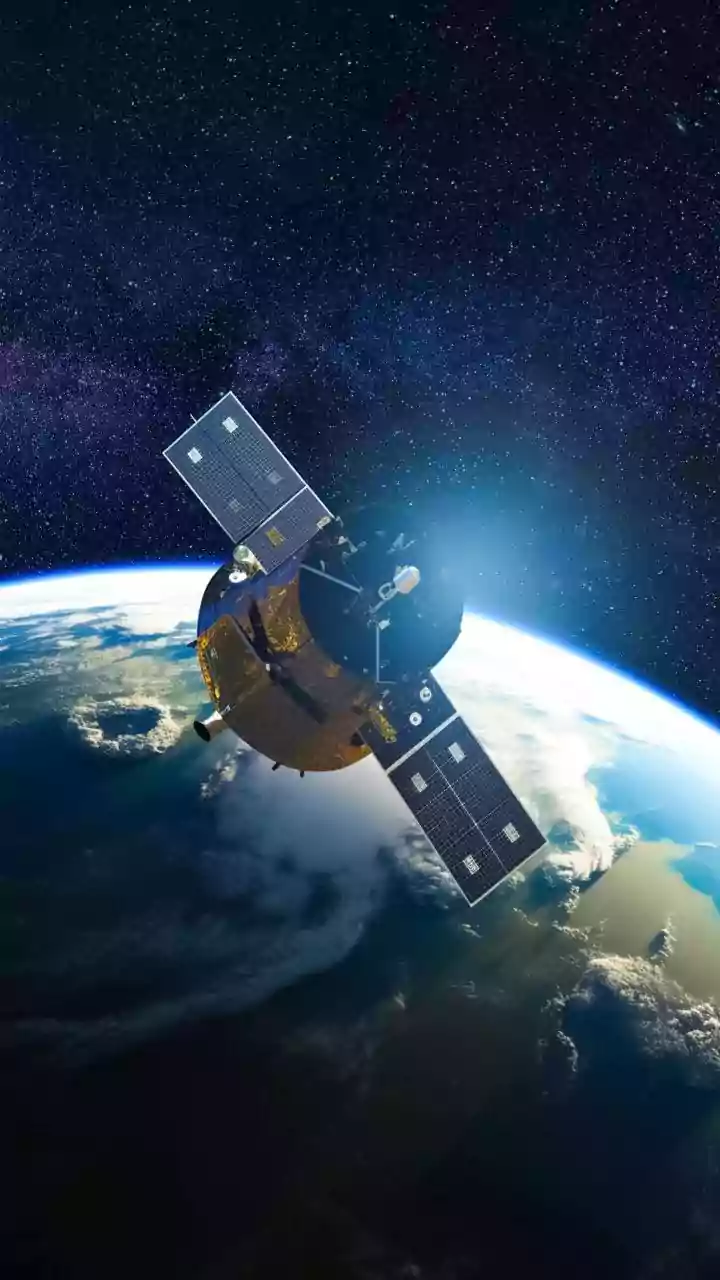
Imagine a satellite that doesn't just blindly follow orders from the ground but thinks for itself. That's the promise of integrating Artificial Intelligence (AI) and Machine Learning (ML) into space systems. Instead of beaming massive amounts of raw data
back to Earth for analysis, future Indian satellites could process this information right in orbit. This capability, known as on-board processing or edge computing, would allow satellites to identify and transmit only the most crucial data, such as clear images without cloud cover or specific changes in a landscape. This makes data transmission far more efficient and enables much faster decision-making. For a country like India, this could revolutionise disaster management by providing real-time information during floods or cyclones, and bolster national security with intelligent, autonomous surveillance. ISRO Chairman S. Somanath has previously mentioned plans to launch dozens of satellites for geo-intelligence gathering, which will harness onboard AI to process images and identify potential threats autonomously.
Quantum Leaps in Secure Communication
One of the biggest vulnerabilities in the digital age is data security. As computing power grows, conventional encryption methods could become easier to break. This is where quantum technology comes in, offering a new paradigm for secure communication. The core technology is Quantum Key Distribution (QKD), which uses the principles of quantum physics to create theoretically un-hackable encryption keys. Any attempt to intercept a quantum communication disturbs its state, immediately alerting the sender and receiver. ISRO has already made significant strides in this area, successfully demonstrating free-space QKD over a distance of 300 metres. The long-term goal is to establish Satellite-Based Quantum Communication (SBQC), creating a secure network between satellites and ground stations. This would be a game-changer for protecting sensitive military communications, financial transactions, and other critical national data. Experts believe these quantum networks will be essential for future-proofing our communication infrastructure against emerging cyber threats.
India's Strategic Push
This focus on AI and quantum is not just a theoretical exercise for India. According to experts at the recent National Space Technology Conclave 2026, these technologies are set to play a transformative role in the country's upcoming satellite systems. ISRO is actively developing the foundational hardware and algorithms needed, from photonic qubits to quantum communication protocols designed for space. The Defence Space Agency (DSA), formed in 2019, is also expected to be a key player, with roadmaps that include deploying over 100 military satellites in the coming years, many of which will likely leverage these advanced capabilities. Furthermore, India's burgeoning private space sector is also jumping in. Startups like Pixxel and Sarvam AI have announced plans for 'Pathfinder', India's first AI-powered orbital data centre satellite, scheduled for a potential launch by late 2026. This mission aims to run AI models directly in space, a major step towards sovereign AI capabilities independent of ground infrastructure.
The Dawn of a New Space Era
The benefits of integrating AI and quantum tech are immense. For AI, it means smarter, more responsive satellites that can autonomously manage not just their data collection but also their own flight functions, such as orientation and navigation. This leads to optimised resource management and more effective missions, whether for scientific research, Earth observation, or defence. For quantum technology, the primary advantage is unparalleled security. However, the challenges are also significant. These technologies are complex and expensive to develop. Building systems that are robust enough to operate in the harsh environment of space, including shielding them from radiation, requires intense rigour and innovation. Moreover, India is not alone in this pursuit; the US, Europe, and China are all racing to develop and deploy their own space-based quantum and AI systems, turning low-Earth orbit into a new arena for strategic competition.