







The Hidden Saboteur in Your Fitness Plan
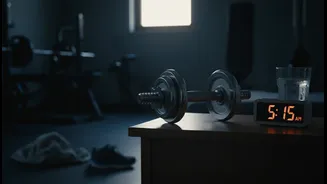
You drag yourself to the gym after a long workday, powered by sheer willpower. You complete your workout, but it feels like you're moving through mud. This isn't just a feeling; it's a physiological reality. Chronic work-week sleep loss, even just an
hour or two a night, directly undermines your fitness efforts. Studies show that sustained sleep restriction makes workouts feel significantly harder. It can lead to a measurable drop in performance, particularly in the quality and speed of your movements, with one study noting a 15% slower execution in lower-body exercises. While a single bad night's sleep might not derail your strength, consistent deprivation means you're operating at a constant deficit, making it harder to push for personal bests and see the progress you're working for.
The Domino Effect on Daily Decisions
The impact of sleep debt extends far beyond the gym floor. It infiltrates the thousands of small decisions you make every day. Sleep deprivation impairs activity in the brain's frontal lobe, the region responsible for decision-making, problem-solving, and impulse control. This means that after a few short nights of sleep, you are neurologically less equipped to make healthy choices. Suddenly, the allure of a sugary, high-calorie snack becomes much harder to resist, and the motivation to cook a healthy dinner vanishes. This isn't a failure of willpower; it's a biological response. Your sleep-deprived brain is primed to seek out immediate, energy-dense rewards, actively working against your long-term fitness goals.
The Hormonal Havoc
Sleep is when your body performs critical maintenance, especially when it comes to regulating hormones that govern fitness and fat loss. When you don't get enough rest, this system goes haywire. Levels of cortisol, the primary stress hormone, become elevated, which can slow recovery and encourage fat storage. Simultaneously, your body produces less human growth hormone, which is essential for repairing the microscopic tears in your muscles caused by exercise, thus hindering muscle growth and recovery. To make matters worse, sleep loss disrupts the hormones that control your appetite. Ghrelin, which signals hunger, increases, while leptin, which signals fullness, decreases. This creates a perfect storm where you feel hungrier, are less satisfied by what you eat, and your body is primed to store energy as fat.
Can You 'Catch Up' on Weekends?
The common strategy for many working adults is to burn the candle at both ends during the week and attempt to repay the 'sleep debt' over the weekend. While sleeping in on Saturday can help reduce short-term fatigue, research paints a more complex picture. Some studies suggest that weekend catch-up sleep may not fully reverse the negative metabolic effects, like reduced insulin sensitivity, accumulated during the week. A large shift between weekday and weekend sleep schedules can also create what scientists call "social jet lag," which disrupts your body's internal clock, or circadian rhythm. While some research indicates that weekend recovery sleep is better than none and may offer some benefits, it's not a perfect substitute for consistent, adequate sleep throughout the week. Prevention appears to be the best strategy.
Rethinking Fitness: A Three-Pillar Approach
This brings a crucial concept into focus: fitness isn't just about exercise. True, sustainable health is built on three interconnected pillars: exercise, nutrition, and sleep. Neglecting one pillar weakens the entire structure. Viewing sleep not as a luxury or a passive activity, but as an active and essential component of recovery and performance is the key. Just as you schedule your workouts, you must prioritize and protect your sleep. It's the foundation that allows your efforts in the gym and the kitchen to pay off. Without adequate sleep, you're building your fitness house on sand.