





The Twin Burdens of Water and Power
Maharashtra's agricultural landscape, particularly in arid regions like Marathwada and Vidarbha, is a story of dependence. Farmers have traditionally relied on seasonal rains for their crops, a gamble that climate change has made even riskier. To supplement
this, they turn to groundwater, but pumping it to the surface requires energy. For many, this means a reliance on an unstable grid with frequent power cuts or expensive and polluting diesel generators. This dual challenge has often limited farmers to a single cropping season and kept incomes suppressed, forcing many to migrate to cities for work after the monsoon harvest.
A Simple Solution With Profound Impact
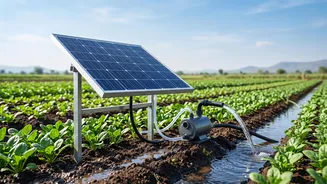
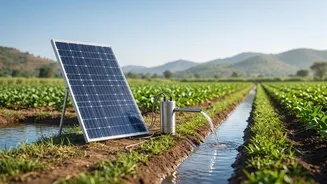
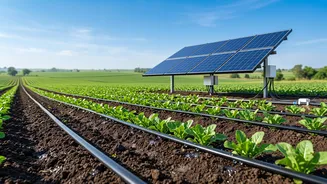
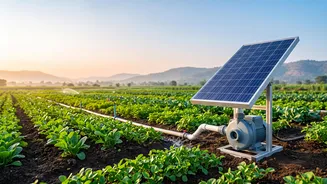
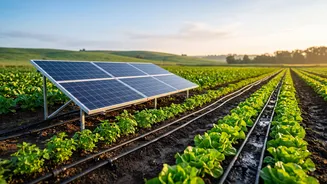
Solar-powered drip irrigation offers a direct answer to these problems. The system is elegantly simple: solar panels capture sunlight to power a pump, which draws water from a well or pond. Instead of flooding the field, this water is delivered directly to the roots of each plant through a network of pipes, a method known as drip irrigation. This approach is revolutionary for two reasons. First, it provides a free, reliable source of daytime energy, liberating farmers from electricity bills and diesel costs. Second, drip irrigation is incredibly efficient, significantly reducing water waste compared to traditional methods.
From Scarcity to Security and Surplus
The results are transformative. With a dependable water supply, farmers are no longer limited to a single rain-fed crop. They can cultivate a second, and sometimes even a third, crop during the dry rabi and summer seasons, dramatically increasing their annual output. This water security allows for diversification into high-value cash crops like vegetables and fruits, which command better market prices. Studies have shown that drip irrigation can increase crop yields by over 50% while reducing fertiliser and electricity use. For a brinjal farmer in western Maharashtra, for instance, this translated to a 72% increase in profits. In one Palghar village, cultivated land expanded from just five acres to over 95 after a shared solar irrigation project was installed.
An Engine for Social and Economic Change
The empowerment extends far beyond the fields. By eliminating fuel costs and boosting yields, household incomes rise, providing families with financial stability. This additional income can be invested in better nutrition, healthcare, and children's education. The technology also reduces the physical drudgery of farming, particularly for women who often bear the responsibility of managing irrigation. With automated systems, they regain valuable time for other economic activities or family care. Furthermore, the assurance of year-round farming work reduces distress migration, keeping families and communities intact.
Addressing the Barriers to Adoption
Despite the clear benefits, the high upfront cost of installing a solar pump and drip system remains the single biggest hurdle for small farmers. To address this, the government has stepped in with ambitious subsidy schemes. Under initiatives like the central PM-KUSUM and Maharashtra's 'Magel Tyala Saur Krushi Pump Yojana', farmers may only need to pay 5-10% of the total cost, with the rest covered by state and central subsidies. Maharashtra has emerged as a leader in this transition, having installed over 7.47 lakh solar pumps, the most in the country. However, challenges related to awareness, maintenance, and access to credit still need to be addressed to ensure the benefits reach every last farmer.