
What is the SHAPE Payload?
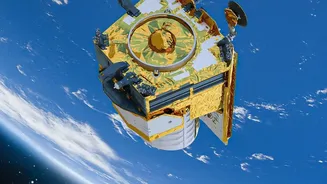
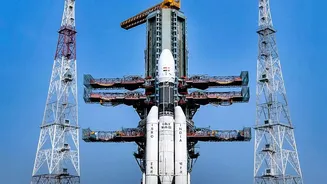
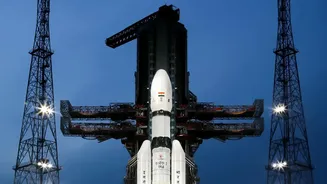
Aboard the Chandrayaan-3's propulsion module, which carried the lander and rover to lunar orbit, was a unique scientific instrument called SHAPE. The acronym stands for Spectro-polarimetry of HAbitable Planet Earth. Developed by the U. R. Rao Satellite
Centre (URSC), this payload was not designed to study the Moon, but to observe our own planet from the unique vantage point of lunar orbit. Unlike the other instruments that landed on the lunar surface, SHAPE’s mission was to stay in orbit and gather data on Earth's distinct characteristics. This made it the only scientific payload on the propulsion module, operating long after the Vikram lander had separated to begin its descent.
Earth as a Test Case for Alien Worlds
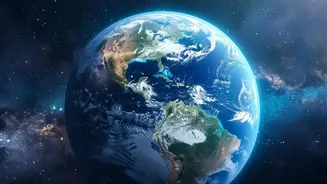
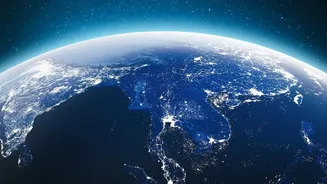
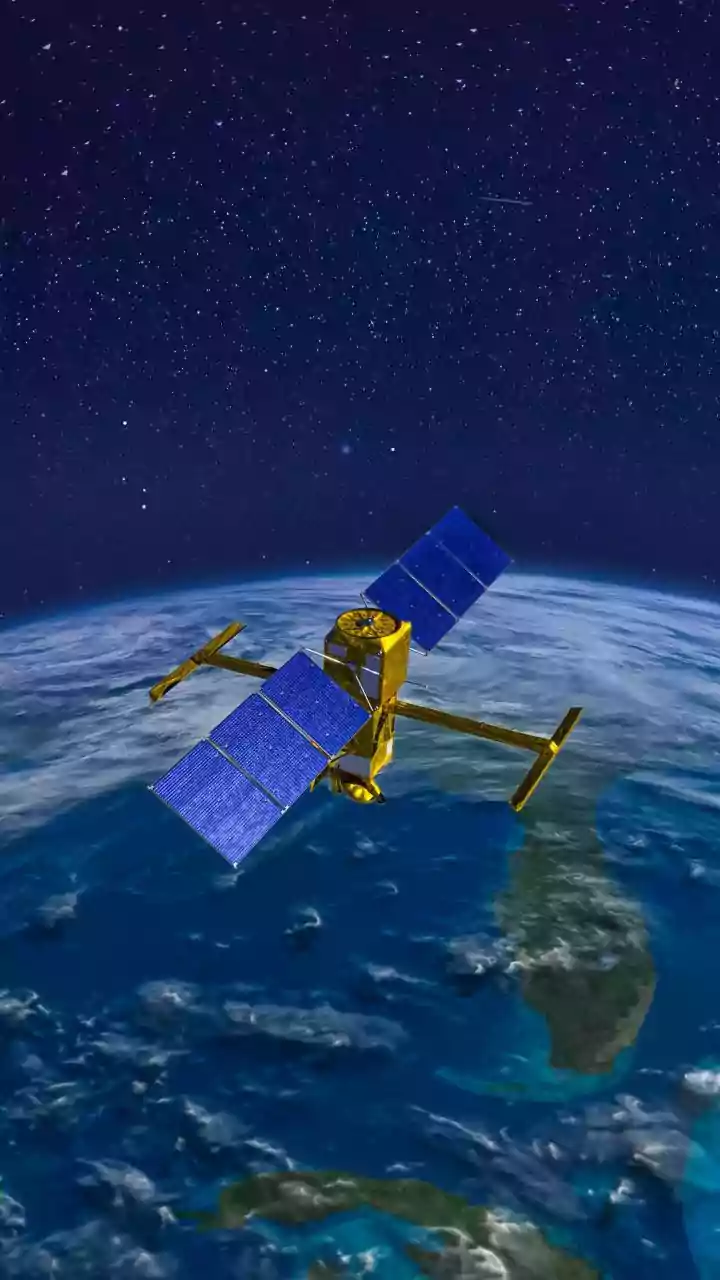
The primary goal of the SHAPE experiment is to help scientists in their search for life on planets outside our solar system, known as exoplanets. To find potentially habitable worlds, we first need to understand what one looks like from a great distance. Earth is, so far, our only example of a planet teeming with life. By studying the light reflected from Earth as if it were a distant exoplanet, ISRO scientists can create a benchmark or a template. This data will help future telescopes identify key signatures of a habitable planet, such as the presence of clouds, oceans, continents, and an atmosphere rich with certain gases. The experiment essentially uses Earth as a model to learn what to look for when we eventually point our powerful telescopes at Earth-sized planets orbiting other stars.
The Science of Analysing Planetary Light
SHAPE analyses Earth's light using a technique called spectro-polarimetry. This method breaks down the light into two key components. Spectroscopy splits the light into its constituent wavelengths, much like a prism creates a rainbow. This spectrum reveals the chemical composition of the atmosphere, as different gases absorb light at specific wavelengths, leaving tell-tale gaps in the spectrum. Polarimetry, on the other hand, measures the orientation of the light waves. When light reflects off a surface, like clouds or an ocean, it becomes polarized. By measuring this polarization, scientists can learn about the physical characteristics of a planet’s surface and atmosphere. Combining these two measurements provides a much richer picture than either could alone, offering clues about everything from atmospheric gases to the presence of liquid water.
Why the Moon is the Perfect Observatory
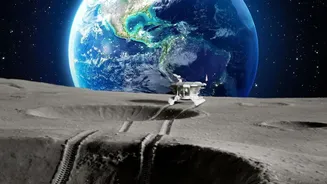
Studying Earth from an observatory on or orbiting our own planet is complicated by our proximity. It's like trying to understand what a whole forest looks like while standing in the middle of it. The Moon, however, offers a perfect, stable platform at a distance. From lunar orbit, SHAPE could observe the entire sunlit disc of Earth, a technique known as 'disc-integrated' observation. This mimics how we see distant, unresolved exoplanets—as a single point of light. Furthermore, as Earth rotates and the Moon orbits it, SHAPE could capture data from various phase angles, observing how the planet's light signature changes as different features (like oceans and continents) rotate into view. This provides a comprehensive dataset on how a living planet’s appearance evolves over time, information that will be invaluable for interpreting the faint light from distant worlds.
A Foundation for Future Discoveries
The data collected by the SHAPE experiment is not just a one-off academic exercise; it's a foundational investment in the future of astronomy and India’s role in it. The insights gained will directly inform the next generation of powerful space telescopes designed to characterize exoplanets. By providing a detailed 'fingerprint' of a habitable planet, SHAPE helps scientists fine-tune their methods and technologies for the ambitious goal of finding another Earth. This experimental payload, a value addition to the primary mission, has demonstrated India's capability to think beyond immediate objectives and contribute to some of the most profound questions in science: Are we alone in the universe? And if not, how will we find our cosmic neighbours?