


Catch the Tail End of a Famous Meteor Shower
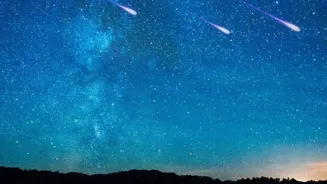
While the famous Perseid meteor shower peaked around August 12-13, its activity continues until late August. Skywatchers can still catch stray ‘shooting stars’ in the days following the peak. The shower is active from mid-July to August 24, so there's
still a chance to see these fast, bright meteors. For the best views, find a location away from city lights, lie back, and look towards the northeastern sky after midnight. It takes about 20-30 minutes for your eyes to fully adapt to the dark, so patience is key. Although the main event has passed, the lingering Perseids provide a perfect excuse to spend a quiet night under the stars.
Gaze into the Heart of the Milky Way
August is one of the best months to view the core of our own galaxy, the Milky Way. On a clear, moonless night, it appears as a hazy, luminous band stretching across the sky. To find it, look south for the constellations Scorpius and Sagittarius. Sagittarius is particularly helpful as its brightest stars form an asterism known as the 'Teapot'. The dense star clouds of the Milky Way’s core appear like steam rising from the teapot's spout. This region is packed with star clusters and nebulae, including the Lagoon Nebula (Messier 8) and the Omega Nebula (Messier 17), which can be spotted with binoculars from a dark site. The biggest challenge for Indian observers is the monsoon, but any break in the clouds offers a breathtaking reward.
Spot the Summer Triangle Overhead
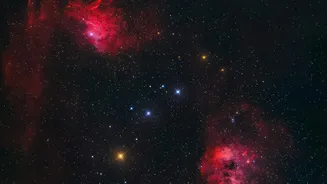
Dominating the high northern sky on August evenings is the Summer Triangle, a large and easily recognizable asterism. It’s not a constellation itself, but is formed by three brilliant stars from three separate constellations. These are Vega in Lyra (the Lyre), Deneb in Cygnus (the Swan), and Altair in Aquila (the Eagle). Vega is the brightest of the three and will be almost directly overhead in the early evening. Altair is the southernmost star of the triangle. Because these stars are so bright, the Summer Triangle can be spotted even from light-polluted urban areas, making it an accessible target for city-based skywatchers.
Find the Planets on Parade
While a major six-planet alignment took place around August 12-13, several of these worlds remain visible in the sky. Mars and Saturn are the easiest to spot. Mars (magnitude 1.3) will be relatively high in the pre-dawn sky, while Saturn (magnitude 0.5) will be visible for most of the night, rising in the east around sunset. Although Saturn’s opposition isn't until October, it is already becoming a brilliant object for evening observation. Finding planets is a rewarding experience; they shine with a steady light, unlike the twinkling of distant stars. Use a sky map app on your phone to pinpoint their exact locations on any given night.
A Partial Lunar Eclipse (for some)
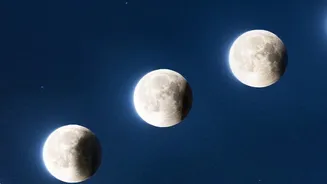
Ending the month is a partial lunar eclipse on August 28, 2026. However, its visibility is not favourable for India. According to NASA, the eclipse will be visible across the Americas, Europe, and Africa. The greatest eclipse occurs at 4:14 a.m. UTC, which is 9:44 a.m. Indian Standard Time, well after sunrise in India. While you won't be able to see this particular event from the subcontinent, it's a great reminder of the constant celestial mechanics at play and a good reason to keep an eye on the astronomical calendar for future eclipses that will be visible from home.