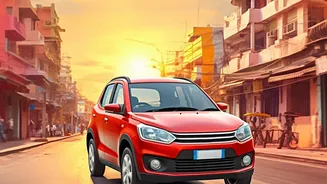







An Expressway Revolution on a National Scale
India is in the midst of an infrastructure boom, with the national highway network expanding by over 60% in the last decade. Projects like the Delhi-Mumbai Expressway, Bengaluru-Mysuru Expressway, and Delhi-Dehradun Expressway are fundamentally changing
the country's travel landscape. These aren't just patches of new tarmac; they are multi-lane, access-controlled corridors designed for speeds up to 120 km/h, bypassing congested towns and promising a smooth, predictable journey. For travellers, this means destinations that once required an overnight train or a pricey flight are now viable for a weekend road trip.
The New Time Calculation: Door-to-Door
A two-hour flight might seem unbeatable, but the real measure is total travel time. Consider a typical flight: add an hour to get to the airport, another two hours for check-in and security, and then 30-45 minutes for baggage claim and finding a taxi at your destination. Suddenly, that two-hour flight becomes a five-hour commitment. Now, compare that to a drive on a new expressway. The Delhi-Dehradun journey has been slashed from 6-7 hours to just 2.5 hours. Similarly, the Bengaluru-Mysuru trip, once a three-hour-plus crawl, can now be done in about 90 minutes. For distances under 500 kilometres, the car is often not just competitive but significantly faster from your front door to your hotel lobby.
Crunching the Numbers: Cost for a Family
For a solo traveller, a budget airline ticket booked in advance can sometimes be the cheapest option. However, for a family of four, the maths changes dramatically. Four flight tickets, plus potential baggage fees and expensive airport transfers, can add up quickly. A road trip, on the other hand, has costs like fuel and tolls that are shared among all passengers. While rising fuel prices are a factor, the ability to pack your car to the brim without worrying about excess baggage charges is a major financial and practical advantage. As airfares remain volatile, the predictability of driving costs offers peace of mind.
Freedom, Flexibility, and Fun
Beyond time and money, the road trip offers an entirely different quality of travel. It's about freedom. You can leave whenever you want, stop for a photo, discover a hidden dhaba, or take an unplanned detour to a local attraction. There are no baggage restrictions, making it easy to carry sports equipment, extra luggage, or even the family pet. This flexibility is a luxury that the rigid schedules and cramped confines of air travel simply cannot match. The journey itself, with shared playlists and conversations, becomes a memorable part of the holiday, not just a means to an end.
When Does Flying Still Make Sense?
Despite the rise of road travel, flying remains the practical choice for long-distance journeys. A cross-country trip from Delhi to Chennai or Mumbai to Kolkata is still best handled by air. For business travellers on a tight schedule, where every hour counts, the speed of a flight is indispensable. Furthermore, for travel to remote areas like the Northeast or during severe weather conditions like monsoons, which can make highways unsafe, flying offers a more reliable and secure alternative. The choice isn't about one being definitively better, but about which is smarter for your specific trip.