




A Major Push for Connectivity
On September 8, 2026, a significant infrastructure push was announced, with projects worth over ₹35,000 crore set for Gujarat. This massive investment covers railways, national highways, and urban development, all aimed at enhancing the state's transport
network. For travellers, these developments are not just abstract numbers but represent a tangible shift towards faster, safer, and more efficient journeys across the state and beyond. The projects range from the completion of dedicated freight corridors to the laying of new railway lines and the six-laning of crucial highways, each designed to tackle existing bottlenecks and prepare for future growth.
Smoother Road Travel Ahead
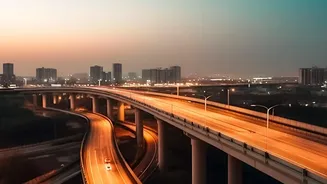
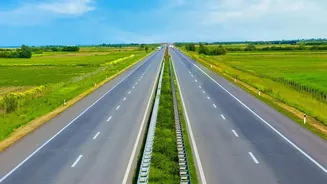
Road travellers have much to look forward to. Key projects focus on National Highway 48, a vital artery connecting major industrial and commercial hubs. The six-laning of the Kamrej-Chalthan section and the construction of new bridges over the Tapi and Narmada rivers on the Vadodara-Surat stretch are set to ease notorious traffic snarls. Furthermore, new flyovers and grade-separated junctions on NH-48 and NH-53 will address accident-prone spots, directly improving safety for daily commuters and long-distance drivers. In South Gujarat, a ₹1,185 crore plan will upgrade roads leading to tourist destinations like Saputara and the Dandi Heritage Route, cutting travel time and boosting the local economy by making these scenic areas more accessible.
New Horizons for Rail Passengers
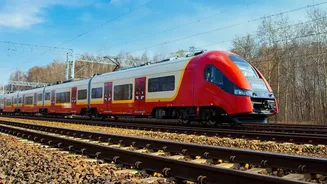
The railway network is undergoing a significant expansion to benefit passengers. A new train service between Vadodara and Tanda Road will directly serve residents of Vadodara, Chhota Udepur, and Alirajpur districts. A noteworthy development is the new Jobat-Tanda Road rail line, which connects the remote and tribal areas of Alirajpur to the national rail network for the first time, opening up new opportunities for mobility and economic integration. Foundation stones have also been laid for major projects like the Vadodara-Ratlam third and fourth lines and the gauge conversion of the Miyagam Karjan-Choranda-Malsar section. These upgrades are designed to increase capacity, reduce congestion, and improve rail connectivity between Gujarat and Madhya Pradesh.
The High-Speed Dream Nears Reality
The Mumbai-Ahmedabad High-Speed Rail Corridor, popularly known as the bullet train project, continues to make significant strides. The main transit hub in Ahmedabad is nearing completion, designed to seamlessly connect with the local metro and Indian Railways network. This integration will create a multimodal transport hub, making transitions between different forms of transport effortless for passengers. While the entire 508 km line is slated to open by 2029, the first section between Surat and Bilimora is expected to commence services as early as 2027. Once fully operational, the bullet train will slash the travel time between Ahmedabad and Mumbai to just over two hours, a revolutionary change from the current five-plus hours by the fastest train.
Connecting Emerging Economic Hubs
Beyond the main corridors, new projects are linking emerging economic zones. The Ahmedabad-Dholera Expressway, nearing completion, will cut the travel time between the two cities from over two hours to around 45 minutes. This four-lane, access-controlled expressway is a critical component of the Delhi-Mumbai Industrial Corridor and is set to transform Dholera into a major industrial and smart city hub. Similarly, in Kutch, the doubling of the Adipur-Bhuj railway line will decongest the corridor and support both passenger and freight movement in a region seeing rapid development. New rail lines connecting remote parts of Kutch like Hajipir and Lakhpat will also boost tourism by providing access to the Rann of Kutch and historical sites like Dholavira.