



More Than Just Standing
Tadasana is the foundational yoga posture that improves balance and aligns the spine. While it seems basic, it requires you to be fully aware of what every part of your body is doing. This active engagement transforms simple standing into a powerful tool
for improving postural awareness, strengthening the legs and core, and promoting stability that carries into more complex poses. Think of it as the reference point your body returns to, a posture that teaches you how to stand with strength, stability, and ease.
Finding Your Neutral Spine
A 'neutral' spine isn't perfectly straight; it maintains its natural, gentle curves in the lower back and neck. Many of us spend our days hunched over desks, which can lead to a slouched posture where these curves are exaggerated or flattened. In Tadasana, the goal is to stack the spine tall, aligning the head directly over the shoulders and the shoulders over the pelvis. Imagine a string gently pulling the crown of your head toward the ceiling, creating length from your tailbone up. Avoid the common tendency to either over-arch your lower back or tuck your tailbone under too much, which flattens the lumbar curve. The aim is a balanced position that feels supported and effortless.
Practical Cues for a Healthy Spine
To achieve a neutral spine, start from the ground up. Stand with your feet either together or hip-width apart and parallel. Distribute your weight evenly across all four corners of both feet. Gently engage your core by drawing your navel slightly in and up, as if zipping up a pair of snug trousers. This action helps to support the lower back. Lengthen your tailbone down toward your heels without tucking it forward. Finally, keep your chin parallel to the floor, ensuring the back of your neck is long. You can even practice with your back against a wall to get a feel for the alignment; your buttocks, shoulder blades, and the back of your head should lightly touch the wall.
Setting Your Shoulders Correctly
Shoulder tension is a common issue, often made worse by stress and long hours at a computer. In Tadasana, we aim to release this tension and find an open, broad position across the chest. The mistake many make is either slouching forward or pulling the shoulders back into a rigid, military-like stance. Neither is ideal. The goal is to let the shoulders be relaxed but properly placed in their sockets.
A Simple Trick for Shoulder Placement
Here's a simple, effective cue: Inhale and shrug your shoulders up toward your ears. Then, as you exhale, roll them back and let them slide down your back. This motion helps to position the shoulder blades firmly but gently on the back. Think about broadening your collarbones, creating space across the front of your chest. Allow your arms to hang naturally by your sides, with your palms facing either your body or forward. This open posture not only feels better but also improves breathing efficiency by allowing the lungs to expand fully.
Putting It All Together in Tadasana
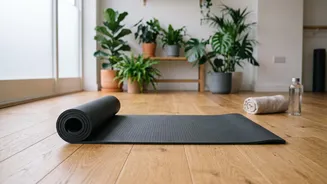
Begin by rooting your feet into the mat, feeling grounded and stable. Soften your knees slightly to avoid locking them. Engage your thigh muscles. Find your neutral pelvis and lengthen your spine, lifting through the crown of your head. Roll your shoulders up, back, and down, letting your arms rest at your sides. Keep your gaze soft and straight ahead. Hold the pose for five to ten deep, even breaths, scanning your body for any unnecessary tension. Notice the feeling of being simultaneously grounded and lifted, stable and relaxed. This is the essence of Mountain Pose.