



The Sun's Volatile Nature
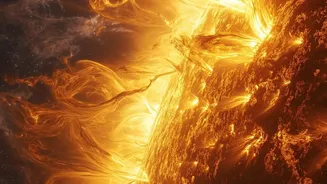
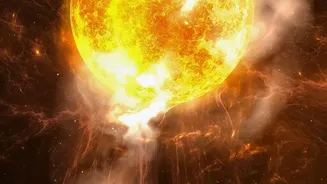
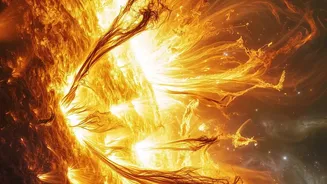
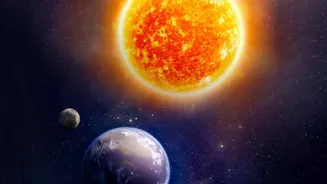
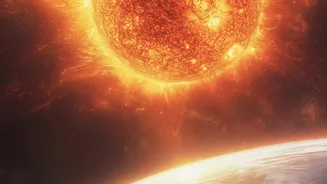
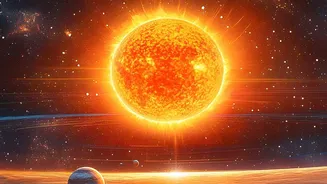
Our Sun is not always the calm, steady presence it seems. It's a dynamic star that goes through cycles of activity. Sometimes, it releases enormous bursts of energy and plasma known as solar flares and Coronal Mass Ejections (CMEs). A solar flare is an intense
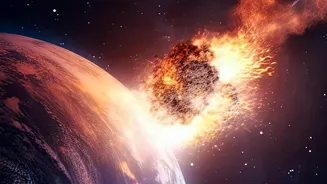
flash of radiation, while a CME is a giant cloud of solar plasma and magnetic fields flung into space. If a CME is aimed at Earth, this billion-tonne cloud of charged particles can take one to three days to reach our planet, acting like a cosmic cannonball headed our way.
Why Power Grids Are Vulnerable
When a CME collides with Earth's magnetic field, it triggers a geomagnetic storm. While these storms can create beautiful auroras, they also pose a significant threat to our technological infrastructure. The rapidly changing magnetic fields during a storm induce electrical currents in the Earth's surface. These are called geomagnetically induced currents, or GICs. Long conductors, like high-voltage transmission lines, act like antennas, picking up these GICs. The quasi-DC nature of these currents can flow into large power transformers, causing them to overheat, saturate their magnetic cores, and potentially fail. A widespread failure of these crucial components could lead to cascading blackouts lasting for hours, days, or even longer.
Our Eyes in the Sky
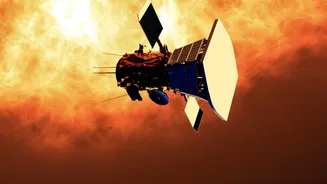
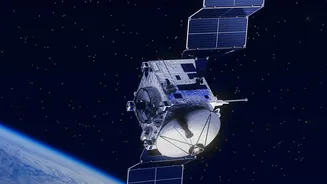
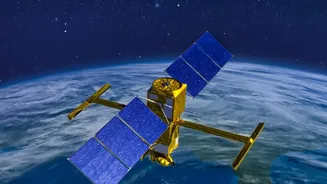
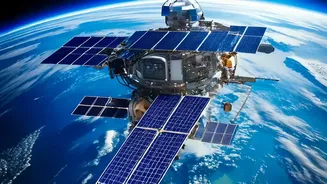
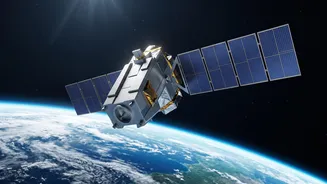
The key to protecting our power grids is early warning. This is where a network of specialised satellites comes in. A crucial player is the Deep Space Climate Observatory (DSCOVR), a satellite operated by America's National Oceanic and Atmospheric Administration (NOAA). Positioned 1.5 million kilometres away from Earth at a stable gravitational point called Lagrange Point 1 (L1), DSCOVR acts as a space weather buoy. It directly measures the speed, density, and magnetic field of incoming CMEs and can provide a vital 15- to 60-minute warning before the storm hits Earth. This data is fed to forecasting centres like NOAA's Space Weather Prediction Center (SWPC).
From Space Alert to Ground Action
That advance warning is everything for grid operators. When the SWPC issues a geomagnetic storm alert, utility companies don't just wait for the impact; they take protective measures. These actions can include postponing critical maintenance, re-routing power flows, reducing the load on the system, and ensuring backup generation is ready. By preparing the grid for the incoming disturbance, they can lessen the strain on transformers and other sensitive equipment, significantly reducing the risk of catastrophic failure. In recent years, some utilities have also begun installing hardware like neutral blocking devices, which are designed to physically block GICs from damaging transformers.
A Worldwide Watch
Monitoring space weather is a global effort. Organisations like the International Space Environment Service (ISES) help coordinate data sharing among regional warning centres around the world. India has become a key player in this international collaboration with its Aditya-L1 solar observatory, also positioned at the L1 point. Launched by the Indian Space Research Organisation (ISRO), Aditya-L1 provides continuous observations of the Sun, helping to track CMEs from their origin and improve forecasting models. This global cooperation ensures that data from multiple viewpoints can be combined to create a more accurate and timely picture of incoming threats, bolstering our planet's defences against the Sun's fury.