
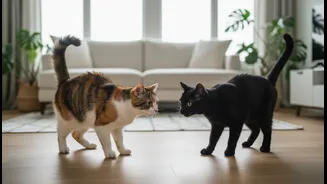


Understand Feline Territory
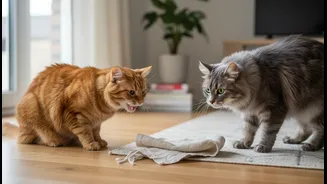
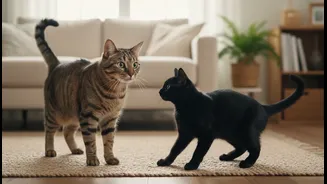
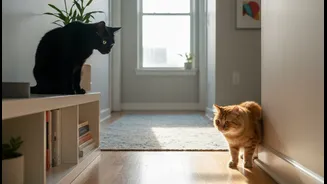
Cats are fundamentally territorial animals. Their sense of safety and security is tied to the space they control. When another cat is present, they can feel that their access to essential resources like food, water, safe resting spots, and litter boxes
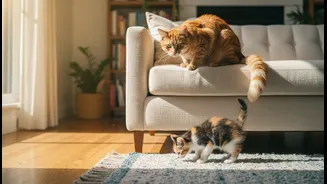
is threatened. This isn't a sign of being 'mean'; it's a deep-seated survival instinct. Aggression, such as stalking, hissing, or blocking access to a room, is often a cat's way of saying, "I feel insecure and need to control this area to feel safe." Recognizing this helps shift the focus from punishment, which can increase stress, to proactively managing the environment to make every cat feel secure.
Multiply Your Resources
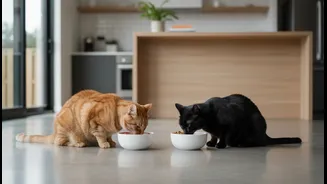
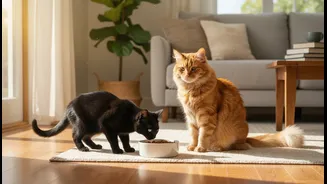
Competition is a primary driver of conflict. The golden rule for a multi-cat home is to provide more than enough resources to go around. This means you should have one of everything per cat, plus one extra. This applies to food bowls, water bowls, and especially litter boxes. For two cats, you should ideally have three litter boxes. Spreading these resources throughout the home in different locations prevents one cat from 'gatekeeping' or blocking the other's access. A cat shouldn't have to cross the path of its rival just to get a drink or use the toilet. By creating abundance, you reduce the perceived need to compete.
Go Vertical: Expand Their World
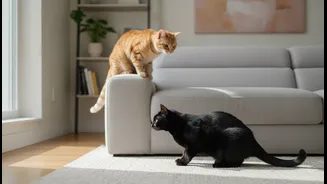
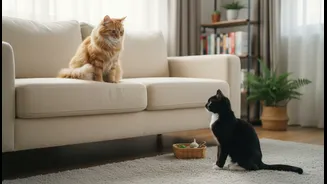
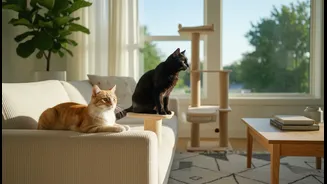
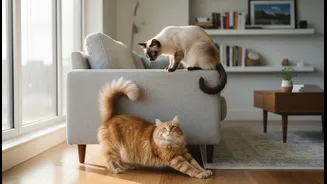
When you can't expand your home horizontally, think vertically. Adding vertical space is one of the most effective ways to increase a cat's territory and reduce conflict, especially in smaller homes. Cats naturally seek high vantage points to feel safe and observe their surroundings. Cat trees, wall-mounted shelves, and even sturdy bookcases can create new pathways and private retreats. This allows a less confident cat to avoid a more assertive one by simply going up and over, rather than being forced into a confrontation on the floor. Ensure there are multiple routes up and down so no single cat can control access to the high ground.
The Power of Scent
Scent is a cat's primary language. You can use it to build familiarity and positive associations. 'Scent swapping' is a powerful technique where you create a communal scent. Take a soft cloth or sock and gently rub it on one cat’s cheeks and head to pick up their pheromones, then present it to the other cat to investigate, perhaps near some treats. Do the same in reverse. You can also swap their bedding or brushes. This process helps the cats get used to each other’s presence in a non-threatening way, gradually blending their scents into a single, familiar 'colony' scent. This makes the other cat’s smell a normal and non-threatening part of the environment.
Create Separate, Safe Retreats
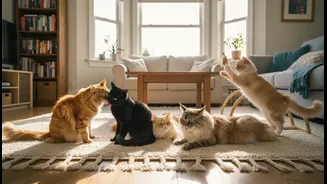
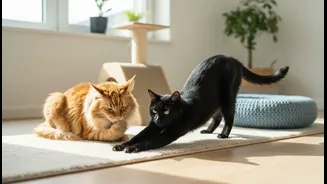
Every cat needs a place where it can retreat and be completely undisturbed. This could be a covered cat bed, a cardboard box on its side, or a designated sanctuary room where the other cat is not allowed. These safe zones are crucial for de-stressing. If tension escalates into a fight, it's important to separate the cats into their respective safe zones for a cool-down period of 24 to 48 hours to let their stress levels return to normal. Forcing interaction will only deepen the animosity. A safe space gives them the autonomy to disengage from conflict, which is a vital skill for peaceful coexistence.
Consider Calming Aids
For households with persistent tension, calming aids can help lower the overall stress level. Synthetic pheromone diffusers, such as Feliway, release calming signals into the environment that can help cats feel more secure and reduce conflict. These products mimic the natural pheromones cats use to mark their territory as safe. While not a magic solution on their own, they can be an effective part of a broader strategy when used alongside environmental enrichment and resource management. In cases of severe aggression, it is always best to consult a veterinarian or a certified animal behaviorist to rule out underlying medical issues and create a tailored behavior plan.