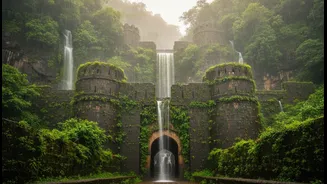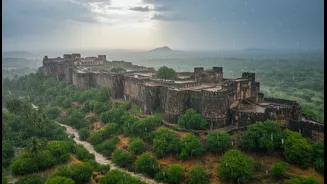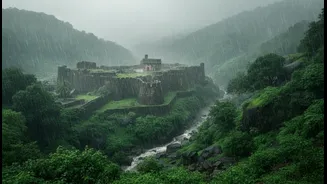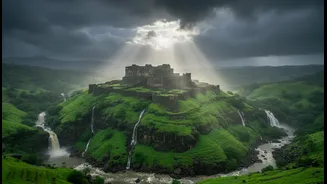






Lohagad Fort, Maharashtra
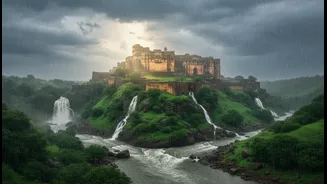
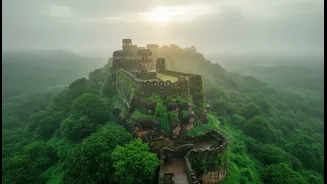
Known as the “Iron Fort,” Lohagad is a classic monsoon destination near Lonavala and one of the most accessible forts from Mumbai and Pune. During the rains, its sturdy stone walls are often shrouded in mist, and the plateau at the top becomes a carpet
of vibrant green. Historically significant, it was captured by Chhatrapati Shivaji Maharaj in 1648 and later used to hold his treasury. The trek to the top is considered beginner-friendly, and the reward is not just the history but also the panoramic views of the Pavana reservoir and the surrounding Sahyadri hills. A key attraction is the Vinchu Kata, a long, narrow spur that resembles a scorpion's tail and offers dramatic views over the misty valley below.
Raigad Fort, Maharashtra
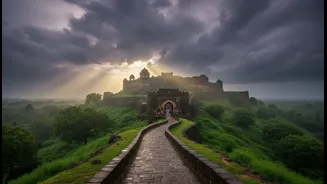
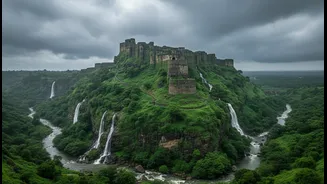
More than just a fortress, Raigad was the capital where Chhatrapati Shivaji Maharaj was crowned in 1674, making it a site of immense historical pride. Perched atop a formidable hill in the Western Ghats, the fort becomes a spectacular sight during the monsoon. The landscape transforms into a lush green panorama, with waterfalls cascading down the rugged cliffs. The journey to the fort itself is an experience; visitors can either brave the challenging trek up approximately 1,700 steps or take a scenic ropeway that glides through clouds and offers breathtaking views of the rain-soaked valleys. The fort’s ruins, including the royal court, markets, and residential quarters, evoke a powerful sense of its glorious past, amplified by the dramatic monsoon atmosphere.
Mandu, Madhya Pradesh
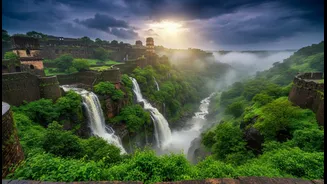
Perched on the Vindhya Range, the fortress town of Mandu is often called Shadiabad, or the 'City of Joy'. This name feels most appropriate during the monsoon when the entire plateau is enveloped in low-hanging clouds and a romantic mist. The landscape's numerous lakes and reservoirs fill to the brim, and the surrounding gorges turn into verdant valleys with seasonal waterfalls. Mandu is famous for the legendary love story of Sultan Baz Bahadur and Rani Roopmati. Her pavilion, strategically built to overlook his palace and the Narmada river, offers some of the most stunning and romantic views, especially when the rains create a soft, dreamlike filter over the landscape. The pleasant weather and minimal crowds make it an ideal off-season destination.
Kumbhalgarh Fort, Rajasthan
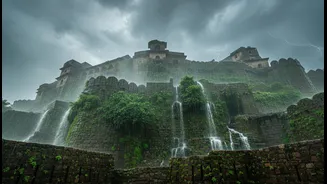
While Rajasthan is known for its arid landscapes, the monsoon reveals a different side to the state, especially at Kumbhalgarh. This UNESCO World Heritage Site, famous for its wall that stretches over 36 kilometres, is the second-largest fort in Rajasthan. During the rainy season, from July to September, the Aravalli Hills surrounding the fort shed their brown hues for a vibrant green blanket. The once-dry terrain comes alive with replenished lakes and seasonal waterfalls. The fortress, often called the 'Great Wall of India', offers a magical experience as clouds drift across its ramparts, providing a tranquil and less crowded alternative to other popular destinations. The cool, pleasant weather makes exploring its 360-plus ancient temples a truly unique experience.
Sinhagad Fort, Maharashtra
Just a short drive from Pune, Sinhagad, or the “Lion Fort,” is one of the most historically significant and popular monsoon getaways in the region. The fort stands tall at an elevation of 1,312 metres and is famous for the 1670 battle where Tanaji Malusare, a commander of Shivaji, recaptured it from the Mughals. In the monsoon, the fort offers a thrilling experience as gusty winds and thick fog sweep across its ramparts. The trek up is invigorating, with small streams and waterfalls appearing along the way. At the top, visitors are greeted not only with panoramic views of the green valleys but also with local vendors selling hot snacks like pithla-bhakri and onion bhajiyas, which have become an essential part of the Sinhagad monsoon experience.