







The New Space Gold Rush
Forget Silicon Valley; the next frontier is, well, the final frontier. The global space economy, valued at over $400 billion, is projected by analysts at Morgan Stanley to soar past $1 trillion by 2040. This explosive growth isn't just driven by government
agencies like ISRO or NASA anymore. A dynamic ecosystem of private companies—from global giants like SpaceX and Blue Origin to homegrown Indian startups like Skyroot Aerospace and AgniKul Cosmos—is building rockets, launching satellites, and planning missions to the Moon and beyond. This commercialisation is creating a demand for a workforce with skills that extend far beyond rocket science. It's a new gold rush, and the opportunities are as vast as space itself.
1. The Space Traffic Controller
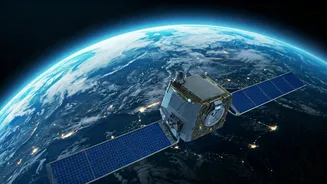
Imagine being an air traffic controller, but for objects moving at 28,000 kilometres per hour. Earth's orbit is getting crowded. With thousands of active satellites and an ever-increasing amount of space debris, the risk of collision is real. A single crash could set off a chain reaction, jeopardising everything from your GPS navigation to global communications. Space Traffic Controllers will be the guardians of our orbital highways. Using advanced AI and tracking systems, they will monitor satellite paths, forecast collision risks, and coordinate manoeuvres to keep our orbital infrastructure safe. This role requires a cool head, sharp analytical skills, and a background in aerospace engineering, data science, or orbital mechanics.
2. The Extraterrestrial Habitat Designer
As humanity sets its sights on establishing bases on the Moon and Mars, we won't be able to just pack up a building and ship it. We'll need to build where we land. Extraterrestrial Habitat Designers will be the architects and civil engineers of our off-world future. Their job will be to design structures that can protect inhabitants from extreme temperatures, radiation, and micrometeoroids, all while using local materials—a process known as in-situ resource utilisation (ISRU). Think 3D-printing habitats using Martian soil or lunar regolith. This field merges architecture, material science, robotics, and engineering to solve one of the greatest challenges of space colonisation: creating a safe place to call home, millions of kilometres away from Earth.
3. The Space Lawyer
Who owns the minerals mined from an asteroid? What happens if one company's satellite crashes into another's? As commercial activity in space increases, so does the need for a legal framework to govern it. The Outer Space Treaty of 1967 provides a foundation, but it was written long before private asteroid mining or space tourism were realistic prospects. Space Lawyers will specialise in this complex and emerging field. They will draft contracts for satellite launches, litigate disputes over orbital slots, advise on the ethics of space exploration, and help shape international treaties on everything from property rights on the Moon to liability for space debris. It's a field for legal eagles who are also fascinated by the final frontier.
4. The Asteroid Miner
This might sound like the plot of a sci-fi movie, but it's a serious business prospect. Asteroids are packed with valuable resources, including platinum-group metals that are rare on Earth, as well as water that can be converted into rocket fuel. Asteroid Miners won't be individuals with pickaxes but highly skilled roboticists, geologists, and remote systems operators. They will identify resource-rich asteroids, deploy and manage autonomous mining robots, and oversee the complex process of extracting and processing materials in a zero-gravity environment. While still in its infancy, companies are already developing the technology, and the first prospectors of the cosmos will be the engineers and scientists who can make it happen.