





Star Walk 2: The All-Rounder
Star Walk 2 is often recommended for beginners, and for good reason. It offers a beautifully designed and intuitive interface that makes exploring the cosmos feel like a game. Simply point your phone at the sky, and the app uses your location and internal
sensors to show a real-time, augmented-reality map of what’s above you. The app excels at identifying stars, constellations, and planets. Its 'Time Machine' feature is particularly useful, allowing you to scroll forward or backward to see how the sky will look at a future date or how it appeared in the past, perfect for planning a stargazing session. The free version is ad-supported but highly functional, while a paid upgrade unlocks more deep-sky objects and removes ads.
SkyView Lite: Simplicity and AR
If you want the most straightforward point-and-identify experience, SkyView Lite is an excellent choice. It’s incredibly simple to use: open the app, point it at a bright object, and it will tell you if you're looking at Jupiter, Sirius, or a passing satellite. Its augmented reality (AR) feature overlays information directly onto your camera's view of the sky, making identification a seamless experience day or night. The app can specifically identify satellites, including the International Space Station (ISS) and the Hubble Space Telescope. A major benefit is that it doesn't require a WiFi or GPS signal to function, making it the perfect companion for camping trips or any off-grid adventure.
Stellarium Mobile: Power and Realism
Based on the renowned open-source desktop software, Stellarium Mobile is a powerhouse planetarium app prized for its realism and comprehensive database. The free version alone boasts a catalog of over 600,000 stars, along with all known planets, comets, and major deep-sky objects. It provides a photorealistic rendering of the sky, showing the Milky Way and constellations as they actually appear from your location. It's an excellent tool for identifying what you're seeing in real-time and can also track satellites like the ISS. While packed with features, its interface is clean and accessible, making it a great free option for beginners who want a tool they can grow with as their knowledge expands.
ISS Detector: The Specialist
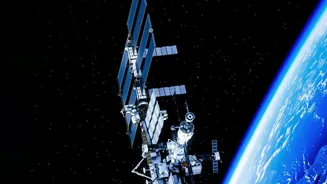
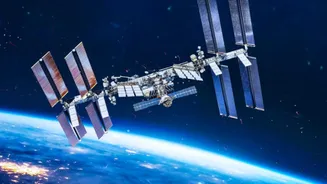
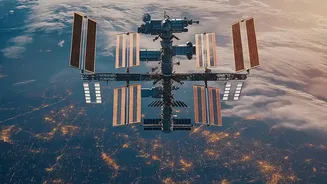
While many general astronomy apps can track the ISS, ISS Detector is built specifically for that purpose. If your primary goal is to catch a glimpse of the space station as it soars overhead, this is the app to get. It will tell you exactly when and where to look, providing a countdown and sending you an alarm a few minutes before a pass is due to begin. The app also checks local weather conditions to let you know if the sky will be clear enough for a good sighting. The free version is focused on the ISS, but extensions are available via in-app purchases to track other famous satellites, including the Starlink satellite trains and the Hubble Space Telescope.
NASA App: The Official Source
For a completely free and official source of space information, the NASA app is a must-have. While not a dedicated point-at-the-sky planetarium like the others, it is an invaluable resource for any budding enthusiast. It includes a dedicated and easy-to-use ISS tracker, information on all current and upcoming NASA missions, and a stunning gallery of thousands of images and videos from space. You can even stream NASA TV directly through the app. It's the perfect complement to a stargazing app, providing the context and news behind the celestial objects you are beginning to identify in the night sky.