





The Challenge of the Indian Classroom
For many students across India, the reality of higher education involves packed lecture halls and a race to scribble down notes as professors navigate complex syllabi. It's a high-pressure environment where missing a key concept can have a significant
impact. The traditional method of manual note-taking, while valuable, often results in an incomplete or disorganized record. Students can find themselves struggling to recall specific details, decipher their own handwriting, or fill in gaps in their understanding, especially when preparing for competitive exams. This information overload makes effective revision and deep comprehension a constant battle.
AI Transcription as a Study Partner
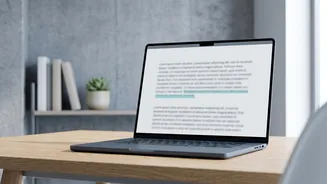
Enter Artificial Intelligence. AI-powered transcription apps have emerged as a powerful tool for students. By simply recording a lecture on a smartphone, students can receive a full, word-for-word text transcript within minutes. The benefits are immediate and transformative. Transcripts are searchable, allowing a student to instantly find a specific term or concept without re-watching hours of recordings. This enhances comprehension and makes revision far more efficient. For visual learners, seeing the words laid out reinforces what they heard. It also provides a clear, accurate record that can be annotated, summarized, and integrated into study notes, turning a fleeting lecture into a permanent, flexible learning asset.
The Hidden Risks of 'Free' Cloud-Based AI
However, not all AI tools are created equal, and many popular services come with significant privacy risks. Most standard transcription apps are cloud-based, meaning your lecture recordings are uploaded to the company's servers for processing. This raises serious concerns. Once your data is on a third-party server, you lose control over it. These companies might use your data—which can contain personal anecdotes, sensitive discussions, or a professor's unpublished intellectual property—to train their own AI models. Furthermore, cloud storage creates a risk of data breaches, exposing your private information to hackers or unauthorized access. In essence, the convenience of transcription could come at the cost of your data security.
What 'Privacy-First' Actually Means
A 'privacy-first' or 'on-device' AI app offers a fundamental solution to these risks. Instead of sending your audio to the cloud, these applications perform the entire transcription process locally on your phone or computer. This means your voice data never leaves your device. There is no data transmission to an external server, no third-party processing, and therefore, no risk of your audio being intercepted, leaked, or used without your consent. These apps are designed from the ground up to protect user privacy by architecturally eliminating the need to share data in the first place. This approach provides the most robust form of data security possible.
How to Choose a Safe Transcription App
When selecting an AI tool, students should look for clear indicators of privacy. Check if the app explicitly advertises "on-device processing," "local transcription," or "offline functionality." Read the privacy policy to see if the company states that it does not use your data for AI training. A simple test is to turn off your Wi-Fi and mobile data; if the app can still transcribe, it's a strong sign that it processes data locally. While some on-device apps might require an initial setup or have specific hardware requirements, the peace of mind they offer is invaluable. For students in India dealing with lectures in various languages, it's also worth checking for multi-language support, including Hindi and other regional languages.
Turning Transcripts into Better Grades
Having a transcript is only the first step. The real academic advantage comes from how you use it. Don't just save the file and forget it. Use the search function to create focused study guides around key themes. Highlight important definitions and examples discussed in class. Use AI-powered summarization features, often included in these apps, to get a quick overview of a long lecture. You can also use the transcript to clarify points in your handwritten notes or create digital flashcards for quick revision. By actively engaging with the transcribed text, you transform a passive recording into an active study tool that can lead to better retention and higher marks.