




The Monsoon's Official Snack
It’s a scene replayed in every city, town, and roadside hamlet. The moment the monsoon arrives, so do the bhutta-walas. Their makeshift stalls, often just a wheeled cart with a small sigdi (charcoal brazier), become beacons of warmth and comfort against
the grey, damp backdrop. They are as much a part of the seasonal landscape as overflowing drains and the sudden bloom of green. This isn't just a snack; it's an announcement. The presence of a bhutta vendor on a street corner is the official, unofficial declaration that the rainy season has truly begun, and with it, a change in the rhythm and cravings of the city.
A Symphony for the Senses
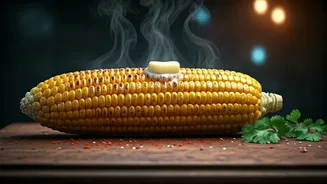
The magic of the monsoon bhutta lies in its multisensory appeal. First, there's the sound: the crackle of corn husks hitting the hot coals and the gentle fanning that coaxes the embers to life. Then comes the sight of the corn kernels, slowly charring from pale yellow to a beautiful, smoky gold. But the true performance begins after it’s cooked. The vendor expertly takes half a lemon, dips it into a secret blend of salt and masala, and rubs it vigorously across the hot cob. The hiss as the acidic juice meets the hot kernels is pure theatre. The resulting aroma—a combination of smoke, spice, tang, and sweetness—is the definitive fragrance of monsoon evenings.
More Than Just Street Food
Why this specific food? Because it’s not just about sustenance. The bhutta is a vessel for memory and nostalgia. For many, it’s the taste of childhood—of huddling under an umbrella with parents, sharing a single cob because it was too hot to hold alone. It’s the flavour of impromptu drives with friends, windows rolled down to catch the rain-scented breeze, looking for the perfect roadside stall. In Bollywood, it’s the quintessential backdrop for a burgeoning romance, a simple, shared experience that signifies intimacy and comfort. Eating a bhutta in the rain is an act of participation in a collective, nationwide ritual. It connects us to millions of others, all savouring the exact same simple pleasure at the same time.
The Great Corn Debate
Of course, not all bhuttas are created equal, and preferences can be fiercely defended. There is the classic bhutta, or desi corn: tougher, less sweet, but with a satisfying chew and a smoky flavour that clings to every kernel after being roasted on open coals. This is the purist's choice. Then there is the American sweet corn, often boiled rather than roasted, served in a cup and slathered with butter, spices, and sometimes even cheese. While popular, many argue it lacks the rustic soul of its desi cousin. The true experience, traditionalists will tell you, involves standing in the light drizzle, juggling the piping hot cob wrapped in a spare husk, and trying not to get kernels stuck in your teeth. It’s a messy, imperfect, and utterly glorious process.
A Comfort in Simplicity
In a world of complex tasting menus and globally-inspired culinary trends, the enduring appeal of the bhutta is a testament to the power of simplicity. It requires no special occasion. It is democratic, enjoyed by people in luxury sedans and those on foot. It’s an affordable luxury, a small pocket of joy that costs less than a cup of coffee at a cafe. In the middle of a torrential downpour that can bring a bustling metropolis to a standstill, the simple act of buying and eating a hot, spicy bhutta feels like a small act of defiance and a celebration of the moment.