






The Core Philosophy: Redundancy
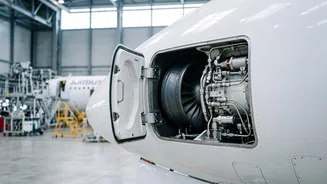
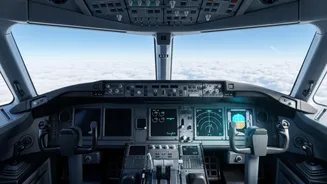
The first thing to understand about modern aviation is the principle of redundancy. No single point of failure should ever lead to a catastrophe. Commercial aircraft are designed with multiple backups for every critical system, from electrical power and hydraulics
to navigation and flight controls. For example, airliners have at least two engines but are fully capable of flying and landing safely on just one. Similarly, flight control systems are often duplicated or even triplicated, ensuring that if one channel fails, another instantly takes over. This philosophy of layered safety means the aircraft is built to withstand not just technical faults, but human-related emergencies as well.
The Human Element: Crew Resource Management
Long before any technology kicks in, the first line of defence is the other pilot. Through a rigorous training protocol known as Crew Resource Management (CRM), pilots are prepared to handle the sudden incapacitation of their partner. This isn't just about the dramatic event of a pilot passing out; it also covers 'subtle incapacitation', where a pilot may be awake but acting irrationally or not responding to commands. In such a scenario, the remaining pilot is trained to take sole command of the aircraft, declare an emergency with Air Traffic Control (ATC), and immediately plan a diversion to the nearest suitable airport. The first step is always to take positive control of the aircraft, often with the clear statement, "I have control."
The Digital Copilot: Fly-by-Wire and Autopilot
In modern aircraft like those from Airbus and newer Boeing models, pilots don't have a direct mechanical link to the control surfaces. Instead, they use a system called 'fly-by-wire' (FBW). When a pilot moves the sidestick or yoke, they are sending an electronic signal to a flight control computer. This computer then interprets the command and moves the flaps, rudder, and elevators accordingly. A key benefit of FBW is 'flight envelope protection'. The computer is programmed to prevent the pilot from making any maneuver that would put the aircraft in a dangerous state, such as stalling or over-stressing the airframe. This system acts as a constant, silent guardian. Coupled with this is the autopilot, which is far more than just a cruise control for the sky. It can manage the aircraft's altitude, heading, and speed, and in many cases, can even perform a fully automated landing, a procedure known as 'autoland'.
The Eyes on the Ground: Air Traffic Control
The moment a pilot declares an emergency due to an incapacitated crew member, they are no longer alone. Air Traffic Control (ATC) becomes an essential resource. Controllers will clear the airspace around the aircraft, provide vectors (directions) to the nearest suitable airport, and coordinate with emergency services on the ground to be ready for the plane's arrival. Like the aircraft itself, ATC systems are built with redundancy, with backup power, communication channels, and fail-safe protocols to ensure they are always available. In the rare event a passenger has to take control, as has happened in small private aircraft, controllers can provide step-by-step instructions to guide the aircraft to a safe landing.
Putting It All Together: The Autoland Procedure
If a pilot is alone and needs to land in difficult weather, or is managing a high workload, they can rely on the autoland system. This sophisticated feature uses the airport's Instrument Landing System (ILS) to guide the aircraft down to the runway with no manual input required. The ILS provides precise lateral and vertical guidance, while the aircraft's radio altimeter measures the exact height above the ground to initiate the landing flare at the perfect moment. While pilots manually land the plane over 99% of the time, autoland is a proven and reliable tool that ensures a safe conclusion to a flight even under the most demanding circumstances. It's another layer in the deep stack of safety systems designed to protect every flight.