

Europe's Moment in the Shadow
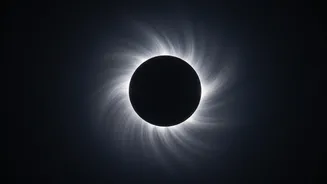
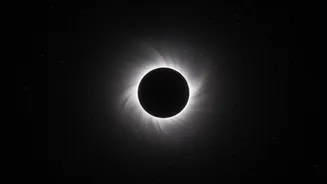
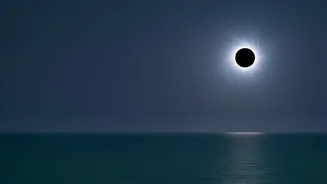
On August 12, 2026, a total solar eclipse will plunge parts of the globe into midday darkness. The path of totality, where the Moon completely obscures the Sun, will sweep across Greenland, Iceland, the Atlantic Ocean, and northern Spain. This is a particularly
momentous occasion for Europe, as it is the continent's first total solar eclipse since 1999, making it a once-in-a-generation spectacle for millions. Cities like Reykjavík in Iceland and Spanish locations including Bilbao and Valencia will be prime viewing spots, experiencing up to two minutes and 18 seconds of darkness. For many in Spain, the eclipse will occur dramatically close to sunset, creating an unforgettable view of the eclipsed Sun low on the horizon.
The View From India
Unfortunately, for sky-gazers in India, this astronomical event will not be directly visible. The path of totality is thousands of kilometres away, and due to the timing, the eclipse will happen during the late night hours for the subcontinent. The partial eclipse begins around 9:04 PM IST on August 12 and ends in the early hours of August 13. Because the event occurs after sunset in India, there will be no opportunity to see the Moon take a bite out of the Sun from our local skies.
NASA Brings the Eclipse to You
This is where the magic of live streaming comes in. NASA is providing a front-row seat to everyone, regardless of their location. The US space agency will broadcast the entire event live on its digital platforms, including NASA+ and its website. This broadcast isn't just a static camera pointed at the sky; it's a full-fledged production featuring multiple high-definition views from different locations along the eclipse path, including Iceland and Spain. Expert commentary from scientists and eclipse specialists will guide viewers through the phenomenon, explaining the science as it unfolds. The European Space Agency (ESA) will also be hosting its own live broadcast from Spain, offering another excellent viewing option.
More Than Just a Pretty Sight
This eclipse is also a significant scientific opportunity. NASA is deploying a high-altitude WB-57 research aircraft to chase the Moon's shadow, allowing scientists to study the Sun's outer atmosphere, the corona, for a longer duration. The corona is a region of superheated plasma that is normally invisible, and eclipses provide a rare chance to study its structure and dynamics, which are key to understanding space weather. Additionally, student teams will launch scientific balloons in Iceland and Spain to study how Earth's atmosphere is affected by the temporary darkening of the sky. Watching the livestream means you get to witness this science in action.
How to Watch in India
Tuning in from India is straightforward. The main NASA broadcast is scheduled to begin at 1:15 p.m. EDT on August 12, which translates to 10:45 PM IST. You can watch via NASA's official YouTube channel or the NASA+ streaming service. The ESA livestream begins at 19:30 CEST, which is 11:00 PM IST. Prepare for totality to begin in Iceland around 1:45 p.m. EDT (11:15 PM IST) and in Spain at 2:28 p.m. EDT (11:58 PM IST). This is a perfect opportunity to gather with family or friends for a late-night celestial viewing party from the comfort of your home.