







More Than Just a Balancing Act
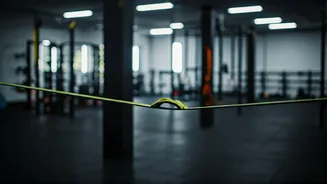
First, let's clear things up: slacklining is not tightrope walking. Unlike a tight, static rope, a slackline is a piece of flexible, bouncy webbing, usually about one or two inches wide, rigged between two anchor points. This 'slack' is key, as the line sways
and shifts with your every movement, forcing your body to constantly adapt and correct. Originating as a pastime for climbers in the 1970s and 80s, it has evolved into a global sport and, more recently, a mainstream fitness trend. Its growing popularity stems from its unique blend of physical challenge and mental engagement, offering a compelling alternative to repetitive gym routines. The goal isn't just to walk from one end to the other, but to find a sense of control and stillness amidst the wobble.
The Full-Body Workout You Didn't See Coming
Don't be fooled by its simple appearance; slacklining is a formidable full-body workout. The constant need to stabilize yourself fires up your deep core muscles—the abs, obliques, and lower back—in a way that crunches can only dream of. This builds functional strength that improves posture and can even help prevent back pain. But it doesn't stop there. Your legs, from your glutes to your ankles, are in a constant state of engagement, making micro-adjustments to maintain balance. This strengthens stabilizer muscles around the joints, which is excellent for injury prevention, especially for runners or those active in other sports. Because the movements are controlled and low-impact, it's also a joint-friendly activity suitable for various fitness levels.
A Workout for Your Brain, Too
Perhaps the most surprising benefit of slacklining is what it does for your mind. Staying on the line demands absolute focus. Your brain has no room for distracting thoughts about work or your to-do list; you must be completely present. This intense concentration is often described as a form of 'moving meditation'. Practitioners report entering a 'flow state', where they are fully immersed in the activity, which helps reduce stress and calm the mind. This practice of maintaining calm and deliberate focus, even when your body is literally unstable, is a skill that translates powerfully to everyday life, helping you navigate challenges with a clearer, more centred mindset.
Your First Steps on the Line
Ready to give it a try? The key for beginners is to start small and manage expectations. Set up your line low to the ground (about knee-high) and over a shorter distance of 3-6 metres, as this reduces the wobble. When you first step on, your leg will likely shake uncontrollably—this is normal. Try to place your foot straight along the line, bend your knees, and keep your arms raised high and wide for balance. It’s crucial to fix your gaze on a stationary point at the end of the line, not down at your feet. At first, just focus on balancing on one foot for a few seconds. Having a friend to hold a hand or a 'training line' set up overhead can provide initial support. The learning curve can be steep, but every small success is incredibly rewarding.
From Solo Practice to Social Hour
While you can easily practice slacklining solo in a park or even indoors with the right equipment, it has a strong community aspect. Across the country, groups gather in parks to share lines, offer tips, and encourage each other. This social element is a huge part of its appeal, transforming a personal challenge into a shared experience. As the trend grows, more fitness studios and climbing gyms are incorporating slacklining into their class schedules, recognizing its value for cross-training, balance improvement, and injury rehabilitation. Whether you are looking to enhance your athletic performance, recover from an injury, or simply find a workout that doesn’t feel like work, slacklining offers a unique and engaging path to both physical and mental fitness.