




A Threat From 150 Million Kilometres Away
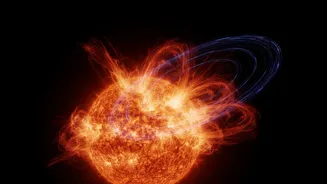
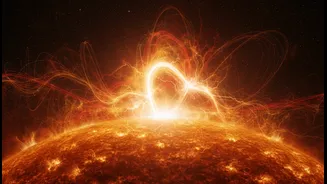
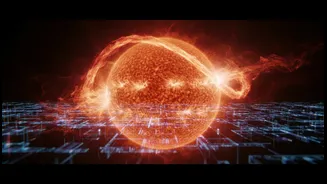
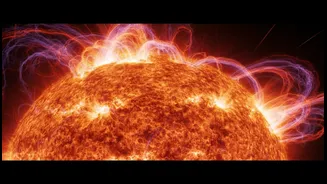
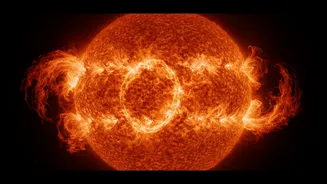
Space weather is not like weather on Earth. There are no clouds or rain. Instead, it involves massive explosions on the sun's surface, like solar flares and coronal mass ejections (CMEs). These events release huge amounts of charged particles and radiation
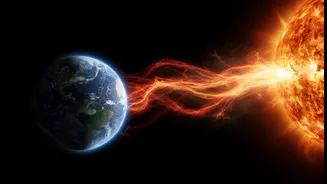
that travel through space. If Earth is in the path of one of these eruptions, our planet's magnetic field can be severely disturbed, leading to a geomagnetic storm. While our atmosphere protects humans from direct harm, the invisible infrastructure that runs our modern world—satellites, communication networks, and power grids—is highly vulnerable.
From Dazzling Auroras to Global Blackouts
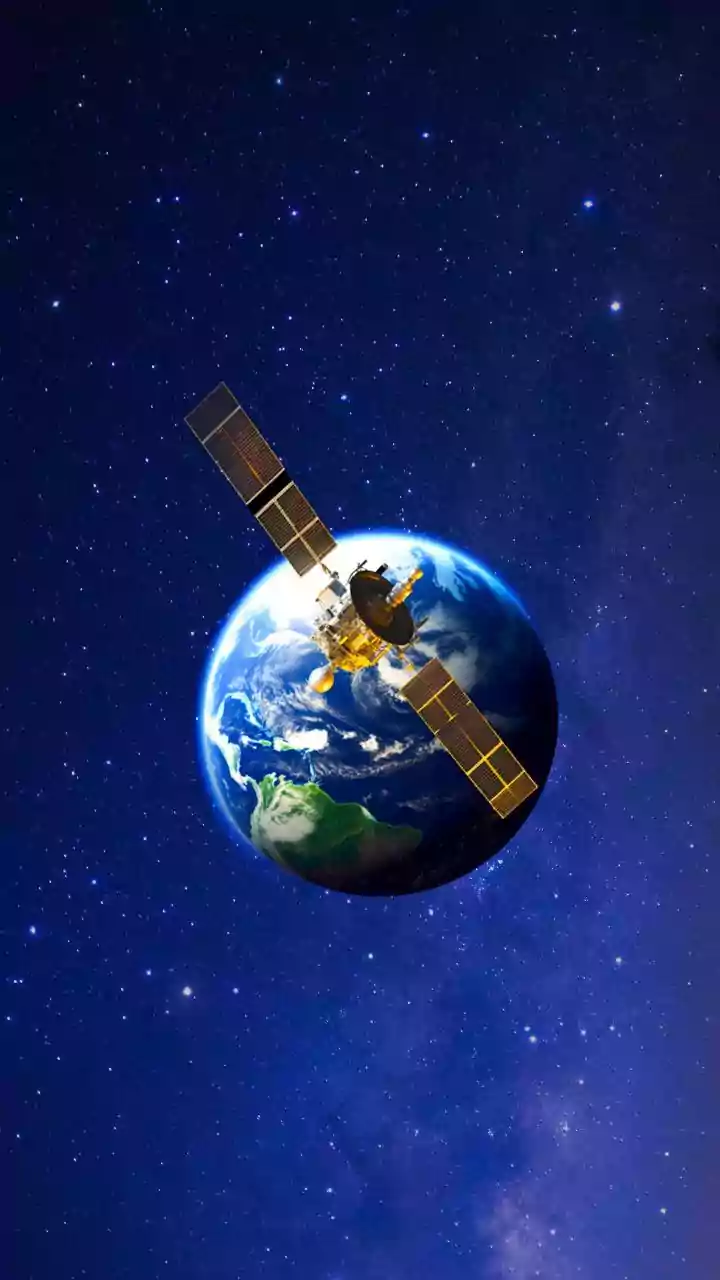
The most beautiful effect of a solar storm is the aurora, the stunning light shows seen near the poles. But the impacts can be far more serious. A powerful storm can induce strong electrical currents in our power grids, potentially causing widespread blackouts like the one that struck Quebec in 1989. They can disrupt high-frequency radio communications and GPS signals, affecting everything from aviation to agriculture. Satellites are especially at risk; solar storms can damage their electronics, and by heating the upper atmosphere, increase drag that can cause them to fall out of orbit. As our dependence on technology grows, scientists warn that a truly massive storm could have a catastrophic impact on the global economy.
Our Sentinels in Space
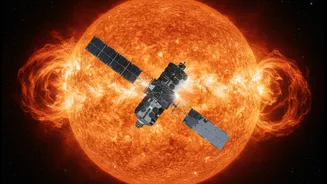
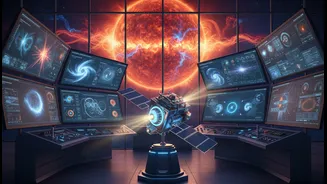
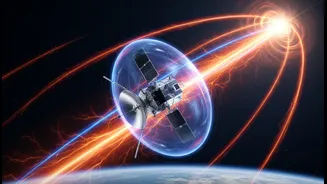
Predicting space weather is incredibly challenging, but it's our best defence. The first line of observation comes from a fleet of spacecraft strategically positioned between the Sun and Earth. Observatories like the NASA/ESA Solar and Heliospheric Observatory (SOHO) have been watching the sun for decades, tracking sunspots and monitoring for eruptions. By watching for CMEs, forecasters can sometimes provide warnings days in advance, giving operators time to take precautions like moving satellites or preparing power grids for the impact. However, the lead time is often short, and predicting the exact intensity and impact of a storm remains difficult.
India’s Eye on the Sun
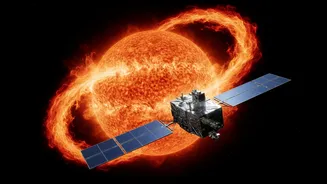
India has become a key player in this global effort with its Aditya-L1 mission. Positioned at the L1 Lagrange point, a stable spot about 1.5 million kilometres from Earth, Aditya-L1 has an uninterrupted view of the sun. Its instruments are providing crucial data on the sun's dynamics and the behaviour of solar storms as they travel towards us. Data from Aditya-L1 has already delivered groundbreaking insights into major solar events, helping scientists understand the turbulent, chaotic nature of these storms and why some are more destructive than others. This enhances our ability to forecast their impact and reinforces India's growing leadership in space science.
The Next Frontier: AI Forecasters
The latest weapon in the prediction race is artificial intelligence. Researchers are now using AI to analyse vast amounts of data from solar observatories, teaching computers to recognise patterns that precede a solar eruption. One model, called DAGGER, can analyse solar wind data and predict where a storm will strike on Earth with about 30 minutes of advance warning. Another model, Surya, developed by NASA and IBM, analyses high-resolution solar images to predict flares up to two hours in advance. These AI tools are rapidly improving, offering the promise of faster, more accurate warnings that could be crucial in preventing severe damage to our critical infrastructure.