


The End of a Government Monopoly
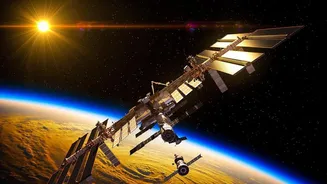
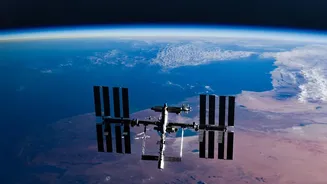
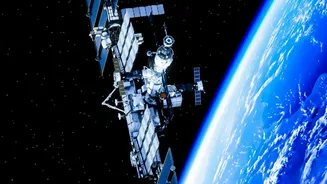
The International Space Station is one of the most incredible engineering achievements in human history, but it comes with a hefty price tag. With a total cost exceeding $100 billion for its construction and maintenance over the decades, the ISS is a marvel
of international cooperation but also a significant financial burden on taxpayers. Its planned decommissioning around 2030 created a critical question: what comes next? Without a successor, the vital microgravity research conducted in areas like medicine, materials science, and technology development would grind to a halt. This looming gap has catalyzed a fundamental shift in how we approach living and working in space, moving away from a government-owned model to a commercial marketplace.
NASA Becomes a Customer, Not an Owner
Instead of building a successor to the ISS itself, NASA is fostering a new commercial ecosystem in low-Earth orbit (LEO). Through its Commercial LEO Destinations (CLD) program, NASA is providing funding and support to several private companies to develop their own space stations. This strategy mirrors the successful Commercial Crew and Cargo programs, which spurred companies like SpaceX to develop transport services to the ISS at a fraction of the cost of previous government-run programs. NASA's goal is to become just one of many customers, purchasing services and lab space from these new commercial outposts. Companies like Axiom Space, Vast, and the Starlab venture from Voyager Space and Airbus are now leading the charge, each developing unique station designs.
Competition and Modern Manufacturing Drive Down Prices
The primary driver of cost reduction is competition. With multiple companies vying for contracts from NASA, other countries, private corporations, and even tourists, there is a powerful incentive to innovate and operate efficiently. This is a stark contrast to the ISS, which was built as a one-of-a-kind international project. Furthermore, these new stations are benefiting from revolutionary changes in the space industry. The advent of reusable rockets has dramatically lowered the cost of launching mass into orbit, making the construction and resupply of a space station far more economical. Commercial modules are also being designed with modern, modular manufacturing techniques, avoiding the bespoke, and therefore expensive, nature of the ISS components. This approach allows for streamlined production and assembly, further cutting down on upfront costs.
A More Diverse and Efficient Marketplace
Commercial stations are being designed from the ground up to be efficient, multi-use business parks in space. Unlike the ISS, which has a primary mission of scientific research, these new platforms are intended to serve a wide range of clients. This includes in-space manufacturing of unique materials like advanced fiber optics, pharmaceutical research into protein crystals, technology demonstrations, and space tourism. By diversifying their revenue streams, station operators are not solely reliant on government funding, creating a more sustainable business model. Automation and robotics are also expected to play a larger role, reducing the need for extensive astronaut crew time on routine tasks and thereby lowering operational costs.
What Cheaper Access Means for Science
For researchers, this new commercial era promises unprecedented access to space. Lower costs mean that universities, startups, and smaller companies can afford to conduct experiments that were previously only possible for major space agencies. Axiom Space, for example, is already flying private astronauts to the ISS for missions costing around $55 million per seat, a figure that is expected to evolve as their own station becomes operational. This 'democratization' of LEO will likely lead to an explosion in innovation. More experiments and more diverse users will accelerate discoveries in everything from drug development to new materials, ultimately delivering more benefits back to Earth. The transition from a single, government-run outpost to a thriving ecosystem of commercial destinations marks a pivotal moment in our expansion into the solar system.