


Venus: The Brilliant Evening Star
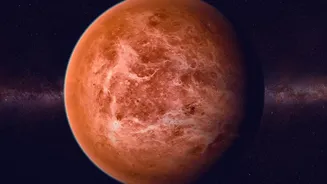
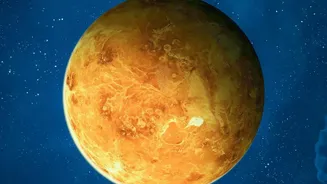
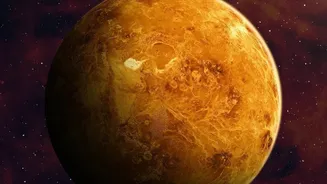
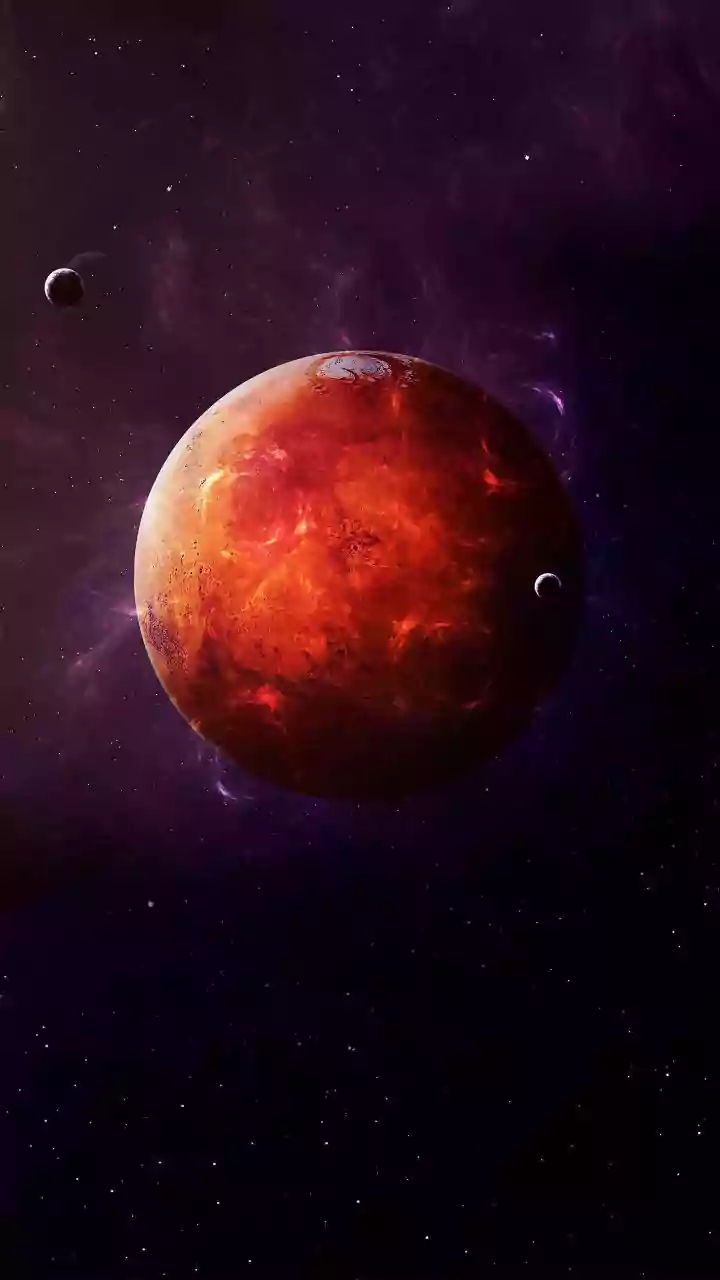
Throughout August 2026, Venus will dominate the western sky shortly after sunset. Often mistaken for a bright star or even an airplane, this is our neighbouring planet, shrouded in thick clouds that reflect sunlight, making it the brightest planet in our sky.
This month offers a fantastic opportunity to observe it, as it will be exceptionally bright and easy to locate, even for beginner stargazers. Its prominence in the evening makes it the undisputed 'Evening Star' of the month.
Key Dates: When to Look Up
While Venus is visible all month, some dates are better than others. The main event is its 'greatest eastern elongation' on August 15. This is when Venus reaches its farthest point from the Sun in our sky, making it appear higher above the horizon and visible for longer after sunset. Around this time, the planet will be shining at a dazzling magnitude of -4.4. Mark your calendars for the evenings around mid-August for the best and brightest views.
A Dance with the Moon and a Star
One of the most photogenic moments will occur around August 15-16, when a beautiful crescent Moon will appear close to Venus in the sky. This celestial pairing, known as a conjunction, is a stunning sight for the naked eye and a perfect opportunity for photographers. Adding to the spectacle, the bright star Spica, the brightest in the constellation Virgo, will also be nearby. Throughout the month, you can watch Venus slowly draw closer to Spica, heading for its own conjunction with the star in early September.
Where and When to Point Your Gaze
Finding Venus is simple. Shortly after the sun dips below the horizon, look to the west. You won't be able to miss the incredibly bright, non-twinkling point of light. It will be located in the constellation Virgo for the month. The best viewing window is during twilight, typically starting about 45 to 90 minutes after your local sunset. This gives the sky enough time to darken while Venus is still high enough to be seen clearly before it follows the Sun and sets.
Do You Need a Telescope?
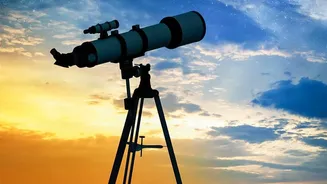
No special equipment is required to enjoy the sight of Venus. Its brilliance makes it easily visible to the naked eye from almost anywhere, even from light-polluted cities. However, if you have a pair of binoculars or a small telescope, you'll be in for an extra treat. A telescope will reveal that Venus has phases, just like our Moon. Around its greatest elongation in mid-August, Venus will appear as a tiny 'half-moon' through a telescope, a phase known as dichotomy.
Other August Sky-Watching Highlights
While Venus steals the evening show, August 2026 is a packed month for sky-watchers. The famous Perseid meteor shower peaks on the night of August 12-13. This year's shower is expected to be one of the best in years, as the peak coincides with a New Moon, meaning skies will be perfectly dark for spotting shooting stars. For those awake before dawn, a rare alignment of six planets will be visible around August 12, though some will require binoculars to spot. Finally, a deep partial lunar eclipse will be visible across the Americas, Europe, and Africa on the night of August 27-28.