





The Twinkle Test
The simplest and most classic method to tell a planet from a star is the twinkle test. Stars twinkle, while planets typically do not. Stars are so incredibly distant that they appear as single pinpoints of light. As their light travels through Earth's
turbulent atmosphere, it gets bounced around, causing the flickering effect we call twinkling. Planets, being much closer to us, appear as tiny disks rather than points. While the light from one edge of the disk might be disturbed by the atmosphere, the light from the other edges averages it out, resulting in a steadier, more solid glow. If you see a bright point of light that shines with a constant, unwavering intensity, you are likely looking at a planet.
Look for a Golden Glow
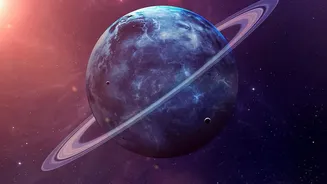
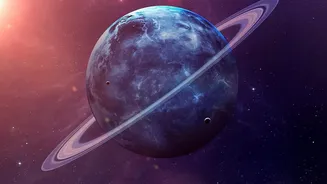
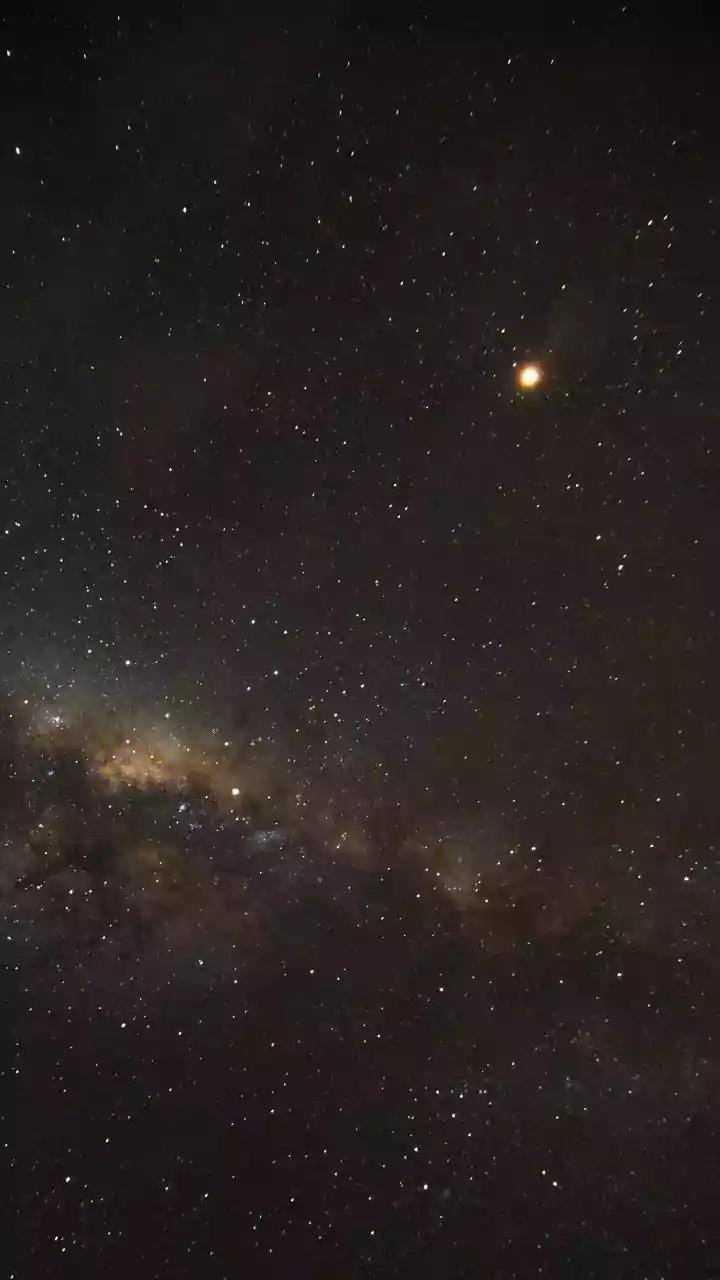
While most stars appear white to the naked eye, planets often have a distinct color. Saturn, in particular, usually shines with a pale, yellowish-golden hue. This is due to ammonia crystals in its upper atmosphere. When you're scanning the sky, look for a 'star' that seems to have this specific golden color. Compared to the brilliant white of Sirius or the reddish tint of Mars, Saturn's steady, golden light can be a dead giveaway. While its brightness varies depending on its position relative to Earth, it is often as bright as the brightest stars in the sky.
Follow the Highway in the Sky
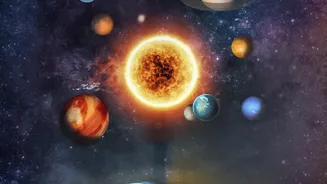
Planets in our solar system, including Saturn, follow a specific path across our sky called the ecliptic. This is the same apparent path that the Sun and Moon travel along. All the major planets orbit the Sun on roughly the same plane because they formed from the same spinning disk of gas and dust. So, if you trace the arc the Sun made during the day, the planets will be found somewhere near that line at night. They won't be in the far northern or southern parts of the sky if you're in the mid-latitudes; they stick to this celestial highway. If your candidate object is on this path, it's more likely to be a planet.
Patience and Tracking Movement
While stars maintain their positions relative to one another in constellations, planets are wanderers. The word 'planet' even comes from the Greek word for 'wanderer'. If you observe the sky over several nights, you'll notice that a planet like Saturn will have shifted its position slightly against the backdrop of fixed stars. This movement is slow and not noticeable in a single evening, but from week to week, its journey becomes clear. This method requires patience but is the most definitive way to confirm you’ve found a planet.
When in Doubt, Use an App
Technology has made stargazing more accessible than ever. There are numerous smartphone apps—like SkyView, Stellarium, or Star Walk—that can identify celestial objects in real-time. You simply point your phone's camera at the sky, and the app will use your location and internal compass to show you exactly what you're looking at, from constellations to satellites and, of course, planets. Many apps are free and incredibly user-friendly, making them a perfect tool for beginners who want to learn the night sky quickly.
A Peek Through Binoculars
Even a basic pair of binoculars can enhance your view and help confirm your sighting. While stars will remain sharp points of light even with magnification, a planet like Saturn will resolve into a small, distinct disk. You won't see it as just a point. With a steady hand or a tripod, you might even be able to discern that Saturn is not perfectly round but slightly oblong—a hint of its magnificent rings. While you need a telescope to truly see the rings in detail, binoculars are enough to confirm that you're not looking at a star.