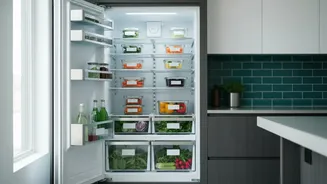







Start with a Clean Slate
Before you can build a new system, you must clear out the old one. The first step is a complete fridge reset. Announce a 'fridge amnesty day' where all members of the shared space are asked to claim their items. Anything unclaimed, unidentifiable, or long-expired
gets tossed. This isn't just about throwing away old food; it's a symbolic act of starting fresh. A deep clean of the empty shelves and drawers creates a neutral, hygienic foundation for the new rules. This initial effort gets everyone on the same page and demonstrates a collective commitment to a better, more organised future. It’s also the perfect time to get buy-in from everyone involved. Frame the conversation not as a complaint session, but as a collaborative effort to make life easier for everyone.
Establish Clear Zones
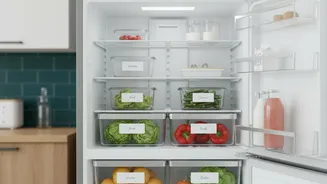
The core of any successful fridge agreement lies in the division of space. Assigning specific areas to each person is the most effective way to prevent clutter and accidental 'food theft'. One popular method is to give each roommate or colleague their own shelf. If space is limited, using clear, stackable containers or labelled bins can achieve the same result. This creates visual boundaries and a sense of ownership. Another strategy is to zone by food type—a designated drawer for produce, a shelf for dairy, and so on. Crucially, designate one area, often the door, as the 'communal zone' for shared items like condiments, milk, or butter. This simple act of mapping out the fridge significantly reduces daily confusion and friction.
Draft Your Core Principles
Once the space is divided, you need a simple set of non-negotiable rules. The most important rule is labelling. Keep a roll of tape and a marker pen near the fridge to make it easy for everyone to label their items with their name and the date. This clarifies ownership and helps track freshness, preventing food from languishing and spoiling. Other key principles should include a 'clean as you go' policy for spills and a rule against leaving empty containers in the fridge. It’s also vital to have an agreement on leftovers: they should be stored in properly sealed containers and are subject to a clear time limit, such as being tossed after 48 hours if uneaten. These core rules form the backbone of your agreement and ensure basic hygiene and respect are maintained.
Manage The Communal Stash
Shared items are often a major point of contention. Who buys the next bottle of ketchup? Who finished the milk? To avoid these issues, be explicit about how communal items are managed. One option is for everyone to contribute to a shared fund for staples. Another is a rotating system where each person takes a turn buying a specific item. If you decide to share items, post a list on the fridge of what's considered communal to avoid any ambiguity. It's also important to establish that if you finish a shared item, you are responsible for adding it to the shopping list or replacing it promptly. Clear communication about these shared goods prevents the feeling that one person is shouldering more of the cost or responsibility than others.
Create a System for Upkeep
An agreement is only as good as its enforcement. However, this doesn't require a 'fridge police' approach. Instead, schedule a regular, quick clean-out. A weekly 'Toss-It Thursday' or 'Fridge-Fresh Friday' where everyone takes a few minutes to remove their old food can keep things from getting out of hand. Post the cleaning schedule where everyone can see it, and consider rotating the responsibility. If someone consistently breaks the rules, a gentle, private conversation is more effective than a passive-aggressive note. The goal is to maintain the system through shared responsibility and polite reminders, fostering a culture of mutual respect rather than one of enforcement and punishment.