





The Unquestioned Kings of Quick Service
The Indian QSR landscape is a story of explosive growth, driven by a rising middle class, urbanization, and the demand for convenient food. Market projections show a sector worth billions, expanding at a robust pace annually. This growth is visibly dominated
by international giants. Brands like McDonald's, Domino's, and KFC have become ubiquitous, successfully adapting their menus with localized items to capture the Indian palate. Their success is built on a ruthlessly efficient model: standardized products, scalable supply chains, and a brand promise of consistency, whether you're in Mumbai or Meerut. They have mastered the art of serving food that is both aspirational and accessible, becoming the default choice for a generation seeking quick and reliable dining options.
The Perfect Candidate That Isn't
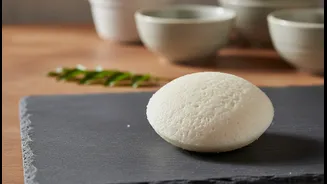
On paper, the humble idli seems like the perfect candidate to challenge this Western dominance. It’s vegetarian, steamed (ticking the healthy box), gluten-free, and enjoyed by people of all ages across the country. It’s a breakfast staple, a tiffin favourite, and a light meal. Many successful regional chains like Saravana Bhavan, Adyar Ananda Bhavan, and Sagar Ratna have built empires on the back of idli, dosa, and their brethren. They have proven that there is an enormous appetite for South Indian cuisine. Yet, none have replicated the hyper-scalable, 30-minutes-or-less, pan-India model of a Domino's. The gap isn't in popularity, but in a specific type of national, fast-food scalability.
The Fermentation and Freshness Hurdle
The single biggest challenge to creating a national idli QSR chain is the batter. Unlike frozen burger patties or pre-made pizza bases, authentic idli batter is a living product. It requires a delicate, temperature-sensitive fermentation process to achieve the right taste and texture. Standardizing this process across different climates and locations in India is a massive operational hurdle. A centralized commissary model would struggle with the batter's short shelf life, while a decentralized model risks inconsistency. This is the core operational problem: how to deliver a product whose very essence is 'freshly fermented' within a 'fast food' framework that thrives on long shelf-life ingredients and predictable processes.
The Price-Point Problem
Even if the operational challenges were solved, the economic model is daunting. For decades, Indians have been accustomed to buying high-quality idlis for a very low price from local 'Udupi' restaurants and street vendors. These small, independent outlets have minimal overheads. A national QSR chain, however, must contend with high real estate costs in prime locations, branding expenses, standardized staff salaries, and GST. It is incredibly difficult to compete on price with the local darshini while offering the expensive infrastructure of a modern QSR. Consumers are often unwilling to pay a premium for a product they perceive as a low-cost, everyday staple.
The 'Ghar Ka Khana' Conundrum
There's also a psychological barrier. For many Indians, QSRs are for indulgence, novelty, and treats—a break from routine. Idli, for all its virtues, is often seen as 'ghar ka khana' (home food) or a basic breakfast item. Studies on consumer behaviour show that while Indians value homemade food for its nutrition, they visit fast-food outlets for 'fun' and a 'change'. While a burger is a treat, an idli is nourishment. Convincing a customer to choose an idli as their 'fun' fast-food meal, especially at a higher price point, is a significant marketing challenge that no brand has comprehensively cracked on a national level.
The Untapped Opportunity
Despite the challenges, the opportunity remains immense. The South Indian QSR market is itself a rapidly growing segment. Brands that are experimenting with the model, like Idli Point, focus on a hyper-local approach, while others innovate with fusion dosas or healthier millet-based options. The company that finally cracks the code will need more than just good idlis. It will require a breakthrough in food technology to stabilize and transport batter, a brilliant business model to navigate the price paradox, and a marketing strategy that can elevate idli from a simple staple to a desirable fast-food experience. The idli-shaped gap is a testament to the complexity of the Indian market, where what seems obvious is often the most difficult to execute.