






The Most Impossible Job in the World?
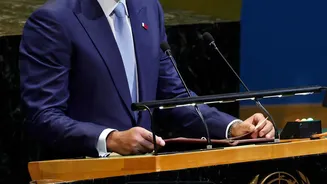
The Secretary-General of the United Nations is tasked with a monumental role: to be the world's chief diplomat, a symbol of its ideals, and the leader of a sprawling bureaucracy dedicated to peace, development, and human rights. Incumbent António Guterres's
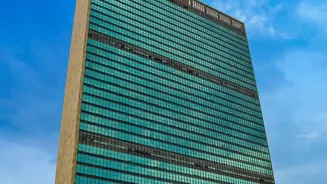
second term ends on December 31, 2026, triggering a complex and highly political selection process to find his successor. While the UN Charter calls for a leader of the 'highest standards of efficiency, competence and integrity,' the path to the 38th floor of the UN headquarters is less about a global consensus and more about navigating the geopolitical interests of the world's most powerful nations.
How a Secretary-General Is Chosen
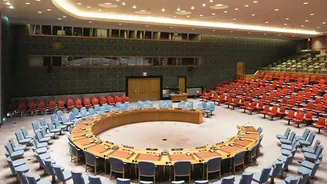
On paper, the process is straightforward. Article 97 of the UN Charter states that the General Assembly appoints the Secretary-General based on a recommendation from the Security Council. In reality, this two-step process gives the 15-member Security Council the decisive role. Candidates must secure at least nine votes in the Council. Critically, this must include the 'concurring votes' of the five permanent members: China, France, Russia, the United Kingdom, and the United States. A negative vote from any of these 'P5' countries acts as a veto, effectively killing the nomination. The General Assembly, where all 193 member states have a vote, has never rejected a candidate recommended by the Security Council.
The Decisive Veto
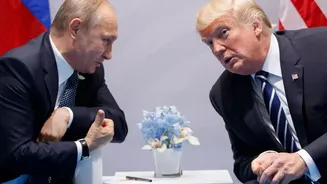
The veto is a relic of the post-World War II order, granted to the victors of that conflict. In the selection of the UN chief, it ensures that no candidate can lead the organization without the express consent of all five major powers. To gauge support and identify potential vetoes early, the Security Council conducts a series of informal secret ballots, or 'straw polls'. In these polls, the ballots of permanent members are a different color from those of the ten non-permanent members, making it clear when a P5 nation has cast a 'discourage' vote—the signal of a likely veto. This opaque process often favors candidates who are seen as least likely to offend any of the major powers, rather than the most dynamic or independent leader.
A History of Blocked Ambitions
The veto has shaped the history of UN leadership. In 1996, the United States famously vetoed a second term for Boutros Boutros-Ghali of Egypt. Despite receiving 14 of the 15 Council votes, the single US veto was enough to end his tenure. Washington considered him too independent and an obstacle to UN reform. A decade earlier, in 1981, a marathon 16-round deadlock occurred when China repeatedly vetoed Kurt Waldheim of Austria for a third term, while the U.S. vetoed his Tanzanian challenger, Salim Ahmed Salim. This stalemate eventually forced both candidates to withdraw, paving the way for a compromise candidate, Javier Pérez de Cuéllar of Peru.
The 2026 Race and Its Power Plays
The process to find the tenth Secretary-General is already underway, with several candidates officially nominated. The field includes Costa Rica's Rebeca Grynspan and Argentina's Rafael Grossi, among others. Recent straw polls show frontrunners emerging but also facing 'discourage' votes, some of which may be from P5 members, signaling potential veto threats down the line. Reports suggest geopolitical tensions are high, with some permanent members allegedly using the threat of a veto to block popular candidates in hopes of promoting a nominee more aligned with their interests. This dynamic highlights the enduring conflict between the UN's democratic aspirations and the concentrated power held by a select few.