
The Battery: An EV's Most Expensive Part
When you look at the price tag of a new electric scooter, a huge chunk of that cost comes from one single component: the battery. Typically, the lithium-ion battery pack accounts for 30% to 40% of the entire vehicle's ex-showroom price. For a scooter costing
₹1.5 lakh, that means the battery alone could be worth up to ₹60,000. This high cost is largely due to the materials inside. Lithium-ion batteries rely on minerals like lithium and cobalt, which are not only expensive but also have complex global supply chains. India imports a significant portion of its lithium-ion cells, making scooter prices vulnerable to international market fluctuations and supply disruptions.
The Salt-Based Alternative: Sodium-Ion Batteries
Enter the sodium-ion battery, a technology that is now moving from research labs to commercial reality. Instead of lithium ions, these batteries use sodium ions—the 'Na' in NaCl, or common table salt—to store and release energy. The fundamental working principle is very similar to their lithium-based cousins, but they are built with materials that are far more abundant and cheaper. Sodium is the sixth most abundant element on Earth, found everywhere in our oceans and salt deposits. This incredible availability is the key to its potential as a game-changer for the EV industry.
Unpacking the Cost Advantage
The economic case for sodium-ion is compelling. Raw sodium carbonate costs a fraction of lithium carbonate, providing a massive structural cost advantage. Furthermore, sodium-ion batteries can use aluminum foil for their anodes instead of the more expensive copper foil required in lithium-ion cells, further chipping away at production costs. For India, this technology aligns perfectly with national goals of self-reliance ('Atmanirbhar Bharat'). By developing a domestic supply chain for sodium-ion batteries, manufacturers can reduce their dependence on imported materials and cells, leading to more stable and ultimately lower prices for consumers. Several Indian companies, including Indi Energy, Reliance New Energy, and KPIT Technologies, are already deep into developing this technology. Some, like Indi Energy, are even using agricultural waste to create components for these batteries.
What This Means for Your Wallet
The potential savings are significant. While manufacturing is still scaling up, experts predict that sodium-ion batteries could become substantially cheaper than current lithium-ion technologies. If a sodium-ion battery pack is even 30% cheaper to produce, it could slash the overall price of an entry-level electric scooter by thousands of rupees. For a scooter where the battery costs ₹40,000, this translates to a direct saving of ₹12,000 for the buyer. As production volumes increase, these savings are expected to grow, making electric scooters competitive with their petrol counterparts on upfront cost, not just running costs.
Are There Any Downsides?
Like any new technology, there are trade-offs. The primary challenge for sodium-ion batteries has been lower energy density. This means that for the same size and weight, they store less energy than a lithium-ion battery, resulting in a shorter range—potentially 20-30% less. However, for the average urban commuter who travels short distances daily, this reduced range is often more than sufficient. Moreover, recent advancements are rapidly closing the performance gap. Sodium-ion batteries also offer other benefits, such as better performance in extreme temperatures (hot and cold) and improved safety, with a lower risk of thermal runaway or fire.
Timeline to the Showroom
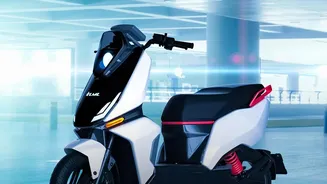
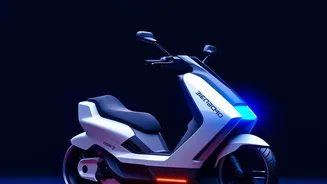
So, when can you buy a scooter with a salt-based battery? The technology is arriving now. Commercial production is beginning to scale in 2026, with electric two-wheelers being one of the first target markets. In India, officials have noted that the technology has reached a high level of maturity, suggesting that a move from pilot projects to commercial production could happen within the next two to three years. Nashik-based manufacturer Jitendra New EV Tech has already announced plans to launch a two-wheeler powered by a sodium-ion battery by early 2026. Initially, they will likely appear in more affordable, city-focused models where the cost-benefit is most attractive.