

A Tantalising Discovery 120 Light-Years Away
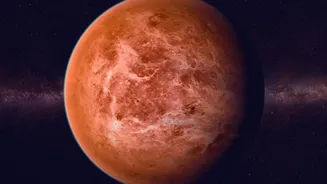
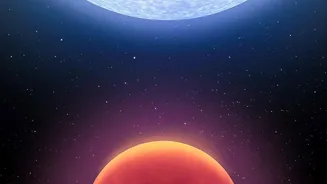
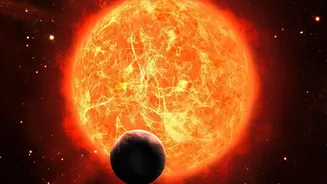
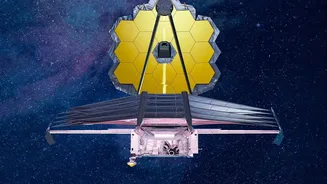
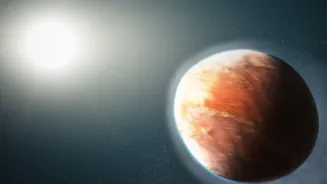
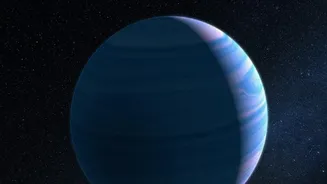
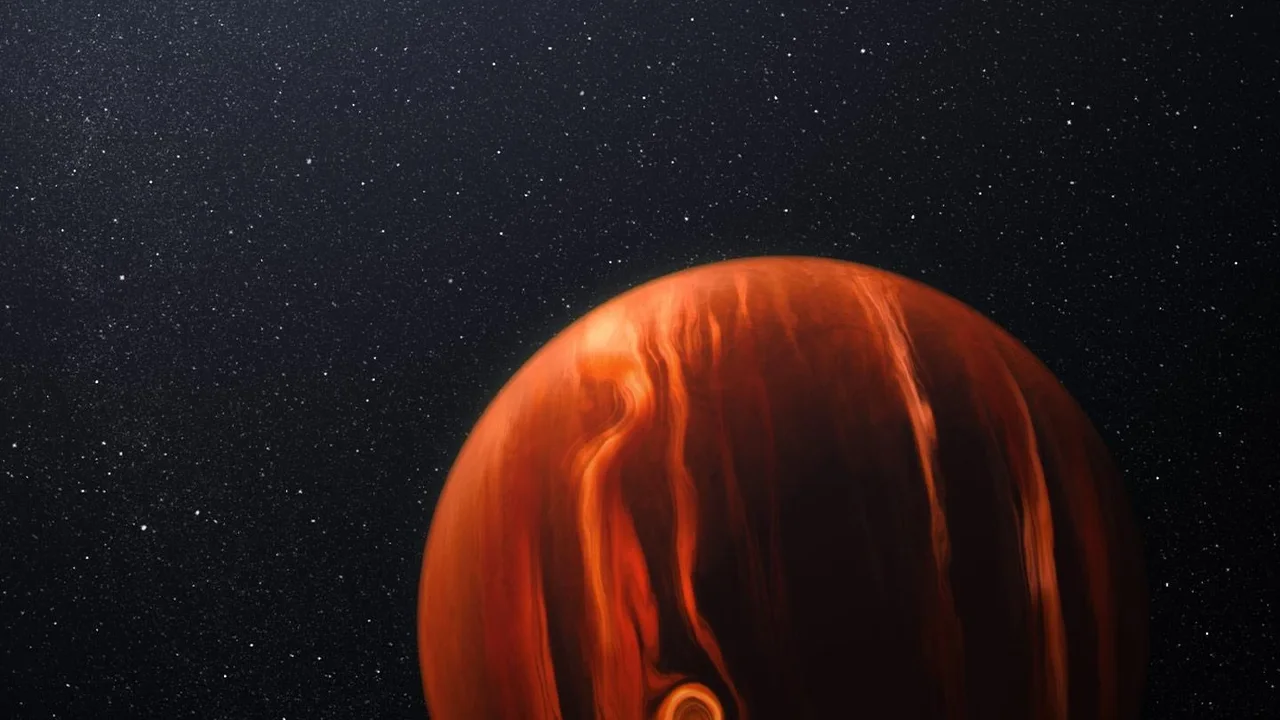
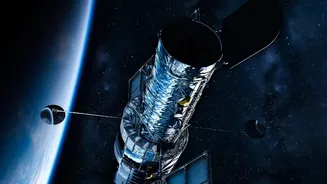
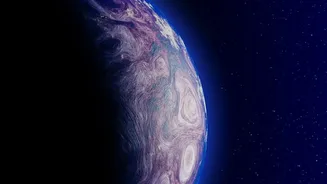
Using the unprecedented power of the James Webb Space Telescope (JWST), astronomers have peered into the atmosphere of an exoplanet named K2-18 b. This world, located about 120 light-years from Earth, is what’s known as a 'super-Earth,' weighing in at roughly
8.6 times the mass of our own planet. What they found there has sent waves of excitement through the scientific community: the distinct chemical fingerprints of both methane and carbon dioxide. These aren't just any molecules; their combined presence in the atmosphere of a planet that lies within its star's 'habitable zone'—the region where temperatures could allow for liquid water—is a profoundly significant clue in the search for life.
The Significance of Chemical Imbalance
So, why is the dual detection of methane and carbon dioxide so important? On its own, either gas can be produced by simple geological or chemical processes. But finding them together in large quantities, especially without an abundance of carbon monoxide, suggests something is out of balance. On Earth, methane is overwhelmingly produced by living organisms, from microbes in wetlands to our own digestive systems. This biological activity constantly pumps methane into our atmosphere, where it would otherwise break down relatively quickly. The simultaneous presence of CO2 is key because many non-biological processes that create methane also produce carbon monoxide, a gas that life tends to consume. Therefore, an atmosphere rich in methane and CO2 but low in CO points towards a 'disequilibrium'—a chemical imbalance that could be actively maintained by a planet's biology.
A New Class of Habitable Worlds
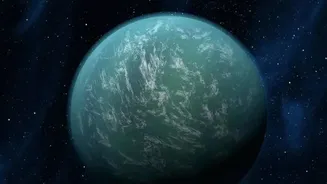
The findings on K2-18 b also bolster a fascinating new theory about a class of planets called 'Hycean' worlds. Coined by researchers at the University of Cambridge, the term is a portmanteau of 'hydrogen' and 'ocean'. These are hypothetical planets covered by vast liquid water oceans with hydrogen-rich atmospheres. Traditionally, the search for life has focused on smaller, rocky, Earth-like planets. However, Hycean worlds, while larger than Earth, could present a whole new, promising avenue. Their extended atmospheres make them easier to observe with telescopes like JWST, and the K2-18 b data—abundant methane and CO2 with a lack of ammonia—strongly supports the idea that it could be just such a water world.
A Hint of Something More?
As if the methane and CO2 weren't exciting enough, the Webb telescope's initial observations also hinted at something even more tantalising: a possible trace of dimethyl sulfide (DMS). Here on Earth, DMS is a compound that is exclusively produced by life, primarily by phytoplankton in marine environments. Its presence would be an incredibly strong biosignature. However, scientists are exercising extreme caution. The DMS signal in the data is weak and has not yet been definitively confirmed; further observations are needed to be sure. It remains a fascinating but tentative clue in this unfolding cosmic mystery.
A Milestone, Not a Conclusion
It is crucial to understand that these findings are not confirmation of extraterrestrial life. There may be unknown geological or chemical processes on a planet so different from our own that could produce this unique atmospheric mix. Scientists point out that the large size of K2-18 b might mean it has a mantle of high-pressure ice and an ocean that is too hot to support life as we know it. What this discovery represents is a monumental step forward in our capabilities. We have moved from simply detecting exoplanets to being able to analyse their atmospheres for complex chemical clues. It proves our methods work and provides a powerful proof of concept for the search ahead.