
An Art from the Arid Sands
Lippan Kam, also known as mud-and-mirror work, is a traditional mural art form that originates from the vast, arid landscapes of Kutch in Gujarat. The name itself offers a clue to its process; 'Lippan' is a local word for applying or smearing. For centuries,
this craft was primarily practiced by women of pastoral communities like the Rabari, Mutwa, and Meghwal. They would adorn the inner and outer walls of their circular mud huts, called 'bhungas', with these intricate designs. The practice was as functional as it was beautiful: the thick mud relief provided insulation from the harsh desert climate, keeping homes cool in the summer and warm in winter.
Crafted from the Earth
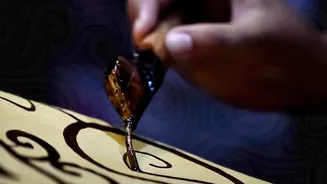
The beauty of traditional Lippan art lies in its use of simple, readily available materials. The primary mixture is a dough made from clay and animal dung, typically from camels or wild asses. The dung, rich in fibres, acts as a natural binding agent that prevents the mud from cracking as it dries. Artists shape this mixture by hand, sculpting freehand designs directly onto the walls. Common motifs are drawn from nature and daily life: peacocks, camels, elephants, trees, and geometric patterns that often mirror the region's rich embroidery traditions. While the clay is still wet, small pieces of mirror, known as 'aabhla', are carefully embedded. These mirrors were believed to ward off the evil eye, but they also served a practical purpose, catching and reflecting scarce light to brighten the dark interiors of the bhungas.
A Contemporary Renaissance
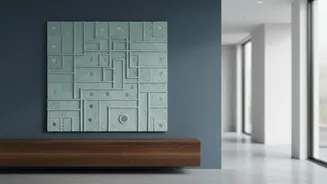
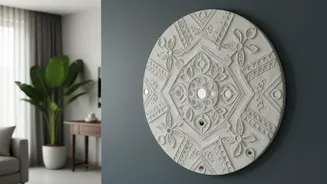
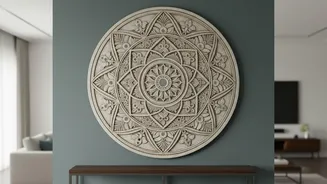
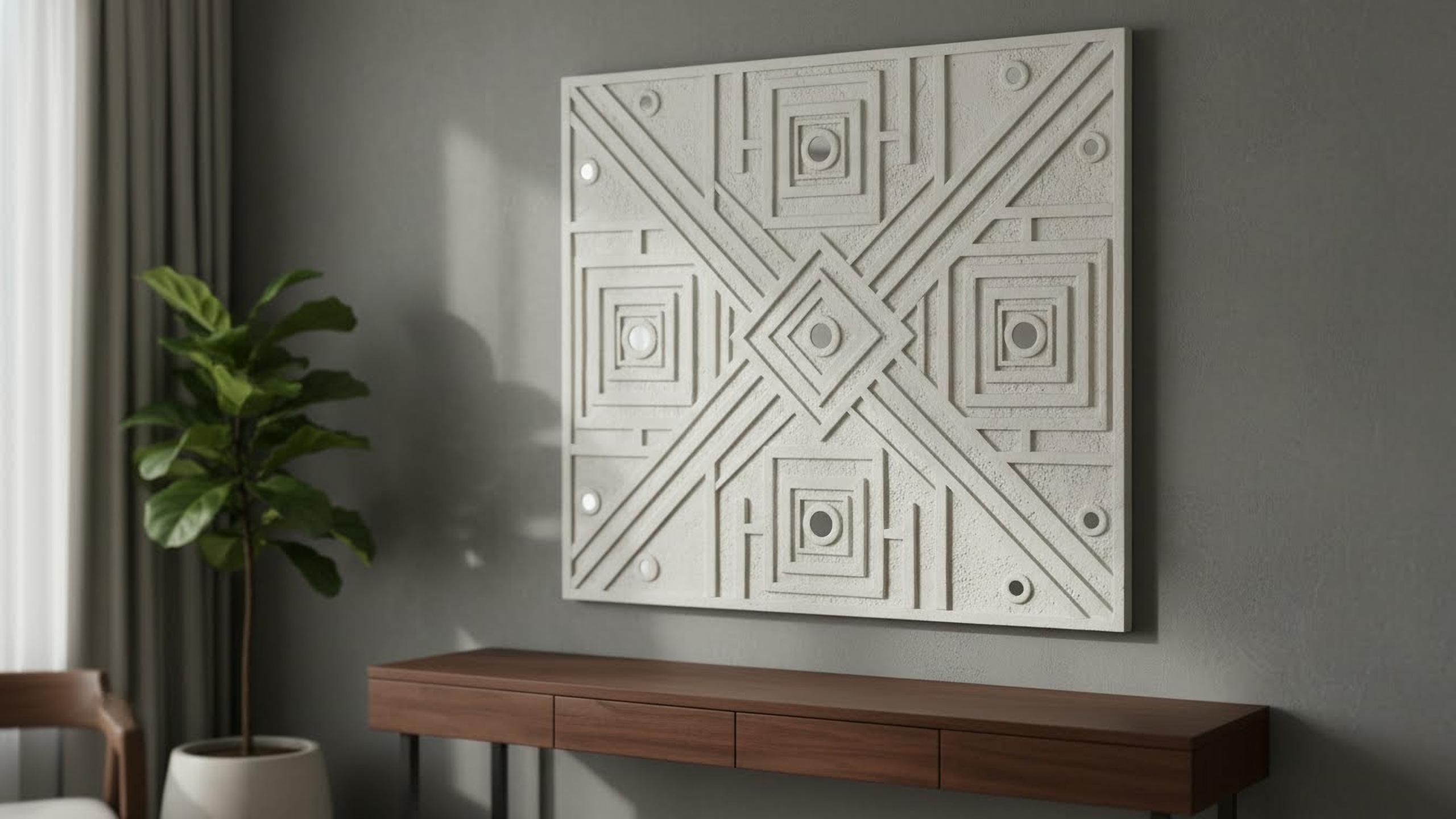
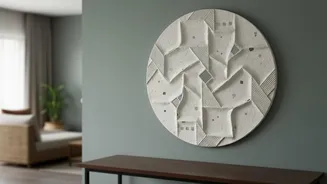
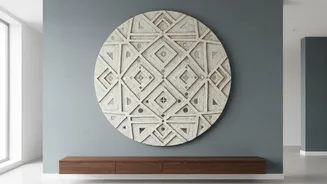
What was once an architectural feature of village homes has transformed into a celebrated and portable art form. The modern revival of Lippan Kam sees artisans and designers adapting the craft for urban sensibilities and apartment living. The traditional mud-and-dung mixture is often replaced with more durable and lighter materials like plaster of Paris, chalk powder, and modern adhesives. Instead of being sculpted directly onto walls, contemporary Lippan art is now commonly created on MDF boards, plywood, or canvas, allowing it to be sold as decorative panels, wall hangings, and even incorporated into furniture. This evolution has made the art form more accessible, durable, and suitable for the logistics of city life.
Styling with Soul and Story
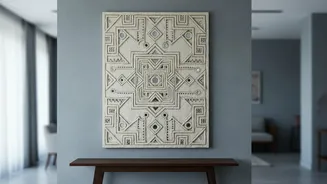
Incorporating Lippan art into a modern home is about adding more than just a decorative element; it's about embedding a piece of cultural history and handcrafted soul into a space. A large, intricate Lippan panel can serve as a stunning focal point in a living room or entryway, immediately sparking conversation. Smaller framed pieces can be grouped together to create a unique gallery wall, adding texture and a touch of ethnic charm to a bedroom or study. While traditional work is often left in its natural white or earthen tones, modern interpretations experiment with vibrant colour palettes, allowing the art to complement a wide range of interior styles, from minimalist to bohemian. The play of light on the embedded mirrors adds a dynamic, shimmering quality that can make a room feel more alive.
More Than Just Decoration
The growing popularity of Lippan Kam is doing more than just beautifying urban homes; it is creating a vital economic lifeline for artisan communities in Kutch. Events like the Rann Utsav have provided a significant platform, boosting tourism and connecting artists with a national and global market. This revival empowers the traditional keepers of the craft, ensuring that their skills are not only preserved but are also a source of sustainable livelihood. By choosing to bring a piece of Lippan art into their homes, consumers are participating in the preservation of a centuries-old tradition, supporting the artists, and celebrating the rich, creative spirit of rural India.