

Start With Your Garden's 'Why'
Before you save another banana peel or eggshell, take a walk through your garden. What do you see? Is the soil heavy and clay-like, or does water drain away too quickly from sandy soil? Are your tomato plants looking a little yellow, or are slugs feasting
on your lettuce? The most successful kitchen waste projects begin not in the kitchen, but with a clear understanding of a garden's needs. Instead of a one-size-fits-all approach, you can tailor your compost or soil amendments to solve a real issue. This shifts the process from a chore into a targeted, problem-solving strategy that yields visible results.
The Problem: Poor Soil Structure
Many garden frustrations stem from poor soil structure. Heavy clay soil holds too much water and can choke roots, while sandy soil fails to retain moisture and nutrients. The universal solution is organic matter. Regular compost, made from a balanced mix of kitchen scraps (greens) and yard waste like dry leaves or cardboard (browns), is the perfect remedy. As compost breaks down, it creates humus, a sponge-like substance that improves soil aeration, drainage, and water retention. For clay soils, compost helps separate dense particles, creating air pockets for roots. For sandy soils, it acts as a binder, helping hold precious water and nutrients where plants can access them. A simple compost pile or bin can transform your soil's fundamental health.
The Problem: Nutrient-Hungry Plants
If your plants are showing signs of deficiency, like yellowing leaves or stunted growth, specific kitchen scraps can provide a targeted nutrient boost. For instance, coffee grounds are a great source of nitrogen, essential for lush, leafy growth in plants. Banana peels are rich in potassium, which helps plants with water uptake and flowering. Crushed eggshells break down slowly, offering a steady supply of calcium that can help prevent blossom-end rot in tomatoes and peppers. Rather than just tossing everything into one pile, you can apply these specific scraps where they're needed most. You can soak banana peels in water to create a potassium-rich 'tea' for your flowering plants or work crushed eggshells into the soil at the base of your tomatoes.
The Solution: Choosing the Right Method
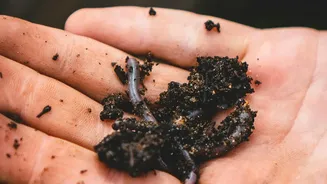
Different composting methods are suited to different needs and spaces. Traditional composting is excellent for overall soil improvement. For those in apartments or with limited space, vermicomposting (worm composting) is a fantastic option. Earthworms digest organic waste, producing nutrient-rich castings that are particularly effective at improving soil structure and microbial activity. Another method is Bokashi, a Japanese technique that uses fermentation in an airtight container. This process is fast, odour-free, and can handle items that traditional compost piles can't, like meat and dairy. The fermented pre-compost is then buried in the garden, where it quickly breaks down, enriching the soil with nutrients and beneficial microbes. Your choice of method should align with the garden problem you are trying to solve.
Beyond Compost: Direct Application
Not all scraps need to go through a formal composting process. Some can be used directly for immediate benefits. Spreading a layer of compost or certain organic materials on the soil's surface acts as a mulch, which helps suppress weeds and conserve moisture. Crushed eggshells sprinkled around the base of plants can deter soft-bodied pests like slugs and snails. However, be cautious about simply burying large amounts of un-composted food scraps directly in the garden. While it can work in small amounts, it can also attract pests or temporarily tie up nitrogen in the soil as it decomposes. It's often better to let scraps break down at least partially before incorporating them into the soil.