




The Ultimate Insurance Policy
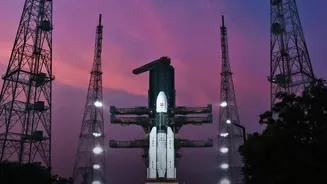
Before Indian astronauts, or 'Gaganyatris', ever board their spacecraft, every possible failure has to be anticipated and solved. This is the purpose of abort test flights. These missions are designed to test the Crew Escape System (CES), an essential
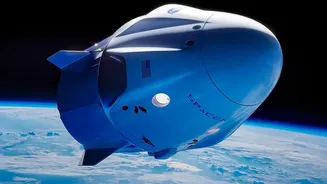
safety mechanism that can pull the Crew Module—the capsule where astronauts will be seated—away from the rocket in case of an emergency during launch or ascent. The CES is a set of powerful, quick-acting solid-fuel motors that can fire in an instant, propelling the crew to a safe distance from a failing launch vehicle. Think of it as the most sophisticated ejection seat ever built, but one that saves the entire capsule, not just the individual.
Simulating Worst-Case Scenarios
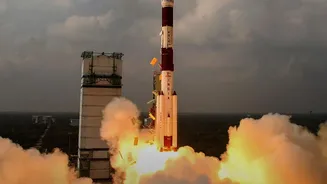
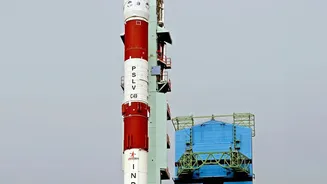
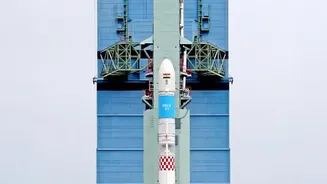
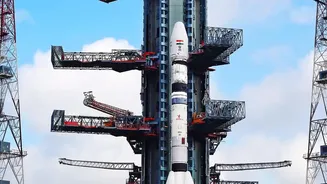
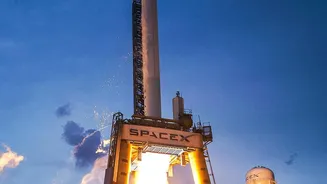
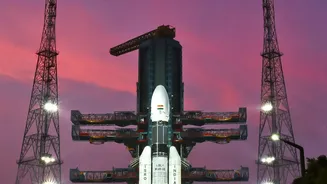
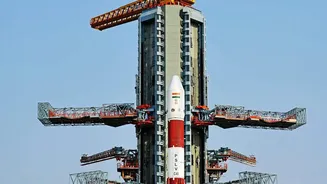
ISRO validates the CES through a series of demanding tests that simulate emergencies at the most critical phases of a launch. One type is the Pad Abort Test, which proves the system can work even before liftoff, rocketing the module away from the launchpad itself. Another, more complex scenario is tested during flights like the Test Vehicle Abort Mission-1 (TV-D1). During this mission, a specially designed test rocket carried a full-size, unpressurised Crew Module to a specific altitude and speed. The test simulated a failure at Mach 1.2, the moment of maximum aerodynamic stress on the vehicle. At an altitude of about 17 km, the abort sequence was deliberately triggered, with the CES firing to detach and propel the Crew Module to safety.
A Symphony of Ten Parachutes
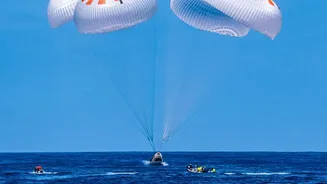
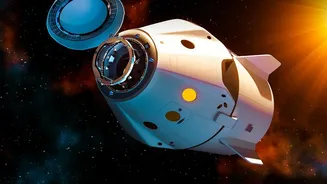
Once the Crew Module is clear of the rocket, getting it back to Earth safely requires a perfectly choreographed parachute deployment sequence. The Gaganyaan module uses a complex system of 10 parachutes of four different types. The sequence begins with two apex cover separation parachutes, which jettison the protective cover shielding the main chutes. Next, two drogue parachutes deploy to stabilize the rapidly descending module and drastically reduce its velocity. Finally, three pilot chutes are released, each responsible for pulling out one of the three large main parachutes. These main parachutes are what slow the module to a safe landing speed for splashdown. The entire system is built with redundancy; while there are three main parachutes, only two are needed for a safe landing, with the third providing an extra layer of safety.
From Splashdown to Recovery
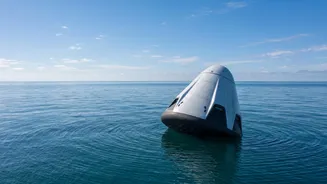
The validation process doesn't end until the Crew Module is safely recovered. After the parachutes slow its descent, the module splashes down in the sea, in a designated zone typically off the coast of Sriharikota. The tests also serve to qualify the recovery procedures. Teams from the Indian Navy are positioned to locate the capsule, attach buoys, and hoist it onto a ship using a crane. Other critical systems are also tested, such as the Crew Module Up-righting System (CMUS), which uses gas-based flotation devices to ensure the capsule turns upright if it lands upside down in the water, a crucial step for astronaut safety and recovery. Each test, from launch to splashdown, is heavily instrumented with hundreds of sensors to capture flight data, ensuring that every component performs exactly as predicted by computer simulations.